Search myodfw.com
Showing 61 - 80 of 705 results
Press Release
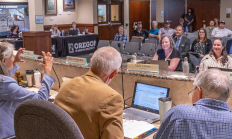
SALEM, Ore.—The Commission approved a revised State Wildlife Action Plan (SWAP) today, a plan that serves as a roadmap for protecting Oregon's at-risk species and their habitats. The Plan incorporates the latest available information on species and presents recommended conservation actions to inform and prioritize conservation work for community members…
August 15, 2025
Species and Subspecies
This is a medium-sized bat with large, long ears. It is gray, brown, or black and generally active only after full darkness. Townsend's big-eared bat is very vulnerable to human disturbance, and its numbers are declining. In Oregon, it is classified as a State Sensitive Species. It's also an Oregon Conservation Strategy Species in all ecoregions except Nearshore. Never disturb this bat if you are in a cave. Photo by ©Michael Durham

Article
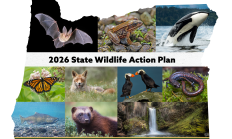
Oregon's State Wildlife Action Plan (SWAP), officially approved by the U.S. Fish and Wildlife Service on March 20, ensures continued federal funding eligibility and provides a science‑based roadmap to maintain healthy fish and wildlife populations, prevent further declines of at‑risk species, and reverse existing declines where possible. Along with the 2026 plan's approval, ODFW updated the user‑friendly SWAP website (formerly the Oregon Conservation Strategy and Oregon Nearshore Strategy) designed to help Oregonians easily navigate information about species, habitats and key conservation issues. Visit the 2026 SWAP website at: https://swap.oregon.gov
April 10, 2026
Press Release
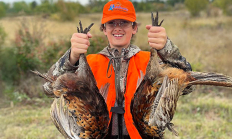
Events in Coquille, Central Point, Monmouth, Eugene, Irrigon, John Day, Klamath Falls, La Grande, Madras, Portland, Tygh Valley SALEM, Ore.—Youth hunters (age 17 and under) who will have completed hunter education by the time of the event can sign up now for ODFW's free pheasant hunts happening around the state…
August 5, 2025
Press Release
SALEM, Ore. – Successful Oregon forest grouse and mountain quail hunters are asked to donate a wing and tail from harvested birds to support biological research. Hunters can deposit wings and tails in collection barrels located at major road junctions or highways in hunting areas, select ODFW offices, and popular…
August 27, 2026
Press Release
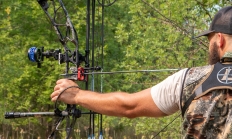
CENTRAL POINT, Ore. – The Rogue-Siskiyou National Forest is temporarily closing the Huckleberry Mountain area in the High Cascades Ranger District Aug. 22-31 for Tribal ceremonial purposes. Rogue Unit general archery hunters should be aware of the closure over the archery opening weekend, Aug. 30-31. For more information on the…
August 20, 2025
Press Release
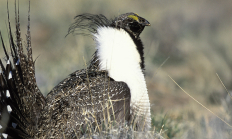
SALEM, Ore. – ODFW staff will host a webinar on July 17 at 2 p.m., to introduce the public to the updated ODFW sage-grouse management plan. The Oregon Greater Sage-grouse Conservation Assessment and Strategy was last updated in 2011. The public is invited to learn about proposed changes to the…
July 10, 2025
Zones or Areas
From the rugged Coast Range to the Cascade Mountains, this vast area offers good general season hunting opportunities.
Landing page
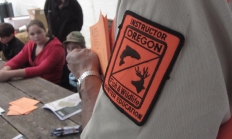
Oregon requires all hunters under the age of 18 to complete a hunter safety education course before hunting in the state. Upon course completion, students will receive a temporary Hunter Safety certification card to be carried while hunting in Oregon until a permanent card is received in the mail to replace it. Hunters over 18 are encouraged to take the online education course, as it may be required for out of state hunts. Note: Youth under the age of 9 may struggle with the course material and may not have the physical strength needed to safely handle a firearm during…
November 13, 2024
Workshop and Events
Register for event
Date
September & October
Location
Multiple locations
Species and Subspecies
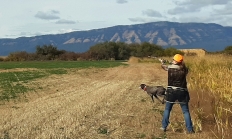
Features: The pronghorn is deer-sized (up to 150 lbs) with relatively long and thin legs and feet, only two digits on each foot (no "dew claws"), a relatively small tail, and unique horns. Bright white sides, underside and rear end help hunters spot them in the field. Habitat: Pronghorn are found in the High Desert sagebrush of eastern Oregon and the Columbia Plateau. Techniques: Most pronghorn hunts happen in August, before other big game seasons, so be ready for the High Desert’s warm summer temperatures. All pronghorn hunting is limited entry (apply by May 15) and it can take several…

Article
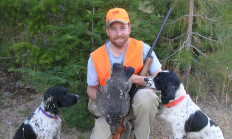
Look for collection barrels where you hunt. Data gathered from wings and tails helps ODFW biologists look at population productivity and set seasons.

Landing page
Big Creek Hatchery began operation in 1941. It was refurbished in 1957 under the Mitchell Act as part of the Columbia River Fisheries Development Program – a program to enhance declining fish runs in the Columbia River Basin. The facility is used for adult collection, egg incubation and rearing of winter steelhead, fall Chinook, and coho.
November 01, 2017
Article
Scout out more information on how to prepare for this year's hunt season, take a look at the Hunter's plan for Big Game success

Article
Legal shooting hours for Game Birds and Northwest Permit Goose for the 2026-27 hunting seasons.
June 26, 2026
Article
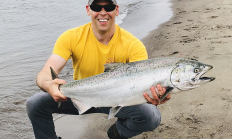
Spring Chinook season on the Columbia River is like a football game with a low-scoring start to the game. Although there is tremendous anticipation and excitement related to reports of the first springer of the year being caught, that's just the kickoff. As the game continues, both teams (fish and anglers) get warmed up and start putting bigger numbers on the board.
March 4, 2026
Article
ORDER Replacement Hunter Safety Card
March 2, 2026
Zones or Areas
From the eastern flanks of Crater Lake National Park through the national forests of Douglas fir and ponderosa pine forests to the California border, there's plenty of public land to find your hunt.

Press Release
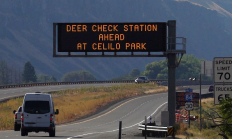
SALEM, Ore.—As 2025 deer and elk hunting seasons begin, ODFW is ramping up its Chronic Wasting Disease (CWD) surveillance statewide. Hunters are encouraged to take advantage of streamlined testing options and reminded that CWD check stations are mandatory to stop at when transporting harvested deer or elk. Sampling is quick…
September 25, 2025