
Search myodfw.com
Showing 681 - 700 of 849 results
This cavity-nesting thrush is one of three bluebird species found only in North America. Previously abundant in western Oregon, the Western bluebird suffered a precipitous decline through degradation of habitat and avian competition. The male has a cobalt blue head and throat, blue wings and tail edged with dusky brown, russet breast and flanks, gray-blue belly and undertail coverts. Female colorations are subdued: head and throat gray, back gray-brown, wings and tail pale blue, breast and flanks pale russet. The amount and brightness of blue and russet are brighter on older birds. The Western bluebird breeds in open habitats with…

Features: The color of all trout varies with environment. In general, the rainbow is bluish-green on the back, silvery on the sides and belly, and has a white edge to the dorsal, anal, and pelvic fins. A generous sprinkling of black spots appear along the back, and on the dorsal, adipose and caudal fins. A pinkish band usually extends along the sides. Habitat: Rainbow trout are the most widely stocked and distributed trout in Oregon. They occur naturally in many rivers and streams, and each year ODFW stocks millions more in ponds, lakes and streams. Prime trout waters are clear…

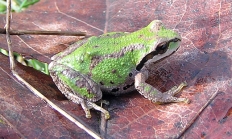
Adult treefrogs have a dark mask that extends from the tip of the nose across the eyes to the shoulders. Coloration varies between individuals, ranging from green or reddish to brown or gray. Most have dark blotches along their sides with light colored bumpy undersides. They have special skin glands that produce a waxy coating to keep their skin moist. Male treefrogs have a dark gray, inflatable throat pouch during the breeding season. As the smallest frog species in Oregon, adult Northern Pacific treefrogs only grow to two inches in length. During the non-breeding season, this treefrog is found in…
Each year, ODFW stocks millions of trout in dozens of reservoirs, lakes and ponds throughout the state. You can use the search and filter functions to search the stocking schedule for specific locations and dates. The schedule is subject to change without notice; see individual waterbody listings in the Recreation Report for updates.
Study ahead: Oregon Furbearer Trapping and Hunting Regulations
2026-27 License and cards available now
Online Learning

October 31, 2026
Denman Wildlife Area 1495 EAST GREGORY ROAD CENTRAL POINT, OR 97502-9430

Central Fishing September 17, 2026 Best bets for weekend fishing: Anglers report good fishing for recently stocked trout in North and South Twin Lakes. Anglers can still fish for trout throughout the lower Deschutes. Using a large stonefly nymph or a double nymph setup with an indicator typically does well during the summer months. Water clarity and overall conditions at Kingsley Reservoir are great for fishing, should still be good opportunity for trout this summer. The Upper Deschutes River above Benham Falls will close to angling on Oct. 1. Only a few weeks remain to fish the headwater reach for…
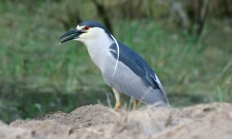
Although quite common in the U.S., the Black-crowned night-heron's nocturnal and crepuscular feeding habits can make it difficult to locate. Its habitat consists of marshes, lakes, rivers, and other wetlands, where it feeds mostly on fish. It is a thick-billed, medium-sized, stocky heron with relatively short neck and legs. Adults have a black back and cap which contrast with the pale gray or whitish underparts. Immatures have brown backs with large pale spots and heavily streaked underparts. A distinctive choking squawk call is often heard at dusk. It is a fairly common summer resident east of the Cascades where it…
The bobcat is the smallest wild felid in Oregon, with females being considerably smaller than males. The bobcat is about twice the size of a domestic cat, but its legs are longer, its tail is shorter, and its body is more muscular and compact. The feet are relatively small and the bobcat is not well adapted to negotiate deep snow. In general, the variously spotted pelage is yellowish with grayish overtones in winter and with reddish overtones in summer, reflecting the two annual molts. The ears are black with a large white spot and are equipped with short black tufts…

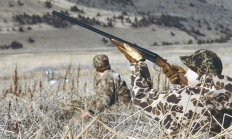
Features: Greater sage-grouse are a large grouse species. They are mottled gray-brown with black undersides. Males have black on the head and throat, while females have white behind their eyes. Habitat: Sage-grouse were originally found through much of the sagebrush dominated areas of eastern Oregon, but were eliminated from large areas by the mid 1900s through conversion of land for agricultural purposes. There has been little change in sage-grouse range, however since the 1950s. They live exclusively in sagebrush steppe habitat. During dry years, they may be concentrated in the vicinity of water sources. Technique: Due to greater sage-grouse fluctuating…

SALEM, Ore. – Razor clam harvesting is now open from the Washington/Oregon border to Cape Blanco, the Oregon Department of Agriculture and the Oregon Department of Fish and Wildlife announced today. Razor clamming had been closed from Cascade Head to the California border. But marine biotoxin levels have tested below…

Oregon’s beaches, bays and ocean waters have more kinds of fishing than anywhere in the state. From chasing surfperch in the… well, surf, to hooking cabezon from a rocky jetty, to going deep after rockfish and halibut, to the line-screaming runs of an albacore tuna, this zone offers a species and fishing technique for every angler. Subscribe for updates Starting Jan. 1, 2026, an Ocean Endorsement is needed for most recreational anglers fishing in the ocean. Check the Ocean Endorsement page for more information. Ocean Endorsement
SALEM Ore. – The Fish and Wildlife Commission meets June 12-13 for a field tour on Thursday and a regular meeting Friday. See the agenda here. The meeting will also be livestreamed from the Commission page. To testify on an agenda item virtually, register on the agenda page at least…
The kit fox is the smallest canid that occurs in Oregon. It has the typical canid conformation: the body is slim, the legs are long and thin, and the ears are large and erect. The tail is about 40 percent of the total length and is tipped with black, but has no dark mane on the dorsal surface. The feet and legs are whitish interiorly, light rusty-brown posteriorly. The dorsum is grizzled brownish-gray medially blending to grizzled gray then to light buff laterally and finally to white on the chest and venter. The head and posterior surface of the ears…

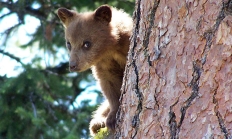
Black bears are the largest extant carnivores in Oregon. They are, however, smaller than grizzly bears, and they lack the grizzly's distinctive shoulder hump. A black bear is heavily built with stout legs and large feet. The eyes and ears are relatively small and the tail is extremely short. The claws are recurved but relatively short with those on the forefeet equal to or only slightly longer than those on the hind feet. The characteristic humped shoulders and dished face of the grizzly bear are absent. During spring-autumn seasons, black bears tend to be more active during daylight and crepuscular…
The Canada lynx is only slightly larger than the bobcat. Nevertheless, long legs and long fur produce the illusion that the lynx is considerably larger than it actually is. Documented accounts of wild lynx are rare and lynx are not expected to currently reside in Oregon. However, if lynx were to be observed, it is likely to occur at higher elevations such as in the Cascade Range, Blue Mountains or Wallowa Mountains. Habitats used by lynx often are defined in terms of habitats used by their primary prey species, thus good snowshoe hare habitat usually is considered to be good…
