Search myodfw.com
Showing 701 - 720 of 1416 results
CLACKAMAS, Ore. – Fishery managers from Oregon and Washington added more recreational salmon fishing days in the mainstem Columbia River during a joint-state hearing today. The decision came after fishery managers assessed Chinook harvest in the fall season fisheries and considered the current in-season abundance expectations for upriver salmon stocks…
Need to figure out controlled hunts, find a place to clam, learn how to fish or get directions to a wildlife area? We've got information on all that and more, straight from ODFW biologists and other accomplished hunters, anglers and wildlife watchers. Header image by Dave Budeau


The mountain cottontail is intermediate in size and light grayish-brown in color. Its tail is white and ears relatively broad and rounded. It is usually associated with rocky outcrops with nearby dominant vegetation consisting of big sagebrush, bitter-brush, rabbit-brush, western juniper and mountain-mahogany. In Oregon, it occurs throughout the state east of the Cascade Range with a western extension into Josephine County. Photo by ©Keith Kohl, ODFW

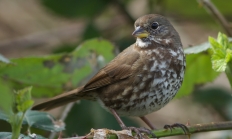
These big, medium-brown sparrows with variable grayish faces and heavily streaked or blotch undersides can be found in summer at higher elevations across much of the state except the Coast Range. Darker brown birds from more northerly breeding populations are common in western Oregon in winter, often coming to feeders, where they scratch like towhees for seed on the ground. Hear the song of the Fox sparrow Photo by Robin Horn, Flickr
Fun facts about our bats Oregon's bats eat only insects. An adult bat eats about 1,000 insects every hour! Bats hang upside down because it gives them an ideal position for take-off. Bats can fly 20 to 30 miles an hour and travel more than 100 miles a night. A baby bat is called a pup. Young bats can fly between two and five weeks of age. Bats are the only flying mammal. ODFW's Living with bats page has tips on protecting at-risk populations, and more. Bat Conservation International Batty for Bats: Facts for kids (pdf) Build a bat house…

NEWPORT, Ore. – The Oregon Department of Fish and Wildlife is hosting three public meetings along the coast to discuss the state's commercial Dungeness crab fishery. Commercial fishermen, industry representatives and anyone interested in the fishery are encouraged to attend. ODFW staff will give updates related to marine life entanglement…
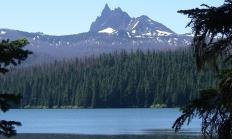
SALEM, Ore. – ODFW's PFA Grant Program began accepting applications on Nov. 14. The grant program is set to offer another $10 million to support innovative projects that drive real change. Applicants can find the PFA Grant Program's Grant Guidelines here and the streamlined application by logging into the Online…
This majestically crested bird is often heard before being seen due to its conspicuous harsh rattling call. Kingfishers are most frequently associated with lake and pond shorelines and islands, as well as coastal dunes with ponds and widely scattered shrubs and trees. They hunt from a vantage point above water such as an overhead branch, telephone wires along shore lines or pilings of piers. This is a common permanent resident throughout most of the state except in the north Lake and east Deschutes counties where open water is generally absent Hear the call of the belted kingfisher Photo from ODFW

SALEM, Ore.— The Commission set 2026 groundfish regulations during their meeting in Salem today. The daily catch limit for lingcod will increase from 2 to 3 fish next year, since lingcod populations are healthy and bycatch of yelloweye rockfish (a protected species) is still low. The daily limit for general…
SALEM, Ore. – The Private Forest Accord Mitigation Advisory Committee will hold its regularly occurring meeting, virtually on Tuesday, July 15, 2025. For a full agenda and virtual login information about the meeting, please visit: https://www.dfw.state.or.us/habitat/PFA/meetings.html The public is welcome to attend virtually. The Private Forest Accord Mitigation Fund was established…
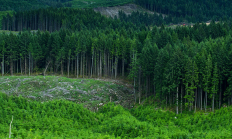
Characteristic of open country and cold weather, the Rough-legged hawk can be found soaring over exposed terrain or perched on utility poles across much of the state in winter. The rough appearance of its legs comes from the feathers covering their length, an adaptation that provides extra warmth in frigid weather. In flight, dark wrist patches and belly help identify this large buteo, though like other hawks it is subject to much variation in plumage. From a distance it frequently appears to have a frosty upper half. It often hovers over fields while hunting, a behavior that is rare among…
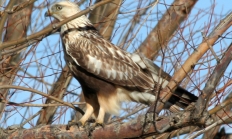
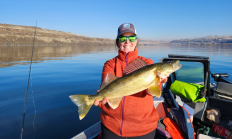
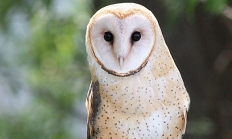
One of the most startling sounds in the black of night is the loud, harsh call of the Barn owl as it flies over field or marsh in search of small rodents. They are white to tan beneath with fine spotting ranging from almost none to fairly extensive. The face has a well-defined facial disc that acts as a parabolic dish collecting the faint sounds of its prey, allowing it to hunt successfully in total darkness. Male and female Barn owls are similar in appearance though the female is somewhat larger. The Barn owl is a fairly common permanent resident…
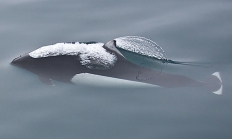
A thick body, small head and coloration similar to a killer whale make this dolphin easy to recognize. Dall’s porpoise is mostly black with a large white patch on the belly and flanks. The small dorsal fin is partly white and the trailing edges of the tail are frosted white. About seven feet long and weighing around 400 pounds, Dall’s live only in the north Pacific. Dall’s are the fastest of all small cetaceans and can swim at up to 35 miles per hour, almost as fast as a killer whale. When swimming at the surface they create a characteristic…
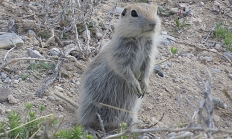
The Piute ground squirrel is the other of the two small gray ground squirrels without stripes or spots. In Oregon, it occurs south of Sheepshead and Cedar mountains in Malheur County. It is a species of the High Desert and commonly occurs in habitats in which the dominant shrub is big sagebrush, saltbush, or greasewood. It is commonly associated with rocky outcrops, levees, railroad embankments, ditchbanks, and sand dunes. Some occur in fencerows and edges of alfalfa and small-grain fields. These ground squirrels are usually active for three to five months each year. They emerge from their hibernacula in February…