Search myodfw.com
Showing 721 - 740 of 1416 results
With short pointed wings and long narrow tails, these small falcons are well built for fast pursuit and mid-air attacks. Sexes differ in color and size, with adult males about 25 percent smaller by weight than females. Males range from blackish gray to pale blue-gray on the back with a reddish wash along sides of the breast and a banded tail; females have brownish backs. In winter, it can be found throughout the state in open or semi-open habitats, but it is most regular near major estuaries, lakes, reservoirs, and occasionally in cities where food supplies are reliable. For nesting…

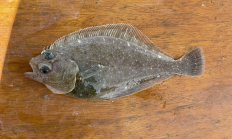
Features: The Pacific sanddab is left-eyed, meaning both eyes are on the left side of the body. The eyed-side is dull light brown, mottled with brown or black, and sometimes yellow or orange. The blind-side is off-white to tan. They have an oval shaped body with large scales. They can grow to be 16-inches long and up to 2 pounds, though most weigh less than 1/3 pound. Habitat: As you probably guessed, sanddabs like to hang out on sandy bottoms. They are most abundant at depths of 20-50 fathoms, and are common in shallow coastal waters from British Columbia to…
SALEM, Ore. – The Private Forest Accord Mitigation Advisory Committee will hold its regularly occurring meeting, virtually on Tuesday, Feb. 10, 2026. For a full agenda and virtual login information about the meeting, please visit: https://www.dfw.state.or.us/habitat/PFA/meetings.html The public is welcome to attend virtually. The Private Forest Accord Mitigation Fund was…
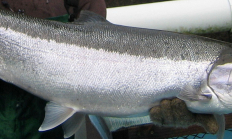
CLACKAMAS, Ore.—Oregon and Washington fishery managers have finalized preseason planning for 2025 Columbia River summer and fall recreational salmon and steelhead fisheries. Forecasts for summer steelhead, sockeye, fall Chinook, and coho will allow opportunity for anglers to target these fish. The planned 2025 fall-season fisheries are primarily limited by the…
Public comment period open; comment via online form SALEM, Ore.—Oregon's Fish and Wildlife Commission will meet Feb. 20 at the Lane County Armed Forces Readiness Center, 3106 Pierce Parkway in Springfield. The meeting starts at 8 am and will be livestreamed on the meeting agenda page and at ODFW's YouTube…
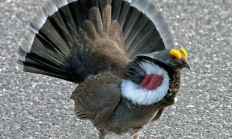
This popular upland game bird is the largest of Oregon's three forest grouse. It is well known for the distinctive hooting call emitted by courting males in the spring. This call is accompanied by an extravagant courtship display involving exposure of blood-engorged, featherless shoulder spots and eye combs, which are reddish to orange. It is a common resident in coniferous forests. Hear the call of the dusky grouse Photo by Jim Dollar, Flickr
Features: The name “cutthroat” is derived from the two red slash marks or streaks on the underside of the lower jaw. Lahontans don't develop the intense crimson or gold coloration that other subspecies do, but the males can develop some red on their sides. Spots on the head can help distinguish this subspecies from other inland cutthroat subspecies. Habitat: This variety has adapted to the dry, highly alkaline waters and was once widespread throughout the Lahontan Basin of California, Nevada and southeast Oregon. Today, native populations can be found in the Whitehorse and Willow creek basins in the far southeastern…

CLACKAMAS, Ore.— Anglers will be able to use their two-rod validation in the Willamette River for hatchery spring Chinook and all other fish except sturgeon from June 3-July 31. Two rods were not originally authorized on the Willamette River this year because the forecasted return of hatchery-origin adult spring Chinook…
SALEM, Ore. – The Private Forest Accord Advisory Committee will not hold its regularly scheduled public meeting on Tuesday, Aug. 12. The next meeting will take place in September. The meeting schedule is available on ODFW's website. The Private Forest Accord Mitigation Fund was established in the 2022 Legislative Session…
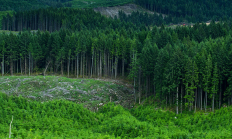
SALEM, Ore. – The Private Forest Accord Mitigation Advisory Committee will hold its regularly occurring meeting, virtually on Tuesday, June 10, 2025. For a full agenda and virtual login information about the meeting, please visit: https://www.dfw.state.or.us/habitat/PFA/meetings.html The public is welcome to attend virtually. The Private Forest Accord Mitigation Fund was established…
SALEM Ore. – The Fish and Wildlife Commission meets June 12-13 for a field tour on Thursday and a regular meeting Friday. See the agenda here. The meeting will also be livestreamed from the Commission page. To testify on an agenda item virtually, register on the agenda page at least…
SALEM, Ore. – The Private Forest Accord Advisory Committee will attend an in-person field trip in Coos Bay on Thursday, Oct. 2. The Advisory Committee will tour several project locations previously funded by the PFA Grants Program. The public is welcome to attend in person and are responsible for arranging…
The Northern harrier is a slender, medium-sized hawk characterized by a noticeably long tail, bold white rump patch, and owl-like face. Commonly encountered in large expanses of open country, its main hunting technique is through use of a distinctive buoyant, gliding flight low over the ground that relies heavily on visual as well as auditory cues to detect prey. The larger females have rich brown upperparts while adult males are mostly light to medium gray, sometimes appearing almost ghostly silvery-white. Males are noted for their high-spirited and acrobatic courtship displays, in particular a series of dives and barrel rolls in…
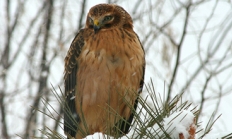
The Short-eared owl is one of our most conspicuous owls owing to its use of open country and crepuscular habits. It is often seen hunting low over the ground across marshes, fields, and other open areas on its buoyant, long wings, flying slowly and irregularly like a giant moth. This owl also differs from most other owls as it seldom vocalizes and is more often seen than heard. It was named for its inconspicuous "ear" tufts arising from the center of the forehead, though field observers rarely see these tufts. Distinguishing characteristics include a pale buff facial disk and a…
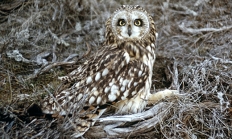
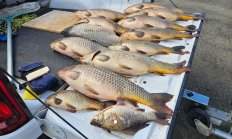
ROSEBURG, Ore. – Illegally introduced common carp were found in Cooper Creek Reservoir near Sutherlin. ODFW verified an angler's report of carp in Cooper Creek last week by electrofishing, removing 14 adult carp, most of which were pregnant females ranging in age from approximately two to eight years old. This…
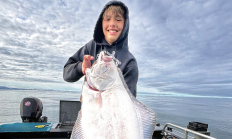
NEWPORT, Ore – Pacific halibut angling opens Aug. 17, Sundays through Friday through Sept. 30 or until quota is reached in the Columbia River subarea (Leadbetter Pt., WA to Cape Falcon, OR) all-depth fishery. The daily bag limit is one Pacific halibut. The Columbia River subarea received a 5,000-pound allocation…
Ruffed grouse are named for a series of black iridescent feathers on the sides of the neck called the ruff, which is erected by males to form an ring around the neck during courtship displays. This forest-dwelling species, favored by upland game-bird hunters, is well known for the drumming of the males during courtship displays in the spring. It is a common resident throughout most forested regions of the state. It occupies most forests at low to moderate elevations east of the Cascade crest, primarily the east slope of the Cascades from Ft. Klamath and upper Klamath Lake and Blue…

Oregon's 33 hatcheries produce about 40 million fish annually and you can visit them. They offer the chance to see fish – from eggs to brooders – and an opportunity to learn how they are raised. Oregon's hatcheries are important for anglers and the public because they directly provide fish for angling, help rebuild native fish populations, and offer educational programs. They are also vital to supporting the cultural heritage of Tribes. Hatcheries offer great wildlife viewing, interpretive displays and some provide boating and angling access. Did you know that ODFW rears 10 species of fish including steelhead/rainbow trout, brook…