
Search myodfw.com
Showing 741 - 760 of 1656 results
Crabbing and clamming are year-round activities on the Oregon coast. Clam diggers will want to watch for low tides, when more beach is exposed for digging. Crabbers will have the best luck during slack tide when crabs are walking about foraging. Visit e-regulations
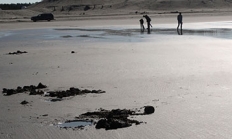
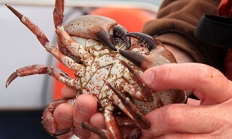
Oregon clams include the much-prized razor clam, as well as bay clams -- a catch-all term that includes several different species of clams. Bay clams are widely distributed on the coast, while razor clams are concentrated on the north coast beaches in Clatsop county. Crabbers mostly target Dungeness crab, but also encounter red rock crab. It, too, is fine table fare. Crab species Clam species
Oregon's crabbing and clamming zones include the beaches, bays and estuaries of the northwest and southwest zones, the mouth of the Columbia River, and the ocean itself for ocean crabbing. Visit e-regulations
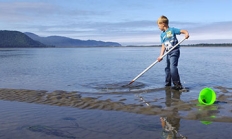
Oregon has nine fishing zones that combine to create a mosaic of opportunity. Freshwater or saltwater, trout and salmon, or bass and crappie, neighborhood ponds or remote mountain lakes – Oregon has a fishery to appeal to every angler. Visit e-regulations

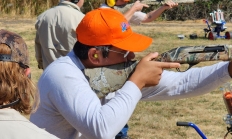

To get started on your next outdoor hunting adventure, the Oregon landscape offers the most diverse and accessible game bird hunting opportunities. Choose from migratory, to upland, to waterfowl, to turkey or all the above; this state offers thousands of acres to hunt in the most beautiful landscapes. Visit the current e-regulations below or pick up a printed copy at any license service agent or ODFW office location. Visit e-regulations
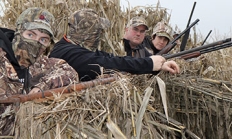
Big game hunting opportunities in Oregon are many and diverse -- from general season hunts for deer and elk, to controlled hunts for deer, elk, antelope, bear and cougar, to once-in-a-lifetime chances for bighorn sheep and Rocky Mountain goat.

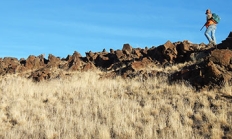
The diversity of Oregon's habitats and terrain offers something for every hunter. From the densely forested Coast Range to the expansive sage steppe of the Great Basin, Oregon is a wonderland of hunting opportunities. Visit e-regulatons
The ring-necked duck, which would have been better named "ring-billed duck" and is called "blackjack" in the southeastern United States, frequents different habits than the scaups with which is is often confused. The black back, white crescent on the side just in front of the wing, and white-ringed bill separate the drake ring-neck from the scaups. The brownish neck ring of the male in alternate plumage is not prominent. The hen is a small dark brown duck with a buff face. Drakes in courtship give a head-throw accompanied by a wow note while hens utter a growling purr. Ring-necks are…

This Eurasian diving duck regularly occurs in the Aleutian Islands and with increasing regularity in North America, especially along the West Coast. It is now reported annually in Oregon, between mid-October and early May, with most during January and February. All were from the coastal lowlands or the Willamette Valley, except for one on a small pond in Josephine County. They are closely related to the scaups and often associated with them. Hear the call of the tufted duck Photo by Tom Benson, Flickr

Greater scaup are almost the size of redheads. In hand, they are easily distinguishable from lesser scaup by size and by the white wing stripe extending beyond the secondaries into the primaries. In the field the two species are sometimes difficult to separate. Drakes are black on both ends and white in the middle. Hens are dark brown with a white mask around the base of the bill. The common vocalizations are the discordant scaup and purring pbbbrr of the female. Greater scaups form large flocks, sometimes mingling with lesser scaups in fall and winter. They are an abundant migrant…

Known as "bluebill" to most hunters, this species is one of the most abundant and widespread of North American ducks. The lesser scaup is similar to the greater scaup in appearance and habits, but is smaller and lacks the white on the primaries. In the field, however, the black-and-white drakes and brown hens are very similar to greater scaups. The common vocalization is the purr call of the female; drakes are usually silent, but utter a low single-note whistle in courtship. In general, the lesser scaup is more apt to be found in interior or freshwater habitats while the greater…

This small, boldly-patterned duck can be found in Oregon throughout the year, either around rocky headlands on the coast or inland on mountain streams. No other breeding duck in Oregon feeds almost exclusively on benthic invertebrates, often swimming underwater and upstream against swift current in search of prey. Though males are striking in appearance, these and the drab brown females can be difficult to see when at rest on a mid-stream rock or dodging behind rocks as they evade observers. Broods have been observed or nests located on tributaries in the river basins of the west Cascades. They are found…

Although the least numerous scoter on the continent, it is the most common scoter along the Pacific coast south of Alaska and winters by the thousands off Oregon. Adult males' plumage, black except for white patches on the forehead and nape, yields attention to the bill, a swollen white, red-orange, yellow, and black wedge feathered squarely along its base. The highly visible standard advertises male's presence for up to a mile. Dark-billed adult females and subadults are dark brown above and paler brown below, with two indistinct light patches on the cheeks and sometimes on the nape. A flattened head…
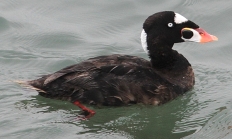
The white secondaries of the white-winged scoter in all plumages form a conspicuous square wing patch during flight but are often hidden during rest. Other than the secondaries, males' plumage is entirely black except for a small white teardrop around each eye. Females and immatures are dark brown above and pale below with diffuse white patches in front of and behind the eyes. A black knob graces the males' swollen, white-ridged, orange bills, while females' and immatures' bills are dark; the feathering of all extends almost to the nostril. Abundant along the coast from fall through spring, white-winged scoters are…
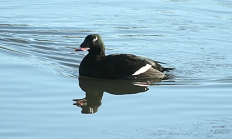
Adult male scoters of all species are black, but black scoters are the blackest; their shiny black plumage bears no white. The swollen bright orange-yellow knob on the otherwise black bill is smaller than that of other scoters. Males are distinguished in flight by the flashing silver-gray of underwing flight feathers against black wing linings and the all-black body. Females' uniform soot upperparts and dark head cap are clearly delineated from paler cheeks; their bills are usually dark. Immatures resemble females, but most males acquire some black feathering the first fall. This scoter can be uncommon to locally common along…

This restless diver of cold oceans and bays is one of the prize waterfowl to see on a coastal winter day. Although the loud, musical call of males is seldom heard in Oregon, we can still be cheered on a chilly day by this energetic visitor from the north. The winter males' body is mostly white except for a black breast and central back; the wings are dark, scapulars long and gray, and the dark central tail feathers elongate. Winter females are darker above with a light head; scapulars and tail feathers are short and dark. Dark areas mark females'…

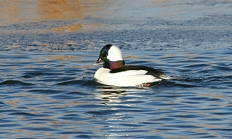
The bufflehead is North America's smallest diving duck, giving it the advantage of being able to nest in abandoned holes of northern flickers, a plentiful resource off limits to larger cavity-nesting ducks. It is a swift flyer and takes wing from water more easily and neatly than other diving ducks. Widely distributed throughout the state in winter, males attract attention with their striking white body, black back, and iridescent black head with a large notch of white; females and juveniles are dark charcoal-gray with a conspicuous white patch behind and below the eye. It is a local, uncommon breeder in…
The common goldeneye drake is a strikingly handsome black-and-white diver about the size of a greater scaup. Goldeneyes are strong, fast flyers nicknamed "Whistlers" for the sound of their primaries as they zoom past on a still day. Drakes have a black head with a white spot below and in front of the eye, white neck, breast and flanks and a black back and tail. Hens have a brown head, light neck, breast and belly, brown backs and flanks. They are fairly silent and usually alone or in small groups. They tend to remain apart from other ducks. It is…
