
Search myodfw.com
Showing 761 - 780 of 1416 results
ROSEBURG, Ore. – The Umpqua Fish District is hosting an informational update on local fisheries on June 11, 6-8 p.m. at the ODFW conference room, 4192 N. Umpqua Highway, Roseburg with a virtual option. Space is limited so those who want to attend in person are encouraged to reserve a…
PRINEVILLE, Ore. – A single dead adult quagga mussel was found out of water on the shoreline at Prineville Reservoir on June 6 during a routine survey for aquatic invasive species. This marks the first time that this highly invasive freshwater mussel species has been found in or near an…
SALEM, Ore. – The Private Forest Accord (PFA) Advisory Committee will hold its regular virtual meeting on Tuesday, October 21, 2025. Oregon Department of Fish and Wildlife staff will present two new funding pathways for the PFA Grants Program, Land Transactions and Water Transactions, followed by Advisory Committee discussion of…
This is a sparrow of the dry brushlands. The Clay-colored sparrow breeds chiefly across the northern prairies from northeast British Columbia east to Michigan and south into Colorado. It winters in the southern United States and Mexico. It has expanded its range westward and northward in recent years and is now nesting in small numbers in eastern Washington. It was seldom reported west of the Rocky Mountains prior to 1960. Since that time, it has become a regular migrant and wintering bird along the west coast. Hear the song of the Clay-colored sparrow Clay-colored sparrow. Photo by "Always a birder"…

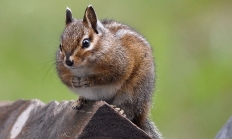
The Siskiyou chipmunk is slightly smaller than the Townsend's chipmunk and slightly larger than the Allen's chipmunk. The pelage is marked with five dark and four light stripes on the dorsum; the middorsal stripe is usually black and nearly always darker than the other four dark stripes. The sides of the face are marked with three brown and two light gray stripes; a patch behind the ear is light gray. It occurs in Curry, Josephine and Jackson counties south of the Rogue River; in extreme western Klamath County; in extreme eastern Douglas and Lane counties; and in extreme southeastern Linn…
SALEM, Ore.—The Oregon Fish and Wildlife Commission will meet Thursday and Friday, Dec. 11-12 to set 2026 groundfish regulations and hear an informational briefing on the barbless hook requirement for Columbia River recreational fisheries. Both a Dec. 11 workshop and Dec. 12 meeting will be in a hybrid format, allowing for…
CLACKAMAS, Ore.— Fishery managers from Oregon and Washington extended hatchery steelhead retention for recreational anglers on the mainstem Columbia River downstream of The Dalles Dam using joint state action yesterday. Steelhead retention was initially planned to be closed in this area beginning August 1. With this extension, effective Friday, Aug…

NEWPORT, Ore. – New research from Oregon's south coast highlights the positive economic impact of science and tourism within Redfish Rocks Marine Reserve. The study quantifies the number of jobs supported and income generated by these activities, providing important data for the local Port Orford community, policymakers, conservation practitioners, and…
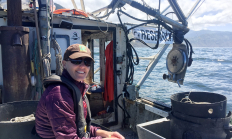


Sport fishing offers youth and adults alike a healthy and fun recreational activity that can be shared for a lifetime with friends and family. Workshops are offered statewide throughout the year. View and register for an upcoming event: Classes and W or kshops.
SALEM, Ore. – The Private Forest Accord (PFA) Advisory Committee will hold its regular virtual meeting on Tuesday, Sept. 30, 2025. ODFW staff will present two new funding pathways for the PFA Grants Program, Land Transactions and Water Transactions, followed by Advisory Committee discussion of these pathways and the accompanying…

Whether it's concerns about your local fishery, questions about an upcoming hunt, or comments about an agency policy, we want to hear from you. Please feel free to call or send us an e-mail.
Rough-skinned newts were named for their dry granular skin―most other salamander species have moist smooth skin. A terrestrial adult newt has a brown head and back with a bright orange belly and can grow to almost eight inches in total length. Rough-skinned newts have a powerful neurological poison in their skin and eggs to protect them from predators. A milky white substance is released from glands when disturbed. Avoid hand-to-mouth contact after handling a Rough-skinned newt. Through the non-breeding season, terrestrial adults live in forested areas along the coast and through to the eastern foothills of the Cascades. They find…

KLAMATH FALLS, Ore. – Recreation access sites within the restored Klamath River reach between Keno, Ore., and Hornbrook, Calif., will remain open as winter conditions allow. The five recreation day-use access sites now open until further notice are as follows: Pioneer Park West (Ore.) Moonshine Falls (Ore.) K'utárawáx·u (prounounced ku-ta-ra-wa-hhu)…