
Search myodfw.com
Showing 81 - 100 of 306 results
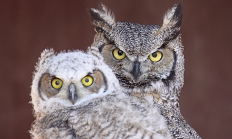
The Great horned owl is the most commonly encountered owl in Oregon. It is a large, stocky, powerful owl with large yellow eyes and distinctive feather tufts or "ears" above the eyes. Plumage color varies from dark brown in western Oregon to pale grayish brown in southeastern Oregon. The throat is white. It is a fairly common permanent resident throughout the state, but generally absent in areas above the timberline. Hear the call of the Great horned owl Photo by Charlotte Ganskopp
This is a medium-sized bat with large, long ears. It is gray, brown, or black and generally active only after full darkness. Townsend's big-eared bat is very vulnerable to human disturbance, and its numbers are declining. In Oregon, it is classified as a State Sensitive Species. It's also an Oregon Conservation Strategy Species in all ecoregions except Nearshore. Never disturb this bat if you are in a cave. Photo by ©Michael Durham

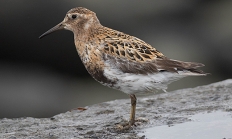
This large brown shorebird is the most wide-ranging of the curlew species. It is distinctive, having contrasting light-brown and dark-brown head stripes and a long decurved bill that it uses to probe for food on coastal mud flats and beaches. It is a common spring and fall migrant in coastal areas although it is also found, rarely, in small numbers inland as well. It is a rare spring migrant in the Willamette Valley with generally about one record annually, typically in late April or early May. Hear the call of the Whimbrel Photo by ©Keith Kohl, ODFW

This active and often unwary woodpecker, the smallest in North America, is generally the most often seen black and white woodpecker in human-settled areas. A preference is shown for decayed wood for nesting, though sound wood is also utilized. Nest sites are usually 10 to 12 feet off of the ground. It is found mostly at low to moderate elevations in deciduous and mixed deciduous-coniferous forests throughout much of the state, and less often in coniferous forests. Hear the call of the Downy woodpecker Photo by ©Keith Kohl, ODFW

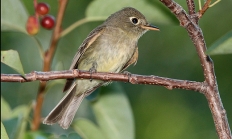
The Cordilleran flycatcher was recently designated a species distinct from the Pacific-slope flycatcher with which it was formerly lumped under the name Western flycatcher. The two species are almost identical in appearance, and the population in eastern Oregon is in some respects vocally intermediate between the Cordilleran and Pacific-slope types, so the distribution and status of the Cordilleran n Oregon is unclear. This species generally occurs in drier, higher elevation forests than the Pacific-slope flycatcher and is more closely associated with riparian zones. Hear the song of the Cordilleran flycatcher Photo by Julio Mulero, Flickr


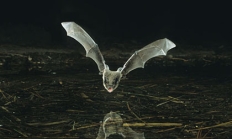
The long-legged myotis lives in forests and comes out early in the evening to hunt. It is a fast flier and will chase insects for a long distance. One baby is born in the summer, and the species hibernates in winter. In general, the long-legged myotis is a species associated with montane coniferous forests, but it also occurs in some desert and riparian habitats. The long-legged myotis is an Oregon Conservation Strategy Species in these ecoregions: Blue Mountains, Coast Range, East and West Cascades, Klamath Mountains, and Northern Basin and Range. Photo by ©Michael Durham
Features: Similar to the greater scaup in appearance and habits, but smaller and lacking the white on the primaries. In the field, however, the black-and-white drakes and brown hens are very similar to greater scaups. Habitat: In general, the lesser scaup is more likely to be found in interior or freshwater habitats while the greater scaup is more a coastal bird. Techniques: Scaup are rafting birds attracted to large spreads of scaup decoys. Popular hunting destinations include coastal estuaries and lakes, where most hunters hunt from a boat. However, in the marshes of eastern Oregon, there can be good hunting…

This medium sized, stocky sandpiper is rarely observed away from the rocky coastline as it forages close to the zone of salt spray. Primarily a late fall migrant with the major influx into Oregon occurring the last week in October and into early November. Generally silent during migration and on wintering grounds. Often found singly or in small groups with foraging Black turnstones and Surfbirds. Cryptic plumage makes it difficult to observe as it forages slowly over mussel and barnacle beds in typical sandpiper fashion. Roosts on rocks with Black turnstones and Surfbirds near feeding grounds, just above the spray…
This majestically crested bird is often heard before being seen due to its conspicuous harsh rattling call. Kingfishers are most frequently associated with lake and pond shorelines and islands, as well as coastal dunes with ponds and widely scattered shrubs and trees. They hunt from a vantage point above water such as an overhead branch, telephone wires along shore lines or pilings of piers. This is a common permanent resident throughout most of the state except in the north Lake and east Deschutes counties where open water is generally absent Hear the call of the belted kingfisher Photo from ODFW

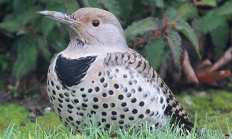
The Northern flicker is larger than most woodpeckers in Oregon. It is primarily lighter shades of brown and gray with black markings: spotted underparts, barred back, and a broad necklace. Its wing linings and undertail range from salmon to yellow, and the rump is white. Males have a red or black mustache. Northern flickers may be encountered in almost any terrestrial habitat, but are generally most abundant in open forests and forest edges adjacent to open country. They venture into nearby habitats, including towns and farms but typically avoid dense forests. It is a common resident throughout Oregon. Hear the…
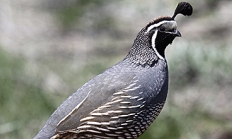
California quail are the most widely distributed upland game birds in Oregon. Most easily recognized by the comma-shaped, black, plume, or "topknot," which bends forward and is larger on the male. It has been a resident statewide since the early 1900s, except for most forests of the north Coast Range and west Cascades; it is generally absent along the coast north of Coos Bay. California quail is also absent from high-elevation areas of the east Cascade range. They are common residents in rural and even some suburban areas, particularly in eastern Oregon where many coveys gather at feeding stations during…
A large, long-legged wader distinguished from similar species in a flight by flashing rufous underwings and dark brown primaries. Its feet extend beyond tail tip in flight. Flocks generally consist of fewer than 50 birds on the coast. Juveniles migrate south several weeks later than most adults. After mid-November, a few stragglers are seen until late December. The Marbled godwit is a regular spring and fall migrant on the Oregon coast. Spring migration commences in early April and extends through early June on the coast. Its average arrival at the Malheur National Wildlife Reserve is April 27. Hear the call…

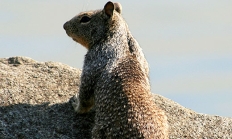
The California ground squirrel is a large, long-tailed gray squirrel with a large, nearly-black, triangular patch between light-gray shoulder patches. The gray dorsal pelage is speckled with buffy white spots. The tail is bushy, but not so full and spreading as those of tree squirrels. In Oregon, it occurs throughout the area west of the Cascade Range and throughout much of Central Oregon. It is considered among the most generalized of the ground squirrels as it inhabits a variety of habitats. Although it is a ground-dwelling squirrel, it has a strong propensity to climb. It is commonly observed sitting on…
The deer mouse is a moderately small mouse-like rodent that exhibits considerable variation in color, tail length and markings. In general, the pelage of adult deer mice is buff to dark brown on the dorsum and white on the venter. The ears are moderately long, essentially naked and usually held erect and directed forward. The eyes are black and beady. The deer mouse has the broadest distribution of any species within the genus and occurs throughout Oregon. Below the treeline, it occurs as part of essentially all communities. It is active nocturnally, the time of onset of activity is cued…

Features: Drakes have a reddish head and neck; black breast, lower back and tail coverts; nearly white back, flank, and belly, and dark gray tail. The hen is grayish brown with a darker brown head, neck, breast and tail coverts. Canvasbacks are large; adults in good condition are as heavy as mallards and second in size only to the white-winged scoter among common Oregon ducks. Habitat: Brackish estuarine bays and marshes with abundant submerged aquatic vegetation and invertebrates are ideal wintering habitat for canvasbacks. Techniques: Generally part of a mixed duck bag. These ducks have a reputation as good table…

Features: Both the male and female are gray or reddish-brown on the body with dark bars and spots throughout. They have variable tail colors but always have a black band near the tip. Habitat: Ruffed grouse are most commonly found in brushy riparian areas in eastern Oregon and in early-aged mixed woodlands in western Oregon, though birds may be found in pockets of good habitat nearly anywhere. Technique: The ruffed grouse is a bird of the edge, so look in edges of meadows, clearcuts, and where brushy growth meets timber. In September, when most ruffed grouse hunting takes place in…

Features: Oregon is home to more than 6,000 cougars, or mountain lions. Cougars are the largest members of the cat family found in the state and tend to be solitary, except for females raising young. Males in particular are very territorial. Habitat: Cougars are throughout Oregon, with concentrations in the Cascade Range and Blue Mountains. Lately, more cougars are being seen in northwest Oregon including the suburbs of Portland. Techniques: Hunting is open statewide under a general season all year, or until zone quotas are met. Most cougars in Oregon are taken while hunters are out pursuing other species like…

CLACKAMAS, Ore. – Sturgeon retention in Bonneville Pool and The Dalles Pool will open for one day on Monday, Feb. 16. These retention fisheries had not opened on the traditional date of Jan. 1 as in previous years. Due to warmer-than-normal winter water temperatures, increased angling effort, and high catch…