
Search myodfw.com
Showing 881 - 900 of 1416 results
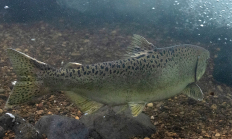
ROSEBURG, Ore. – Fishing for fall Chinook salmon (hatchery and wild) closes at 12:01 a.m., Aug. 19 on the Umpqua, Smith, and North Fork Smith rivers because the quota of 500 wild fall Chinook has been reached. With forecasted low returns of wild fall Chinook salmon in the Umpqua, Smith…
The Tufted Puffin is extremely charismatic and the most recognized seabird in Oregon. It is easily identified in the breeding season by the colorful laterally compressed bill, a distinct white face with long cream-colored facial plumes, black body, and reddish-orange feet. In winter it moves offshore and loses most of its colorful plumage and bill plates. Tufted Puffins are burrow-nesters and feed at sea. Along the Oregon coast, they primarily nest on soil-covered islands free of mammalian predators. They also occasionally nest on headlands such as Cape Mears, Cape Lookout, Cape Foulweather, and Yaquina Head. Tufted Puffin populations have…

PENDLETON, Ore. – From Oct. 18 through Nov. 30, 2025, the adult daily salmon and steelhead bag limit on the Umatilla River from the Hwy 730 bridge upstream to Threemile Dam is three fish total, but retention of Chinook will be closed. The closure of Chinook retention is necessary due…
Coyotes, wolves and foxes are found throughout Oregon, depending on the species. The gray wolf, kit fox and Sierra Nevada red fox are Oregon Conservation Strategy Species. More about wolves in Oregon Report a wolf sighting

SALEM, Ore. - Oregon's Fish Passage Task Force will meet Thursday, October 16 from 8:00 a.m. to 12:30 p.m. at the Red Lion, 1313 N Bayshore Dr, Coos Bay. The meeting will be open to the public. Members of the public who are interested in the meeting are encouraged to…
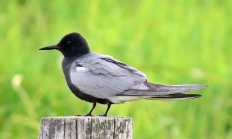
This is Oregon's smallest breeding tern, with black head and body and gray wings during the breeding season. Black terns are delicate, graceful fliers, reminiscent of a nighthawk or swallow. The Black tern breeds in marsh wetland complexes of southeast, south central and central Oregon. In western Oregon, a very small breeding population is found at a few sites in the Willamette Valley. Hear the call of the Black tern Photo by Bob, Flickr
Horned puffins have an unmistakable black and white plumage and a large, distinct, yellow and orange bill during the breeding season. They are rare in Oregon, and most commonly encountered dead on the beach in winter or spring, or sighted more than 50 miles offshore in spring. Individual birds, or possibly pairs, occasionally stay in Oregon for the breeding season and are seen attending colonies with Tufted puffins, but there are no records of breeding in Oregon. Hear the call of the Horned puffin

This group of animals is common throughout Oregon in various locations depending on species. Oregon just has one marmot, the yellow-bellied marmot and two of its squirrels are on the Oregon Conservation Strategy Species list: the Washington ground squirrel and the Western gray squirrel. View more information about Living with Wildlife, Tree Squirrels for tips on preventing conflicts, trapping, species status and recommended conservation actions.

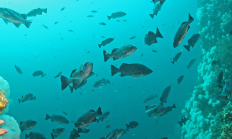
NEWPORT, Ore. – The Oregon Department of Fish and Wildlife is holding two public meetings to discuss the commercial black and blue rockfish and nearshore fisheries. The meetings will be held in person with virtual or phone-in options Sept. 9 in Port Orford and Sept. 11 in Tillamook. ODFW commercial…
CLACKAMAS, Ore.—Fishery managers from Oregon and Washington added more recreational spring Chinook fishing days on the mainstem Columbia during a joint state hearing today. Eleven additional fishing days for the area from the Tongue Point/Rocky Point line in the estuary upstream to the Oregon/Washington border (upstream of McNary Dam) were…
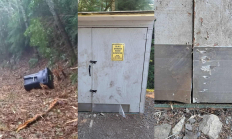
A black bear tried its best to get into a Neskowin homeowner's bear resistant trash can. The homeowner then built a small shed to enclose the trash can. The persistent bear left its prints and claw marks on the shed but did not succeed in breaking into it. This resident…
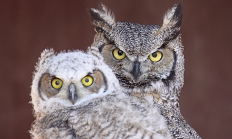
The Great horned owl is the most commonly encountered owl in Oregon. It is a large, stocky, powerful owl with large yellow eyes and distinctive feather tufts or "ears" above the eyes. Plumage color varies from dark brown in western Oregon to pale grayish brown in southeastern Oregon. The throat is white. It is a fairly common permanent resident throughout the state, but generally absent in areas above the timberline. Hear the call of the Great horned owl Photo by Charlotte Ganskopp
Allen's hummingbird is a common breeder in the coastal fog belt from California into southern Oregon. It is closely related to the more wide-ranging Rufous hummingbird with only subtle differences in plumage, behavior, and vocalization. This is a fairly common spring and summer resident along the southern Oregon coast as far north as Bandon. It occurs as a very rare vagrant in other parts of western Oregon. Hear the call of the Allen's hummingbird Photo by Trish Gussler, Flickr

Cassin's auklet uses a few offshore lands for breeding in Oregon. It forages in the marine environment and nests in a chamber under rocks or digs its own burrow, two to six feet long, in the soil. This species spends its day at sea and only comes to the burrow at night, perhaps to reduce discovery by predacious Western gulls. Although few Cassin's auklets nest in Oregon, nesting sites are found along the entire coast where offshore rocks provide appropriate habitat. During the non-breeding season this is the most abundant alcid seen at sea in Oregon. They are present offshore…

PENDLETON, Ore. – A $1 million federal investment will jump-start critical engineering and design work on fish passage and alternative solutions at McKay Creek Reservoir Dam, laying the technical groundwork to eventually reconnect more than 100 miles of historic salmon and steelhead habitat. Sens. Jeff Merkley and Ron Wyden helped…
The heather vole is among the smaller voles in Oregon. In appearance, it strongly resembles the montane vole. It is gray to brownish on the dorsum, whitish to grayish on the venter. Two of nine nominal subspecies are purported to occur in Oregon: the lighter colored P. I. intermedius in the Blue and Wallowa mountains of northeastern Oregon and the darker P. I. oramontis in the Cascade Range. Heather voles are rather docile creatures; they usually make little attempt to flee or to defend themselves when captured. It is active during daylight hours more frequently than the Southern red-backed vole…
Enterprise, Ore. – Spring Chinook fishing in Hells Canyon will be closed starting June 4, after harvest quotas for the season were reached earlier than anticipated due to a run size downgrade. Spring Chinook fishing on the Snake River is open April 22 to Aug. 17 under permanent regulations but…
CORVALLIS, Ore . — The Oregon Hatchery Research Center Board will meet virtually via Zoom on Wednesday, Sept. 3 from 9:00 a.m. to 11:00 a.m. In addition to the regularly scheduled items, the agenda includes a review of a proposal for use of the remaining OHRC Research Fund. The meeting…
SALEM, Ore.— ODFW will host an open house on Tuesday, May 12 from 2-4 p.m. to discuss development of its 2027-29 Agency Request Budget. The meeting will be hosted in ODFW's headquarters classroom (4034 Fairview Industrial Drive, SE, Salem) and will be streamed online via YouTube. In Oregon, state agency…