Search myodfw.com
Showing 901 - 920 of 1702 results
Article
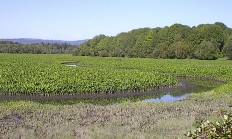
Most warmwater anglers traveling to the northeast area are probably heading to Brownlee Reservoir, a huge 15,000 acre waterbody located along the Oregon-Idaho Reservoir on the Snake River. Brownlee offers outstanding fishing for bass and catfish, but might be best known for its crappie fishery which attracts anglers from throughout the country. However, anglers shouldn't overlook the other fishing opportunities located further downstream below Brownlee in Oxbow and Hells Canyon Reservoirs, and in the Snake River itself. Even in the lower Grand Ronde, a river better known for trout and steelhead, anglers will find good smallmouth bass fishing during the…
Article
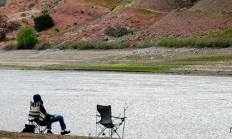
The southeast area covers the high desert country of Harney and Malheur counties and is the most arid region of Oregon. Extended dry periods or droughts can affect the warmwater fisheries in this area, but these can be quick to rebound when water returns. The area’s most popular warmwater fishery is found in Owyhee Reservoir, a huge nearly 14,000 acre reservoir located on the Owyhee River south of Ontario that offers outstanding fishing for bass, crappie and catfish. There are few roads to and along Owyhee, but those with a boat will be rewarded with remote and spectacular scenery. Other…

Article
The southwest area follows Interstate 5 from Drain south to the Oregon-California border and includes the communities of Grants Pass, Medford and Ashland. In this area, anglers can fish the famed lower Umpqua River, which offers one of the finest smallmouth bass fisheries in the country. Outstanding warmwater fishing for bass and panfish can also be found in the area's many lakes and reservoirs including Cooper Creek, Galesville and Emigrant Reservoirs, and Selmac Lake. Smaller ponds near Sutherlin, Grants Pass and Medford including those at ODFW's Denman Wildlife Area are also good bets, particularly for families or young anglers.

Article
To maintain boating access and to protect Oregon's waters from invasive species, all boaters must have the required permit. Visit ODFW's Electronic Licensing System to buy permits.
February 4, 2026
Article
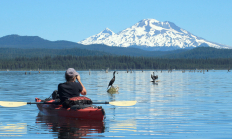
The Oregon Department of Fish and Wildlife owns or manages nearly 200,000 acres of land set aside for wildlife use and public recreation. The ODFW Wildlife Area Parking Permit helps fund habitat improvements and visitor amenities such as parking, restrooms and interpretive signs at these wildlife refuges. Buy a Parking Permit
November 17, 2025

Article
All Oregon-licensed anglers fishing for salmon, steelhead or sturgeon (catch-and-release and retention) on all rivers and tributaries in the Columbia River Basin need to have a Columbia River Basin Endorsement (CRBE). Washington-licensed anglers need a Columbia River Salmon and Steelhead Endorsement (CRSSE) from the Washington Department of Fish and Wildlife (WDFW).
January 29, 2026
Article
If you bought a tag you must report, even if you weren't successful or didn't hunt. Report your hunt online or at an ODFW license vendor. Hunters have until January 31 (or April 15 if purchased a late tag) each year to report their previous year's hunts.
December 8, 2025
Recreation Report
There is no Wildlife Viewing update for the Columbia Zone.
September 05, 2017
Article
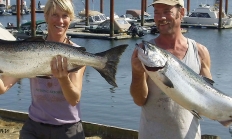
Two commonly caught species of salmon are coho and Chinook. Fishing regulations require anglers to correctly identify salmon species as restrictions such as legal lengths and seasons often vary based on the species.
Article
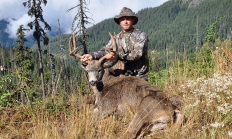
An emergency hunt is an unanticipated hunt held on short notice to address acute agricultural damage. Many damage situations are addressed by controlled hunts during annual big game seasons. ODFW expects to implement very few emergency hunts during any year. On average, about 200 tags are issued annually statewide. Emergency hunt tags are in addition to tags for general seasons, controlled hunts or leftover hunts. Emergency hunt participants are selected from a list established on a county-by-county basis. You may apply for only one county.

Article
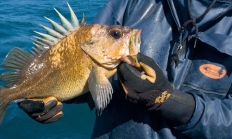
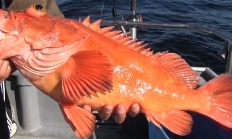
It's important to be able to distinguish between the most commonly encountered rockfish. Knowing what you've caught, and how many you can possess, will keep you on the right side of the regulations. Reminder: Yelloweye rockfish and quillback rockfish are prohibited at all times and in all waters.
Article
A few waterbodies in Oregon are set aside just for younger anglers and those with disabilities—offering everything from warmwater and stocked trout to salmon and steelhead fishing.

Article
Rockfish must be released when retention is prohibited or when an angler has reached the daily bag limit, but continues to fish for other species. However, releasing rockfish isn’t as simple as just dropping them back into the water. Some rockfish need help to get back down to deeper water to recover from a condition called barotrauma.
Article
With just a couple of tools and a few minutes, The Fish Grip™, originally designed as a safer way for anglers to land fish, can easily be converted into a rockfish descending device. Fish Grips™ can be purchased at local tackle shops or online.
Article
We've asked our fish biologists throughout the state to pick their favorite family fishing locations. These spots are great for novice and experienced anglers alike.

Article
This example will show you how to read a point summary report. Print this table
Article
A beginner's guide to waterfowl hunting on Sauvie Island - an introduction. Part 1 of a 5 part series.

Article
A beginner's guide to waterfowl hunting on Sauvie Island - Hunting in the Eastside Unit. Part 2 of a 5 part series.
Article
A beginner's guide to waterfowl hunting on Sauvie Island- Hunting in the Westside Unit. Part 3 of a 5 part series.

Article
A beginner's guide to waterfowl hunting on Sauvie Island - hunting in the North Unit. Part 4 of a 5 part series.