
Search myodfw.com
Showing 941 - 960 of 1416 results
SALEM, Ore.—ODFW will be proposing several changes to next year's Sport Fishing Regulations. The Commission will adopt 2026 regulations at their Sept. 12 meeting in Ontario. Major staff proposals for changes include: Allowing spearfishing for bass and walleye in more rivers and streams: Spearfishing is a popular alternative fishing method…
Seeing killer whales off the Oregon coast is a rare treat, but whale watchers can usually count on a pod of orca’s patrolling the coast in mid-April – just in time to intercept baby gray whales. Orcas are most often seen in the ocean off Depoe Bay and Newport, but can be spotted coastwide. The first thing you are likely to see when sighting killer whales is their dorsal fin. Male orcas have a dorsal fin that can be six feet in height, juveniles and females have shorter fins. These large fins can be seen from quite a distance. There…

SALEM, Ore – Mussel harvesting is now closed from Tillamook Head (south of Seaside) to the north Jetty of the Siuslaw River (Florence) the Oregon Department of Agriculture and the Oregon Department of Fish and Wildlife announced today. Recent mussel samples indicate levels of Paralytic Shellfish Poisoning (PSP) – a…
SALEM, Ore. – ODFW was notified today that the Bonneville Power Administration (BPA) is terminating its share of funding for the Select Area Fisheries Enhancement (SAFE) Program in the Lower Columbia River effective September 30, 2026—providing barely three months' notice for a decision that carries major consequences for Oregon's commercial…
With four wing-beats each second pushing them to 62 miles per hour, brant are the fastest and strongest geese in flight and among the swiftest of all large birds. Black brant comprise the vast majority of brant occurring in Oregon. These small geese have smoky black backs and bellies, and dissected white collars and white around the tails provide striking contrast. The black brant can live up to 20 years and are resilient enough to ride out storms on the open ocean. In Oregon, wintering numbers along the coast have seen a 50 percent reduction from previous years due to…

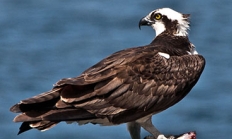
This large bird of prey has dark brown feathers above, white feathers below with a white head and prominent dark eye stripe as well as a visible dark spot at the wrist of the wing when flying. Juveniles have buffy-tipped dark feathers above. In flight, the wings have a noticeable angle or "crook." This highly migratory fish-eating species is frequently found nesting along larger rivers, lakes, and reservoirs. A large bulky nest at the very top of a live, broken top, or dead tree and more recently on utility poles, channel markers, pilings, and cell phone towers near fishable waters…
The gregarious Tricolored blackbird is one of North America's most intensely colonial breeders, forming dense, non-territorial, noisy colonies. A highly synchronized nesting system exploits secure nesting locations and rich food supplies that change from year to year. In Oregon, breeding colonies are scattered and intermittent at specific locations, though sites used during consecutive years may be in the same general area. The Tricolored blackbird breeds most consistently in Klamath and Jackson Counties. Small colonies and summering residents have been found in the Willamette Valley; during fall and winter they are rare. Most retreat south to California in winter, while some…

The black rat is slightly smaller than the Norway rat, but much larger than the house mouse, the only other members of the subfamily in Oregon. The black rat is similar to other members of the subfamily in that it possesses a scaly, scantily haired tail; membranous, nearly naked ears, and a soft pelage. It differs from the Norway rat in having a tail much longer than the length of its head and body and commonly having a darker-colored pelage. The pelage ranges from black to sandy brown dorsally and from lead colored to nearly white ventrally. The black rat…

This group of mammals is spread nearly worldwide and in Oregon, they are found throughout the state. Oregon is home to the American pika and seven species of rabbits and hares.

Oregon has two sea lion species and three seals. The Steller sea lion, Northern elephant seal and Pacific harbor seal are Oregon Conservation Strategy Species.


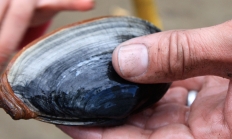
Features: Unlike gaper clams, softshell clams have no gape on their neck end. Softshell clams have a spoon like projection on the left valve, this feature is called a chondrophore. Habitat: Brackish, muddy areas all along Oregon's coastline. Find softshells 12-18" depth. Technique: Softshells can be harvested by digging with either a shovel or clam gun. As the name suggests, they have soft or thin shells which are easy to break. Although a clam with a broken shell is still good to eat, sharp edges of a broken shell can be very dangerous. Until you've refined your shoveling skills you…
Shellfish regulations only apply to Columbia River downstream of Tongue Point/Rocky Point line at the mouth of the Columbia River.
SALEM, Ore.--Oregon's Fish Passage Task Force will meet Wednesday, March 11, from 8:00 a.m. to noon online. The meeting agenda includes numerous ODFW Fish Passage Program updates, Task Force business items, and a round table discussion by Fish Passage Task Force Members and ODFW staff on fish passage guidance documents…
Updated statement Friday, Nov. 7, 2025 SALEM, Ore. – A coyote was captured and humanely killed on Oct. 31 and confirmed to be the individual animal that bit a 9-year-old child in the Alameda neighborhood on Oct. 23. ODFW worked with partners at the city, state, and federal levels to…

Oregon has two species of pelicans, American white and the Brown pelican, and three species of cormorants. All are fish-eating water birds with four toes joined by webbing. Depending on the species, pelicans and cormorants inhabit the Oregon coast, rivers or interior waterbodies.

Features: Sacramento perch are blackish above with about seven vertical dark bars that are irregular in form and position. They are not a true perch, but a sunfish. It is the only member of the sunfish family native to the west coast and, in Oregon, is found only in the Klamath Basin. Sacramento perch are distinguished from the other sunfish in Oregon by having 12 or 13 dorsal fin spines whereas all the others have 10 or fewer. Maximum size in Oregon is about 12-inches in length and a weight of about 3/4 pound, although in California they have been…

The enigmatic Solitary sandpiper may be one of the least understood of Oregon's regularly occurring shorebirds. As its name implies, the species is most often found singly, and it rarely occurs in groups of more than two individuals. The Solitary sandpiper frequents habitats not often utilized by other migrant shorebirds, such as smaller and often partly wooded patches of water, and high-altitude bogs and wet meadows. It is an uncommon to rare migrant in fresh water or brackish habitats throughout Oregon; rarest along outer coast and in alkali habitats. Spring adults more common in the western interior valleys; fall juveniles…
