
Search myodfw.com
Showing 1361 - 1380 of 1722 results
SALEM, Ore. – ODFW invites the public to view artwork entered in the annual stamp art contest on Tuesday, Nov. 4 from 12:30-5:00 p.m. at ODFW Headquarters in Salem. The event is free and open to the public. Located at 4034 Fairview Industrial Dr SE, Salem, ODFW Headquarters will host…
SALEM, Ore.–The Fish and Wildlife Commission will meet virtually on Friday, Oct. 10 from 8:30 a.m.-noon for a training related to cultural resources, tribal sovereignty, and tribal treaty rights. The meeting will be livestreamed from the Commission page and via ODFW's YouTube channel. Invited speakers will share information with the…
NEWPORT, Ore. – New research from Oregon's south coast highlights the positive economic impact of science and tourism within Redfish Rocks Marine Reserve. The study quantifies the number of jobs supported and income generated by these activities, providing important data for the local Port Orford community, policymakers, conservation practitioners, and…
SALEM, Ore. – Anglers will have additional chances to fish for wild coho this November as ODFW announces extended fishing opportunities in the Siletz, Yaquina, and Alsea river basins. At the request of the Oregon Fish and Wildlife Commission, ODFW staff evaluated the potential for additional fishing days beyond the…

SALEM, Ore. - Oregon's Fish Passage Task Force will meet Thursday, October 16 from 8:00 a.m. to 12:30 p.m. at the Red Lion, 1313 N Bayshore Dr, Coos Bay. The meeting will be open to the public. Members of the public who are interested in the meeting are encouraged to…
A black bear tried its best to get into a Neskowin homeowner's bear resistant trash can. The homeowner then built a small shed to enclose the trash can. The persistent bear left its prints and claw marks on the shed but did not succeed in breaking into it. This resident…
Central Point, Ore. – Hunters and recreationists who plan to use the Jackson Cooperative Travel Management Area (TMA) should download the newest version of the georeferenced .pdf map. updated on Oct. 14. There have been major changes this year, so users should double check where they plan to access. These…
PENDLETON, Ore. – From Oct. 18 through Nov. 30, 2025, the adult daily salmon and steelhead bag limit on the Umatilla River from the Hwy 730 bridge upstream to Threemile Dam is three fish total, but retention of Chinook will be closed. The closure of Chinook retention is necessary due…
SALEM, Ore. – The Private Forest Accord (PFA) Advisory Committee will hold its regular virtual meeting on Tuesday, October 21, 2025. Oregon Department of Fish and Wildlife staff will present two new funding pathways for the PFA Grants Program, Land Transactions and Water Transactions, followed by Advisory Committee discussion of…
Image: The circles show monitoring stations in the basin and the green shows detection of a tagged salmon. KLAMATH FALLS, Ore. — Salmon are making exciting progress in their return to the upper Klamath Basin, with fisheries biologists from ODFW and The Klamath Tribes celebrating a series of firsts as…
Three Mile Falls Dam is located at river mile three on the Umatilla River. The dam was constructed in the early 1900s and serves as an irrigation dam that is a complete barrier to fish migrating upstream. In order to successfully migrate past the dam, all adult salmon and steelhead must use the fish passage facility located on the east side of the dam. The fish facility consists of a fish ladder, viewing window, fish trap and holding pond. Every adult salmon and steelhead heading upstream is counted at this facility using a combination of trapping and video tape enumeration…
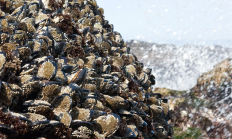
NEWPORT, Ore – Mussel harvesting is now open from Cascade Head to the California border the Oregon Department of Agriculture and Oregon Department of Fish and Wildlife announced today. Marine biotoxin levels in this area tested below the alert level. People should always call the Shellfish Safety Hotline at 1-800-448-2474…
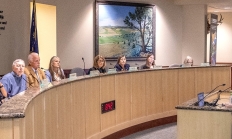
ODFW Director Debbie Colbert (at podium) and Coquille Tribe Chairwoman Brenda Meade (to the right in black jacket) on July 31, 2025 in Bandon, Ore. to announce a major step forward in their combined management effort on salmon recovery in the Coquille River. The first fall Chinook fishery since 2021…
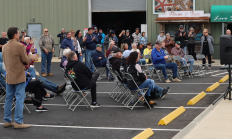
CLACKAMAS, Ore.— Fishery managers from Oregon and Washington extended hatchery steelhead retention for recreational anglers on the mainstem Columbia River downstream of The Dalles Dam using joint state action yesterday. Steelhead retention was initially planned to be closed in this area beginning August 1. With this extension, effective Friday, Aug…
