
Search myodfw.com
Showing 1441 - 1460 of 1722 results
Enterprise, Ore. – Beginning Friday, Sept. 19 through Friday, Oct. 31, harvest of wild adult Chinook salmon (non-adipose clipped, ≥ 24 inches) will be closed in the Snake River from the Oregon/Washington border upstream to Hells Canyon Dam. During this period, anglers may continue to harvest adipose-clipped (hatchery) fall Chinook…
KLAMATH FALLS, Ore. – Sept. 30 will be the last day to fish on Spencer Creek this year, as this tributary of the Klamath River will be closed as of Oct. 1 to protect spawning fall Chinook salmon. Spencer Creek has traditionally been closed to fishing from Nov. 1 to…
SALEM, Ore.—ODFW is seeking qualified applicants to fill one sport fishing position and one commercial salmon industry position on the Restoration and Enhancement (R&E) Program Board. Interested individuals must apply by Oct. 6, 2025, use this form on the R&E Board page. The ideal sport fishing candidate will be a…
ROSEBURG, Ore. – Learn how to hunt waterfowl or sharpen your skills in one of three waterfowl hunting workshops in Southern Oregon offered by the Oregon Department of Fish and Wildlife. ODFW hunter education specialists are teaching the workshops: Oct. 3: Klamath Falls, 6 p.m. – 9 p.m., Klamath Wildlife…
NEWPORT, Ore. – Oregon Department of Fish and Wildlife staff are hosting in person meetings Oct. 6, 7, and 8 to discuss the 2026 recreational bottomfish and Pacific halibut seasons with anglers. The Oct. 8 meeting in Newport also offers a virtual option. Meeting information: Oct. 6, Brookings: 5:30-7:30 p.m…
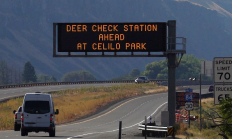
SALEM, Ore.—As 2025 deer and elk hunting seasons begin, ODFW is ramping up its Chronic Wasting Disease (CWD) surveillance statewide. Hunters are encouraged to take advantage of streamlined testing options and reminded that CWD check stations are mandatory to stop at when transporting harvested deer or elk. Sampling is quick…
SALEM, Ore – Mussel harvesting is now closed from Tillamook Head (south of Seaside) to the north Jetty of the Siuslaw River (Florence) the Oregon Department of Agriculture and the Oregon Department of Fish and Wildlife announced today. Recent mussel samples indicate levels of Paralytic Shellfish Poisoning (PSP) – a…
SALEM, Ore. — ODFW is seeking applicants to serve on two public advisory committees that support its Fish Screening and Fish Passage Programs. These programs play a vital role in protecting native fish populations across the state. Through collaboration with landowners, agencies, and conservation partners, the programs work to keep…
SALEM, Ore. — The Oregon Department of Fish and Wildlife is hosting a public meeting to review the agency's draft Endangered Species Management Plan for Southern Resident Orcas (SRO). The online-only meeting is July 9 from 6:30 p.m. – 8 p.m. ODFW staff will give a brief presentation of SRO…
LA GRANDE, Ore. – Lookingglass Creek, a tributary to the Grande Ronde River at Palmer Junction, will open for spring Chinook fishing Wednesday, June 18 through Sunday, June 29. The open area is from the mouth upstream to the confluence of Jarboe Creek. After early season projections made it appear…
PENDLETON, Ore. ‐ The Fish and Wildlife Commission adopted a limited fall Chinook fishing and retention season on the mainstem Umpqua, Smith, and North Fork Smith rivers after receiving many public comments and hearing testimony from a Douglas County Commissioner, business owners and local anglers concerned about a proposed closure…
CORVALLIS, Ore. — The Oregon Hatchery Research Center Board will meet in Corvallis on Tuesday, June 17 from 10:00 a.m. to 2:00 p.m. at the Oregon State University, Nash Hall Room 032, 2820 SW Campus Way. In addition to the regularly scheduled items, the agenda includes OHRC research updates, an…
SALEM Ore. – The Fish and Wildlife Commission meets June 12-13 for a field tour on Thursday and a regular meeting Friday. See the agenda here. The meeting will also be livestreamed from the Commission page. To testify on an agenda item virtually, register on the agenda page at least…
CLACKAMAS, Ore.—Fishery managers from Oregon and Washington expanded recreational spring Chinook days and retention on the mainstem Columbia River during a joint state hearing yesterday. There is remaining harvest allocation available for increased spring Chinook opportunity while staying within allowed ESA-impact rates and other management limits. The following changes were…
SALEM, Ore.—Do you have a love of hunting and passion for wildlife conservation? Are you knowledgeable about forestry and/or agriculture? If so, there are vacancies for a Landowner Representative and a Hunter Representative on the Access & Habitat (A&H) Board. Applications are being accepted by the Oregon Department of Fish…
SALEM, Ore. – The Private Forest Accord Mitigation Advisory Committee will hold its regularly occurring meeting, virtually on Tuesday, June 10, 2025. For a full agenda and virtual login information about the meeting, please visit: https://www.dfw.state.or.us/habitat/PFA/meetings.html The public is welcome to attend virtually. The Private Forest Accord Mitigation Fund was established…
BAKER CITY, Ore. – ODFW along with Baker County Parks will host a Free Fishing Day event at Holcomb Park, Brownlee Reservoir, on Saturday, June 7 from 10 a.m. to 3 p.m. This event is designed to help kids and their families learn fishing basics and enjoy a day outside…
CLACKAMAS, Ore.—Oregon and Washington fishery managers have finalized preseason planning for 2025 Columbia River summer and fall recreational salmon and steelhead fisheries. Forecasts for summer steelhead, sockeye, fall Chinook, and coho will allow opportunity for anglers to target these fish. The planned 2025 fall-season fisheries are primarily limited by the…
SALEM, Ore. – Razor clam harvesting is now open from the Washington/Oregon border to Cape Blanco, the Oregon Department of Agriculture and the Oregon Department of Fish and Wildlife announced today. Razor clamming had been closed from Cascade Head to the California border. But marine biotoxin levels have tested below…
SALEM, Ore.—Everyone can fish, clam and crab for free in Oregon on Saturday and Sunday, June 7-8, 2025. No fishing/shellfish licenses or tags (including a Combined Angling Tag or Columbia River Basin Endorsement or Two-Rod Validation) are required on these days. Both Oregon residents and nonresidents can fish for free. Oregon…