
Search myodfw.com
Showing 161 - 180 of 542 results

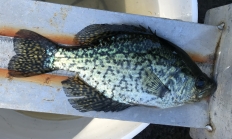
Features: Black crappie are silvery in color with numerous black or dark green blotches and no distinct vertical bars. This results in a darker overall color than seen in white crappie. The forehead is dished, but not as much as in the white crappie. The dorsal fin usually has seven or eight spines and its length is equal to or greater than the distance between the dorsal fin and eye. Habitat: Black crappie do best in clear waters of medium-sized lakes, reservoirs and large slow moving streams. They are less tolerant of flowing and muddy water than white crappie and…
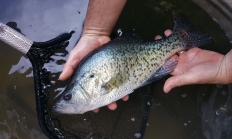
Features: White crappie are often confused with black crappie. White crappie have silvery bodies with blackish-green mottling forming narrow vertical bars on the sides. The forehead is more dished than in the black crappie. The dorsal fin has five or six spines and its length is less than the distance between the dorsal fin and eye. Habitat: White crappie do best in larger lakes and reservoirs and are more tolerant of turbidity and less dependent on aquatic vegetation than black crappie. They congregate around pilings, sunken logs, underwater brush, weed beds and rocks. White crappie begin life feeding primarily on…
Fish counting through Willamette Falls fishway occurs at the main viewing window. Video cameras and time lapsed video recorders are used to record fish passage 24 hrs/day, 365 days/year. Our schedule for reviewing the tapes is Monday through Friday.
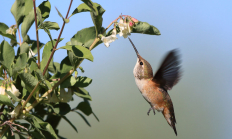
Find the weekly statistics for waterfowl and upland game birds at Summer Lake Wildlife Area. Bird counts at Summer Lake WA

Find maps, boundary descriptions and hunts available in the new Northeast Hunt Area. Download printable PDF map
Features: Greater sage-grouse are a large grouse species. They are mottled gray-brown with black undersides. Males have black on the head and throat, while females have white behind their eyes. Habitat: Sage-grouse were originally found through much of the sagebrush dominated areas of eastern Oregon, but were eliminated from large areas by the mid 1900s through conversion of land for agricultural purposes. There has been little change in sage-grouse range, however since the 1950s. They live exclusively in sagebrush steppe habitat. During dry years, they may be concentrated in the vicinity of water sources. Technique: Due to greater sage-grouse fluctuating…

Find the 2025-26 weekly statistics for waterfowl and upland game birds at Klamath Wildlife Area.
Find the weekly statistics for waterfowl and upland game birds at Denman Wildlife Area. More information about Denman Wildlife Area

SALEM, Ore. – The Oregon Conservation and Recreation Advisory Committee will meet on Tuesday, October 7, from 1:00 p.m. to 4:00 p.m. The committee will be discussing future grant offerings and strategic communications planning. For more information including an agenda visit: https://www.dfw.state.or.us/conservationstrategy/OCRF/meetings.html The Oregon Conservation and Recreation Fund (OCRF) is…
SALEM, Ore.–The Fish and Wildlife Commission will meet virtually on Friday, Oct. 10 from 8:30 a.m.-noon for a training related to cultural resources, tribal sovereignty, and tribal treaty rights. The meeting will be livestreamed from the Commission page and via ODFW's YouTube channel. Invited speakers will share information with the…
ROSEBURG, Ore – A temporary rule prohibits wild spring Chinook salmon harvest on the mainstem Umpqua River and keeps the North Umpqua bag limit the same as 2025, ODFW announced today. Feb. 1 – June 30, 2026: Mainstem Umpqua River: only hatchery spring Chinook may be kept. Harvesting wild spring…
NEWPORT, Ore. – ODFW is accepting nominations for a seat on the Pacific Fishery Management Council (Council). The three-year term for this Oregon at-large seat begins Aug. 11, 2026. Anyone interested in being considered, or wishing to nominate someone, must contact Jessica Watson at 541-351-1196 or jessica.l.watson@odfw.oregon.gov . Completed application…
NEWPORT, Ore. – To reduce the risk of humpback whale entanglements in commercial Dungeness crab gear, the Oregon Department of Fish and Wildlife is moving the May 1 "late-season" regulations to April 1 this year. These regulations require commercial crab fishermen to fish in waters less than 40 fathoms, use…
Features: Bullheads present in Oregon are distinguished from channel catfish by their square or rounded tails and lack of spotting. They seldom exceed 18 inches in length and a weight of 2 pounds. Yellow bullheads are a more uniform yellow color with white or cream chin barbels and a rounded tail. Habitat: Bullheads are found on the bottom in the shallows of mud-bottomed ponds, lakes, reservoirs and backwaters of rivers. The yellow bullhead is found mainly in the Willamette basin. Technique: Bullheads can be caught any month of the year, but fishing is best from the first warm days of…
