

Search myodfw.com
Showing 161 - 180 of 1415 results

Zones or Areas
This area extends from the eastern flanks of the Cascade Range through the Ochoco Mountains to the beginning of the Great Basin, making it a great place to explore.
Article
You can purchase an Oregon fishing license online or at an ODFW licensed vendor. Here are step-by-step directions for purchasing online.
December 18, 2025

Species and Subspecies
The Eastern fox squirrel is among the larger of the tree squirrels in Oregon. Its body is the typical squirrel shape. The ears are short, rounded, and without tufts. The tail is flattened and somewhat fluffy. In Oregon, it has been found in Multnomah, Washington, Marion, Lane, Union, Clackamas, Yamhill and Baker counties, all occurring in urban areas or in association with nut orchards. The Eastern fox squirrel is active throughout the year during daylight with its greatest activity in the early morning and late afternoon. During autumn, they are exceptionally active on the ground, scatter-hoarding nuts and acorns as…

Species and Subspecies
The Eastern gray squirrel is the smallest member of the genus in Oregon. This squirrel was introduced into Oregon and can now be found in Salem, Portland, Milwaukie, and Vale. All populations in Oregon have been found in urban areas. This squirrel is active throughout the year, activity restricted to daylight hours. Photo from Washington Fish and Wildlife

Landing page
Phillip W. Schneider Wildlife Area provides winter range for mule deer populations and year-round habitat for a variety of wildlife including mammals, birds, reptiles and amphibians. Elk, deer, and bighorn sheep viewing is often good during winter and early spring. Bird watching is excellent all year. Native habitats include sagebrush shrubland, riparian, ponderosa pine forest, western juniper woodland and mixed conifer which support a diversity of fish and wildlife. The riparian areas along the mainstem John Day River, South Fork John Day River and Murderers Creek provide excellent habitat for many birds. Upland areas provide important habitat for passerines and…
February 21, 2018
Article
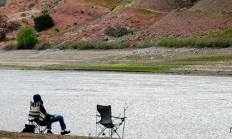
Most warmwater anglers traveling to the northeast area are probably heading to Brownlee Reservoir, a huge 15,000 acre waterbody located along the Oregon-Idaho Reservoir on the Snake River. Brownlee offers outstanding fishing for bass and catfish, but might be best known for its crappie fishery which attracts anglers from throughout the country. However, anglers shouldn't overlook the other fishing opportunities located further downstream below Brownlee in Oxbow and Hells Canyon Reservoirs, and in the Snake River itself. Even in the lower Grand Ronde, a river better known for trout and steelhead, anglers will find good smallmouth bass fishing during the…
Press Release
CANYON CITY, Ore.- A poacher investigated for more than 50 crimes committed in Grant County between 2023 and 2024 was sentenced to 95 days behind bars and more than $22,000 in restitution and fines, according to wildlife officials. In what wildlife enforcement officers refer to as a serial poaching case…
June 24, 2025
Article
ODFW wants to make sure our uniformed service members are given the opportunity to participate in the outdoor recreation Oregon has to offer.
April 15, 2026
Article
Oregon’s population of about 6,000 cougars occupies a wide variety of habitat across the state, offering a year-round, readily-accessible hunting opportunity.
August 29, 2019

Article
Conservation is at the heart of what ODFW does, and your support is important in the work to help Oregon's most vulnerable species and precious habitats.

Landing page
Lower Deschutes Wildlife Area was established in 1983, with the initial donation of land by the Oregon Wildlife Foundation (OWF) of 2,758 acres. In 1986 OWHF donated an additional 5,158 acres of land to the department. The Lower Deschutes Wildlife Area was initially established to provide permanent public angler access. However, especially with the 1986 acquisition, the wildlife area has grown to provide enhanced wildlife and fish habitat (i.e. through removal of livestock, riparian vegetation improvements, etc.) and more wildlife-oriented recreational activities such as hunting, boating, hiking and biking. In 2015, ODFW partnered with the Trust for Public Land to…
February 09, 2018
Article
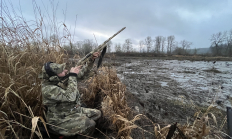
The Minam River Wildlife Area harbors a wide variety of fish, wildlife and their habitats. Anglers can enjoy trout and mountain whitefish fishing, hunters can target deer and elk, and hikers can follow the Minam River Trail to the Eagle Cap Wilderness.

Article
Love the taste of crab and want to try harvesting your own? Already at the beach and looking for a family-friendly activity? Here are some areas to find your favorite seafood and have a fun day on the coast.

Article
The southeast area covers the high desert country of Harney and Malheur counties and is the most arid region of Oregon. Extended dry periods or droughts can affect the warmwater fisheries in this area, but these can be quick to rebound when water returns. The area’s most popular warmwater fishery is found in Owyhee Reservoir, a huge nearly 14,000 acre reservoir located on the Owyhee River south of Ontario that offers outstanding fishing for bass, crappie and catfish. There are few roads to and along Owyhee, but those with a boat will be rewarded with remote and spectacular scenery. Other…

Article
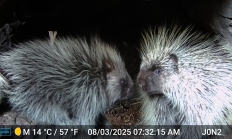
Porcupines may be one of Oregon's most recognizable wildlife, but surprisingly little is known about them—especially in Central Oregon.
September 5, 2025
Recreation Report
CENTRAL WILDLIFE VIEWING June 25, 2026 Crook County Spring ungulate migration will soon be upon us. You can find mule deer transitioning from low elevation winter feeding areas to the higher elevation sagebrush and agricultural areas. There are red-tailed, rough-legged and ferruginous hawks, northern harriers, American kestrels, prairie falcons and golden eagles throughout Crook County and they're usually associated more closely with open/agricultural areas. Bald eagles and ospreys, on the other hand, are more closely associated with water bodies. Look for northern goshawks throughout the Ochoco National Forest, and for ducks and geese in rivers and lakes. Prineville Reservoir Wildlife…
September 05, 2017
Article
We've asked our fish biologists throughout the state to pick their favorite family fishing locations. These spots are great for novice and experienced anglers alike.
