Search myodfw.com
Showing 1 - 20 of 493 results
Oregon's 33 hatcheries produce about 40 million fish annually and you can visit them. They offer the chance to see fish – from eggs to brooders – and an opportunity to learn how they are raised. Oregon's hatcheries are important for anglers and the public because they directly provide fish for angling, help rebuild native fish populations, and offer educational programs. They are also vital to supporting the cultural heritage of Tribes. Hatcheries offer great wildlife viewing, interpretive displays and some provide boating and angling access. Did you know that ODFW rears 10 species of fish including steelhead/rainbow trout, brook…
ODFW manages 20 wildlife areas across the state, each with a unique blend of fishing, hunting and wildlife viewing opportunities. Remember, you'll need a Wildlife Area Parking Permit for your visit. See the map and listing below to find the wildlife area nearest you.
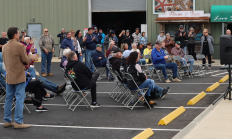
ODFW Director Debbie Colbert (at podium) and Coquille Tribe Chairwoman Brenda Meade (to the right in black jacket) on July 31, 2025 in Bandon, Ore. to announce a major step forward in their combined management effort on salmon recovery in the Coquille River. The first fall Chinook fishery since 2021…
The Winchester Dam was built in November 1890 and is in the National Register of Historical Places. Constructed from large timber cribs, the dam was originally built 4-feet high and in 1907 the dam was raised to sixteen feet. Winchester Dam provided water and electricity for the town of Roseburg until 1923. In December 1945 a more permanent fish ladder and the first fish counting station on Winchester Dam was built. Two counters working the daylight hours, counted fish that swim over a white board located about four feet below the counter. The ladder was closed when counting was no…
This large arctic gull visits the Northwest in winter where its pale bulk often stands out in gull flocks. Finding one is a highlight of winter birding. Even at a distance the size and frosty tones of this bird can be spotted in a flock. Most Oregon birds are in the whitish first-or-second-year plumage showing a pinkish bill with sharply delineated black tip, but third-year birds and adults occur now and then, mainly on the north coast and at Sauvie Island. They are rare but regular along the coast and the Columbia River, and rare in the Willamette Valley. It…


Summer Lake Wildlife Area was established in 1944, with primary objectives of protecting and improving waterfowl habitat and providing a public hunting area. It is now a popular destination for hunting, wildlife viewing and environmental education due to its geographic setting, the abundance of wildlife present and species diversity.


SALEM, Ore.—As 2025 deer and elk hunting seasons begin, ODFW is ramping up its Chronic Wasting Disease (CWD) surveillance statewide. Hunters are encouraged to take advantage of streamlined testing options and reminded that CWD check stations are mandatory to stop at when transporting harvested deer or elk. Sampling is quick…

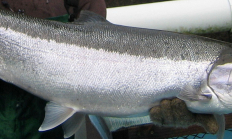
The Dalles, Ore.—The lower Deschutes River will be open for spring Chinook salmon from May 5-20. "This is exciting news for anglers as the last spring Chinook season on the Deschutes was in 2018," said Jason Seals, Deschutes District Fish Biologist. "We're expecting a return of more than 2,000 hatchery…
Returning adult salmon and steelhead enter the fish ladder on the south side of the dam and are held in a 12’ x 40’ trap until they can be processed by ODFW’s South Santiam Hatchery staff. Hatchery employees operate the fish trap one to three times per week depending on the time of year and numbers of adults returning to the system. An average of 4,000 spring Chinook, 4,700 summer steelhead, and 670 winter steelhead are collected annually. All unmarked spring Chinook and winter steelhead are returned to their native habitats in the South Fork of the Santiam above Foster…
Central Point, Ore. – Hunters and recreationists who plan to use the Jackson Cooperative Travel Management Area (TMA) should download the newest version of the georeferenced .pdf map. updated on Oct. 14. There have been major changes this year, so users should double check where they plan to access. These…

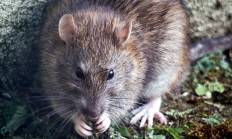
The Norway rat is the largest member of the subfamily in Oregon. This heavy-bodied rat has a scantily haired, scaly tail shorter than the length of the head and body. The ears are membranous and lightly furred. The pelage is course, a grizzled brownish or rusty gray dorsally and dirty white to yellowish gray ventrally. Albino, melanistic, and spotted specimens are known to occur in free-living populations. This rat is distributed throughout the world in association with humans and in Oregon is found in most of the counties west of the Cascade Range and from some counties along the Columbia…
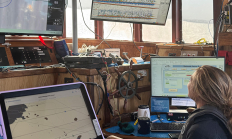
ODFW Marine Resources Program's Alex Copeland monitors scientific fish finders on board the research vessel. ODFW photo. NEWPORT, Ore. – Oregon Department of Fish and Wildlife's Marine Fisheries Research team is conducting a nearly 10-week at-sea survey to better understand the population status of black, blue, and deacon rockfish—three species…