Search myodfw.com
Showing 881 - 900 of 1673 results
Article
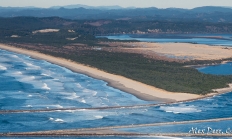
Salmon, steelhead and smallmouth bass offer world-class fishing here year-round. Rainbow trout are stocked in the upper Rogue and in lakes nestled in settings as varied as fir forest and wind-swept dune. Big reservoirs provide fishing for trout and for thriving populations of largemouth bass, catfish, perch and crappie. Coastal bays serve as gateways to rich offshore reef fisheries, and miles of public beach welcome anglers to fish for surfperch against a backdrop of rugged capes.
Article
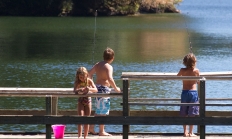
Abundant rainfall feeds the massive Willamette River watershed, tamed by a system of reservoirs stocked annually with hundreds of thousands of rainbow trout. Some of these reservoirs also grow trophy-size largemouth and smallmouth bass, and lots of bluegill, brown bullhead and crappies. Salmon and steelhead navigate the Willamette and its productive tributaries, many of which are also home to rainbow and cutthroat trout.
Article
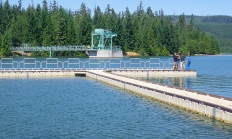
Known for its high desert climate, sage-covered canyons, glacial peaks and mountain lakes, this zone is defined by the reach of Oregon’s finest trout stream. The Deschutes River is no bigger than a creek when it passes close by South Twin Lake on its way toward Wickiup and Crane Prairie reservoirs. But it soon gains power enough to grow athletic rainbow trout. The considerably tamer Crooked River offers good practice if you’re just learning how to keep your footing in a slippery freestone stream.

Article
Wide open spaces, wild windy places, and extreme temperatures characterize Oregon’s largest, most remote fishing zone. Scarcity makes water especially precious here, providing welcome oases in an often rugged, but spectacular landscape. Rainbow trout are native to its streams, including the Williamson, Malheur and Chewaucan rivers. And stocked rainbow and brown trout grow to trophy size in many of its lakes and reservoirs.
Article
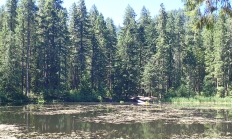
The granite peaks of Oregon’s Blue and Wallowa Mountains form the backdrop for many of this zone’s glacier-carved lakes and crystalline streams. Pack trains are a common sight on steep backcountry trails. Bull trout thrive in this zone’s cold, clear rivers, which also sustain rainbow trout and welcome returning runs of hatchery-reared steelhead. Warmwater fisheries are few, but the John Day River offers world-class fishing for smallmouth bass.

Article
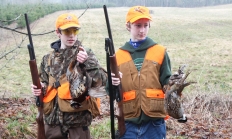
Mentored Youth Hunter Program allows youth 9 through 15 years of age to hunt without first passing an approved hunter safety education program. It gives unlicensed youngsters an unlimited opportunity to receive mentored, one-on-one field experience and training on the ethics, safety, responsibility and enjoyment of hunting while closely supervised by a licensed adult who is 21 years of age or older and who has a valid license and tag(s) for the dates, area and species being hunted. Register for the Mentored Youth Hunter Program free of charge online (or after clicking the online link – go to Purchase from…
April 27, 2026
Article
Dove hunting seasons open earlier than many others and offer one of the first opportunities to go afield each year. The action can be fast, offering lots of opportunities to shoot and the chance to sharpen your skills for the opening of other bird seasons later in the fall.

Article
Rabbit hunting is the third most popular type of hunting activity in the U.S., behind wild turkey and deer hunting. Few people take advantage of it in Oregon, but they should—rabbits and hares are abundant and there is no closed season or bag limit. Plus, they taste good!

Article
Oregon offers some of the best upland game bird hunting in the West. The state’s diverse habitats support nine species of upland game birds— pheasants, chukar, Hungarian partridge, valley (California) quail, mountain quail, ruffed grouse, blue grouse, sage-grouse and wild turkey. There are upland hunting opportunities in every corner of the state, and one upland bird season or another is open continuously from September 1 through January 31. Throw in a six-week spring turkey season and you can hunt upland game birds in Oregon for more than half of the year! Also, since many of the species share similar habitat…
August 18, 2025

Article
Oregon supports diverse waterfowl populations, from sea ducks in coastal saltwater to puddle ducks in the alkali basins of southeast Oregon. You might think you need lots of gear (decoys, boats, a trained dog) to hunt ducks and geese, but you don’t. All of these things are nice but not necessary. All you really need is a hunting license/tag, shotgun, shells and some basic identification skills.

Article
Just a few miles south of Newport, the town of Waldport is on the shores of Alsea Bay. It is one of Oregon’s estuaries that does not have jetties at the ocean entrance. Strong outgoing tides and ocean swell can make boating near the mouth of the bay more dangerous. Use caution and be prepared if you crab in this area.

Article
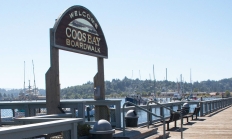
Coos Bay is Oregon’s largest bay. The lower bay (areas from the ocean entrance to the airport) is “marine dominated”, meaning there is little freshwater influence, and offers some of Oregon’s most productive shellfishing opportunities.
Article
The areas around Bandon, on the Coquille River, have productive softshell beds. The areas near Bandon Marsh National Wildlife Refuge tend to be the most popular. Populations of other bay clams may be found close to the jettys but are mostly subtidal.

Article
Nehalem Bay offers both beach and boat access to softshell and purple varnish clam beds.
Article
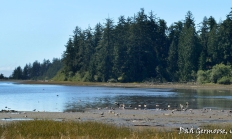
You'll find crab areas and softshell clamming opportunities in the southern part of the bay.

Article
Clamming is the main attraction in Netarts Bay. The bay is also one of five major crabbing bays in Oregon with good populations of both Dungeness and redrock crab.
Article
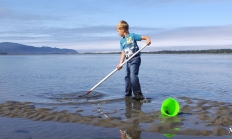
Siletz Bay, located at the south end of Lincoln City, is a very popular destination for beach-goers and clam diggers. Some of the highest density purple varnish clam beds are easily accessed here. Its proximity to the ocean also makes it a very productive seasonal crabbing area

Article
The Siuslaw River runs past the city of Florence and then flows for 4 miles before reaching the Pacific ocean. Areas west of the 101 bridge feature excellent seasonal crabbing and even some good diving.

Article
Crabbing can be good year-round but the best catches are in the winter. Tidal flats throughout the bay produce lots of gapers, cockles and softshell clams.

Article
Umpqua River is one of Oregon's largest estuaries; however, high freshwater influence makes the bay seasonal for crabbing. Softshell clam populations in the Umpqua River are among the highest in the state, and they are large clams. Razor clams can be dug at the North Jetty of the Umpqua, though its a long drive down Sparrow Park Rd. (just north of Gardiner), then South along the beach about 8 miles.