Search myodfw.com
Showing 21 - 40 of 493 results
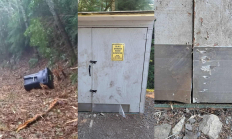
A black bear tried its best to get into a Neskowin homeowner's bear resistant trash can. The homeowner then built a small shed to enclose the trash can. The persistent bear left its prints and claw marks on the shed but did not succeed in breaking into it. This resident…
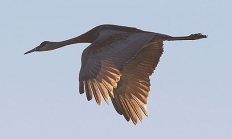
The Greater sandhill crane is Oregon's tallest bird. This large majestic crane has a guttural gurgling or bugling call, and is easily noticed in flight by its profile, with long neck and head extending straight ahead and long legs trailing behind. The Greater sandhill crane is distinguished by its red crown and white cheek patches, contrasting with with a light gray body. Fledged young resemble adults, but have a feathered forehead, a lighter tawny plumage, and lack the red crown and white cheek patches during their first fall. Fledged young have a squeaky cheap call often heard in flight during…
The information provided here is intended to help you get an idea of your odds of drawing a reservation in the Eastside and Oak Island hunt areas. First off, the number of permits available in each hunt unit does change throughout the season. See the NUMBER OF RESERVATIONS AVAILABLE FOR EASTSIDE AND OAK ISLAND UNITS link to view the number of permits that are available for each unit and hunt period.
Lower Deschutes Wildlife Area was established in 1983, with the initial donation of land by the Oregon Wildlife Foundation (OWF) of 2,758 acres. In 1986 OWHF donated an additional 5,158 acres of land to the department. The Lower Deschutes Wildlife Area was initially established to provide permanent public angler access. However, especially with the 1986 acquisition, the wildlife area has grown to provide enhanced wildlife and fish habitat (i.e. through removal of livestock, riparian vegetation improvements, etc.) and more wildlife-oriented recreational activities such as hunting, boating, hiking and biking. In 2015, ODFW partnered with the Trust for Public Land to…

Gulls and terns can be seen year-round in Oregon, depending on the species. Gulls like open areas around water bodies and are frequently seen where human food is concentrated, such as dumps or restaurants. Terns are in the same family and usually are smaller and more slender.

Fish counting through Willamette Falls fishway occurs at the main viewing window. Video cameras and time lapsed video recorders are used to record fish passage 24 hrs/day, 365 days/year. Our schedule for reviewing the tapes is Monday through Friday.
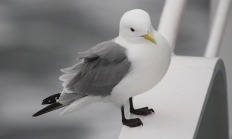
These small agile gulls are predominantly pelagic, but can often be seen from shore and even idling around lower estuaries. It is found primarily on salt water and does not usually forage in dumps and pastures as most gulls do; rather it stays over open ocean, along beaches and in lower estuaries, sometimes resting on the water or on jetties, sand spits and similar bare areas. They are often attracted to feeding swarms of loons, pelicans, tubenoses and other seabirds. The Black-legged kittiwake is a migrant and winter resident in Oregon along the outer coast and offshore. Peak numbers are…

Establishment of the Bridge Creek Wildlife Area initially started in 1961 when a parcel of land was purchased from the Frank Hilbert estate. After the initial purchase, several private holdings were acquired to consolidate the land under department ownership. The last parcel was purchased from the Colvin Cattle Company in 1975. The primary purpose of the wildlife area is to maintain and protect a key historic winter range for Rocky Mountain elk ( Cervus elaphus nelsoni).

The mottled petrel breeds in New Zealand and nearby islands, and ranges throughout much of the Pacific Ocean, mostly far from land. It is a common May to October visitant in the northern and eastern North Pacific, with non-breeding birds occurring during the winter months. Photo by Dominique, Flickr