Search myodfw.com
There are fundamental differences between turkey hunting with a bow and a shotgun, including effective range, shot placement and set up. Effective shooting distance Your effective shooting distance (how far you can be from a turkey and likely kill it with a single shot) will vary with the level of your shooting skills and the type of equipment you’re using. A good rule of thumb for shotgun shooters is 40 yards. Anything further than that and there’s a good chance you might not hit the head and neck with enough pellets to kill the bird. Any closer than 20 yards
There are basic rules of safety and etiquette that apply at archery ranges. Be sure you’re following them. Etiquette on the range Etiquette is an important part of a fun, positive and safe experience on the archery range. Proper range etiquette starts with safety, for you and others around you. Keep arrows pointed down range. Give fellow shooters plenty of space, and never cross into their shooting lane with your body or equipment. Pay attention to what ’s going on around you, especially when leaving or entering the shooting line. Straddle the shooting line -- one foot on each side
The Oregon Fish and Wildlife Commission conducts hybrid public meetings, allowing for testimony either in person or virtually. Meetings are also livestreamed from the Commission page and the ODFW YouTube channel. Per statute ORS 496.108(5), the Commission must hold one meeting per year in each Congressional District. Meeting dates and locations are scheduled a year in advance and can't always align with the local community impacted by regulation changes, another reason why they are hybrid. Meetings begin at 8:00 a.m. and proceed chronologically through the published agenda. The Commission will take a lunch recess as close to noon as the agenda
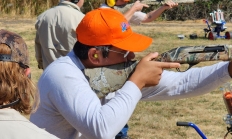
Hunting involves a deadly weapon that can kill more than just your target. Hunting and handling your gun safely MUST be a top priority. Start with the fundamentals Start by learning these four gun safety fundamentals and you’ll be well on you way to a lifetime of safe hunting. Assume all guns are always loaded. The primary benefit of handling all guns as if they were loaded, is that it will help you develop safe gun handling habits. Never let the muzzle of the gun (the shooting end) point at something you’re not willing to shoot. Often referred to as
Our Mission The Oregon Department of Fish and Wildlife (ODFW) Hunter Recruitment Program is dedicated to strengthening and growing Oregon's hunting and shooting sports community. We provide hands-on skills training, promote a culture of safety, ethics, and conservation, and foster a positive public perception of hunting and shooting sports. Our goal is to build confidence, knowledge, and skills for both new and seasoned hunters, supporting a lasting connection to Oregon's rich outdoor traditions. Workshops are offered statewide throughout the year. View and register for an upcoming event: Classes and W or kshops.
There are two steps in patterning your gun: Verify your point of impact. Confirm the pellets are hitting where you’re aiming. Often called sighting in. Check the pattern of the pellets to see what loads shoot most accurately. Often called patterning. Sight in scopes and fiber optic sites If you’re shooting a shotgun with a single bead on top of the barrel, you can go right to patterning. If you’re shooting a shotgun mounted with a scope or reflex sight, or a fiber optic front and rear site, you’ll need to sight in the gun before you pattern it. Start
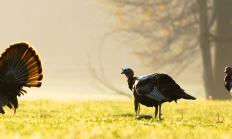
In the spring, hunters try to take advantage of a tom’s predicted behavior during breeding season to bag a bird. In the fall, hunters fill their turkey tags by studying food sources and the daily routine of birds. Turkeys follow food sources As fall progresses, food sources for turkeys change. In late summer and early fall, turkeys largely feed on high-protein insects. Grasshoppers are a primary food source throughout Oregon this time of year. Silk worms, caterpillars, spiders and other bugs make up a good part of a turkey ’s fall diet. As fall leads to winter, earthworms and a
Whether you ’re turkey hunting with a bow or shotgun, you’ll need to know when to take the shot. If you’re using a shotgun, the best shot will be at the head, preferably when it’s outstretched away from the bird’s body. Bowhunters will want to know something about turkey anatomy so they’ll recognize when they have a clear kill shot to a vital organ. Make sure it’s safe to shoot In addition to having a good shot at a bird, you’ll want to make sure there are no other hunters, livestock or other turkeys nearby that you could hit by
If you're a current bird hunter – upland or waterfowl – chances are you already have a shotgun you can use for turkey hunting. If you’re a new hunter here are some tips for buying a shotgun.
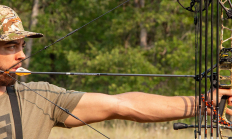
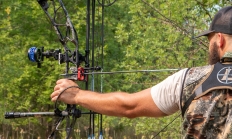
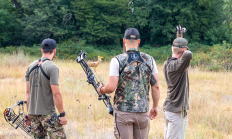
The modern compound bow is the most popular choice for turkey hunting, but traditional recurve and longbows also have their fans. Hunting with crossbows is illegal in Oregon. If you already have a bow you use for deer or elk hunting, it will work fine for turkey Many turkey hunters, though, like to reduce the draw weight of their deer/elk hunting bow to 45 pounds or less for turkey. Unlike deer and elk hunting, where you’re usually standing or kneeling when you take a shot, you’re likely to be sitting when shooting a turkey. In this case, a lighter draw
The variety of available shotgun shells can be dizzying, and there are more being introduced all the time. But taking into account the size of your shotgun and your intended target will help you narrow the choices to a more manageable number. Where to find shell information When you buy shells, the box they’re in will be labeled with the gauge, shell length, amount of shot inside the shell (in ounces), the size of shot and how many feet per second the load travels. Some of this information may also be printed on each shell to help you identify loose
Big Creek Hatchery began operation in 1941. It was refurbished in 1957 under the Mitchell Act as part of the Columbia River Fisheries Development Program – a program to enhance declining fish runs in the Columbia River Basin. The facility is used for adult collection, egg incubation and rearing of winter steelhead, fall Chinook, and coho.
3D Archery event Aug. 2-3 at Denman Wildlife Area
CENTRAL POINT, Ore. – The Oregon Department of Fish and Wildlife is hosting a family-friendly 3D archery event Aug. 2-3 at the Military Slough tract on Denman Wildlife Area. For just $10 (cash only, pay at entrance), archers can take shots at 40 3D animal targets on a two-mile course along…