

Search myodfw.com
Showing 201 - 220 of 903 results
Article
Hunter's Bounty Hunter's Plan Hunter's Guide Hunter's Resources The goal in using key elements to spot the bird before it spots you include moving slowly and quietly, maintaining situational awareness, being patient and approaching your hunt area undetected.
March 25, 2026
Article
What to get for family and friends who love the outdoors—the birder, hiker, aspiring angler, avid hunter or neighbor who cares deeply about conservation? Here's a list of gift ideas that get them outdoors the entire year or contribute to conserving fish, wildlife and their habitats.

Article
Outbreaks of highly pathogenic avian influenza have caused the death of many wild and domestic birds in Oregon since 2022. Here's what hunters and others need to know about the disease.
Zones or Areas
From the eastern flanks of Crater Lake National Park through the national forests of Douglas fir and ponderosa pine forests to the California border, there's plenty of public land to find your hunt.
Article
Oregon offers some great opportunities for the first-time hunter -- from deer and elk, to geese and ducks, to chukar and pheasants. Here are a few pointers to help you get started. Hunter's Guide Hunter's Resources Hunter's Technique Hunter's Bounty
October 30, 2025
Species and Subspecies
Features: The pronghorn is deer-sized (up to 150 lbs) with relatively long and thin legs and feet, only two digits on each foot (no "dew claws"), a relatively small tail, and unique horns. Bright white sides, underside and rear end help hunters spot them in the field. Habitat: Pronghorn are found in the High Desert sagebrush of eastern Oregon and the Columbia Plateau. Techniques: Most pronghorn hunts happen in August, before other big game seasons, so be ready for the High Desert’s warm summer temperatures. All pronghorn hunting is limited entry (apply by May 15) and it can take several…

Species and Subspecies
Features: Rocky Mountain elk are one of two subspecies of elk found in Oregon, with a population estimate of more than 74,000 in the state. They are lighter in color and slightly smaller in size than Roosevelt elk, but their antlers are the largest of all elk and can weigh up to 40 pounds. Habitat: Rocky Mountain elk inhabit most of eastern Oregon with concentrations in the Blue Mountains and south-central Oregon. Techniques: Rocky Mountain elk live in much more open country that Roosevelts so try glassing, still hunting, spot and stalk and calling. Rifle, archery and muzzleloader seasons are…

Species and Subspecies
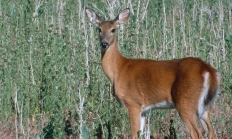
Features: Oregon’s rarest deer has a brown tail that is longer than a blacktail’s wide tail. Its antlers will branch off from a single main beam, unlike mule deer and blacktail antlers that branch twice. Habitat: The Columbian whitetail is a subspecies unique to Oregon and southwest Washington and found in just a few locations—along the lower Columbia River in Oregon and Washington, and in the Umpqua Basin near Roseburg (where it is expanding its range). Techniques: Just a few controlled hunts for this subspecies exist in the Umpqua Basin region and tags are limited; see the regulations for details.
Press Release
CENTRAL POINT, Ore. – ODFW is looking for a landowner representative to serve on the Access and Habitat (A&H) Program's Southwest Region Council. This position is voluntary with a four-year term and an option to be reappointed to a second term. Interested applicants can find the regional application packet at…
May 12, 2026
Species and Subspecies
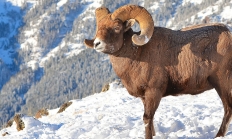
Features: Rocky Mountain bighorn sheep are the largest-bodied bighorn in North America and one of two subspecies of wild sheep in Oregon. Bighorn sheep were extirpated from the state in the 1800s so current populations are the result of a reintroduction effort by ODFW and sportsman groups. Habitat: Oregon’s estimated 800 Rocky Mountain bighorn sheep are found in the northeast corner of the state, in canyons of the Snake River and its tributaries and in alpine areas of the Wallowa Mountains. Techniques: Bighorn sheep are one of the rarest game species hunted in Oregon today, with about 100 tags available…
Species and Subspecies
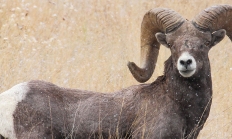
Features: California bighorn sheep are one of two subspecies of wild sheep in Oregon. They are usually smaller, with a less blocky build and smaller horns than Rocky Mountain bighorn sheep. Bighorn sheep were extirpated from the state in the 1800s. Current populations are the result of a reintroduction effort by ODFW and sportsman groups. Habitat: California bighorn sheep are the most abundant subspecies in Oregon with an estimated 3,700 found among 32 herds in central and southeast Oregon. They prefer rugged, open habitats with a good view of their surroundings. Techniques: Bighorn sheep are one of the rarest game…
Landing page
The Columbia Basin Wildlife Areas are a composition of four Oregon Department of Fish and Wildlife (department) managed wildlife areas located along the Columbia River, in the Columbia Basin. The four wildlife areas (Power City, Irrigon, Coyote Springs and Willow Creek) are within the Columbia Plateau ecoregion. Management agreements for these areas were initially established between 1971 and 1977 between the department and Federal agencies which own the lands. The Columbia Basin Wildlife Areas, which total approximately 1,885 acres, provide an important landbase for the conservation and recreation of fish and wildlife within a highly privatized and altered landscape and…
February 21, 2018
Workshop and Events
Date
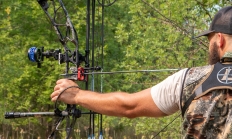
June: Bowhunter safety education & Bowhunter skills
Location
Multiple locations
Landing page
The Columbia Basin Wildlife Areas are a composition of four Oregon Dept of Fish & Wildlife managed wildlife areas located along the Columbia River, in the Columbia Basin. The four wildlife areas (Power City, Irrigon, Coyote Springs and Willow Creek) are within the Columbia Plateau ecoregion. Management agreements for these areas were initially established between 1971 and 1977 between the department and Federal agencies which owns the lands. The Columbia Basin Wildlife Areas, which total approximately 1,885 acres, provide an important landbase for the conservation and recreation of fish and wildlife within a highly privatized and altered landscape and play…
February 21, 2018
Article
ODFW wants to make sure our uniformed service members are given the opportunity to participate in the outdoor recreation Oregon has to offer.
April 15, 2026
Landing page
The Columbia Basin Wildlife Areas are a composition of four Oregon Dept. of Fish & Wildlife managed wildlife areas located along the Columbia River in the Columbia Basin. The four wildlife areas (Power City, Irrigon, Coyote Springs, and Willow Creek) are within the Columbia Plateau ecoregion. Management agreements for these areas were initially established between 1971 and 1977 between the department and Federal agencies which own the lands. The Columbia Basin Wildlife Areas, which total approximately 1,885 acres, provides an important landbase for the conservation and recreation of fish and wildlife within a highly privatized and altered landscape and play…
February 21, 2018
Article
You caught it, now it's time to cook it—and what better time than during a holiday meal with your family and friends. We rounded up some recipes from various hunting and fishing organizations.
November 6, 2025

Recreation Report
CENTRAL WILDLIFE VIEWING May 21, 2026 Crook County Spring ungulate migration will soon be upon us. You can find mule deer transitioning from low elevation winter feeding areas to the higher elevation sagebrush and agricultural areas. There are red-tailed, rough-legged and ferruginous hawks, northern harriers, American kestrels, prairie falcons and golden eagles throughout Crook County and they're usually associated more closely with open/agricultural areas. Bald eagles and ospreys, on the other hand, are more closely associated with water bodies. Look for northern goshawks throughout the Ochoco National Forest, and for ducks and geese in rivers and lakes. Prineville Reservoir Wildlife…
September 05, 2017