Search myodfw.com
Showing 341 - 360 of 1017 results
The Columbia Basin Wildlife Areas are a composition of four Oregon Dept of Fish & Wildlife managed wildlife areas located along the Columbia River, in the Columbia Basin. The four wildlife areas (Power City, Irrigon, Coyote Springs and Willow Creek) are within the Columbia Plateau ecoregion. Management agreements for these areas were initially established between 1971 and 1977 between the department and Federal agencies which owns the lands. The Columbia Basin Wildlife Areas, which total approximately 1,885 acres, provide an important landbase for the conservation and recreation of fish and wildlife within a highly privatized and altered landscape and play…
MARINE WILDLIFE VIEWING September 17, 2026 Recreating in drought and wildfire season - actions you can take to protect wildlife . For the most current fire closures and restrictions-- KNOW BEFORE YOU GO . The Oregon coast is a great place to come and view a variety of wildlife. Enjoy the great diversity of life: from giant whales and barking sea lions to majestic bald eagles and diving pelicans, to showy Harlequin ducks and flocking shorebirds, to the tiny anemones and crabs inhabiting tidepools. There is always something new to discover. Visit our wildlife viewing map for locations to visit and view wildlife along the Oregon…
CENTRAL POINT, Ore. – The Oregon Department of Fish and Wildlife is giving away free wildlife forage seed to landowners in Central Point, Grants Pass, and Gold Beach on Wed., Oct. 1. Landowners are eligible for two 15-pound bags of seed to cover at least one acre of habitat for…
Located near the Elkhorn Mountain Range, Elkhorn Wildlife Area is best known for Rocky Mountain elk and mule deer herds that use the area during the winter. To keep deer and elk from feeding on agriculture lands when they come down from snow-covered higher elevations, ODFW operates 10 feeding sites on the area to feed 1,400 elk and 800 deer during the winter months.
NW WILDLIFE VIEWING September 17, 2026 Recreating in drought and wildfire season - actions you can take to protect wildlife . For the most current fire closures and restrictions-- KNOW BEFORE YOU GO . Tillamook County Birds At this time of year, herons and egrets can be seen hunting amphibians and small mammals in local farm fields. Bald eagle pairs can be viewed near estuaries and rivers. Clatsop County Birds Coastal storm-watchers may find interesting pelagic species pushed closer to shore by the rough weather. Some species which may be viewed during and just after storms include skuas, jaegers, petrels, storm…
A quiet, modest, unobtrusive little bird that must be sought to be seen in its shady retreats, this little-studied species can easily be overlooked. It is typically associated with oaks and mixed woodlands, where it hops along the foliage hunting for insects. In winter it forages with flocks of chickadees, kinglets, and nuthatches. This is Oregon's only resident vireo. Although it is sometimes referred to as non-migratory, some seasonal movement has been observed. Similar in appearance and behavior to the more common and widespread Ruby-crowned kinglet. Hear the song of the Hutton's vireo Photo by Greg Gilson

This majestically crested bird is often heard before being seen due to its conspicuous harsh rattling call. Kingfishers are most frequently associated with lake and pond shorelines and islands, as well as coastal dunes with ponds and widely scattered shrubs and trees. They hunt from a vantage point above water such as an overhead branch, telephone wires along shore lines or pilings of piers. This is a common permanent resident throughout most of the state except in the north Lake and east Deschutes counties where open water is generally absent Hear the call of the belted kingfisher Photo from ODFW

The Columbia Basin Wildlife Areas are a composition of four Oregon Department of Fish and Wildlife (department) managed wildlife areas located along the Columbia River, in the Columbia Basin. The four wildlife areas (Power City, Irrigon, Coyote Springs and Willow Creek) are within the Columbia Plateau ecoregion. Management agreements for these areas were initially established between 1971 and 1977 between the department and Federal agencies which own the lands. The Columbia Basin Wildlife Areas, which total approximately 1,885 acres, provide an important landbase for the conservation and recreation of fish and wildlife within a highly privatized and altered landscape and…
The E.E. Wilson Wildlife Area came into existence in 1950 when the U.S. Government gave quitclaim title to the property to the Oregon Department of Fish and Wildlife. The wildlife area covers approximately 1,788 acres, is located on Highway 99W about 10 miles north of Corvallis and is situated on the Willamette Valley floor. SHOTGUN RANGE BACK OPEN AS OF LATE OCTOBER 2025: The renovation is complete and the shotgun range is back open. Improvements include: four times as many shooting lanes, fully paved ADA-compliant walkway with pullouts that will make it easier for disabled shooters, a new covered pole…
Coquille Valley Wildlife Area was initially established in 2013 with two equally important primary objectives; (1) To protect, enhance, and restore fish and wildlife habitats located on the WA, and (2) to provide a wide variety of wildlife-oriented recreational and educational opportunities to the public.
Game bird seasons in Oregon run from July 1 to June 30, which means you'll need to purchase new upland and waterfowl validations before you hunt again in the fall. If you have questions or need assistance, please call ODFW licensing staff at 503-947-6101. Buy License Check current Game Bird Regulations for details on licenses, tags, permits and validations. Purchase the federal duck stamp here to prepare for waterfowl season. Special permits-applications-forms *Use current published regulations by downloading a .pdf on your device. (AI-may contain inaccurate data).

With short pointed wings and long narrow tails, these small falcons are well built for fast pursuit and mid-air attacks. Sexes differ in color and size, with adult males about 25 percent smaller by weight than females. Males range from blackish gray to pale blue-gray on the back with a reddish wash along sides of the breast and a banded tail; females have brownish backs. In winter, it can be found throughout the state in open or semi-open habitats, but it is most regular near major estuaries, lakes, reservoirs, and occasionally in cities where food supplies are reliable. For nesting…

SALEM, Ore. – ODFW and the Oregon Hunters Association (OHA) will give away free wildlife forage seed to landowners at E.E. Wilson Wildlife Area near Corvallis on Saturday, May 9. The giveaway coincides with OHA's Youth Field Day (limited spots available). Seed giveaway More than 500 bags of free seed…
CENTRAL POINT, Ore. – ODFW is giving away free wildlife forage seed to Southwest Oregon area landowners on Thursday, Sept. 24, 2026. The seed is free to the public from generous donations from the Rogue Valley, Curry, Josephine, and State-level Chapters of the Oregon Hunters Association, matched with federal funds…
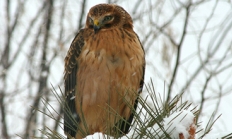
The Northern harrier is a slender, medium-sized hawk characterized by a noticeably long tail, bold white rump patch, and owl-like face. Commonly encountered in large expanses of open country, its main hunting technique is through use of a distinctive buoyant, gliding flight low over the ground that relies heavily on visual as well as auditory cues to detect prey. The larger females have rich brown upperparts while adult males are mostly light to medium gray, sometimes appearing almost ghostly silvery-white. Males are noted for their high-spirited and acrobatic courtship displays, in particular a series of dives and barrel rolls in…