
Search myodfw.com
Showing 361 - 380 of 545 results
This release was updated April 25 to correct two errors (the first name of the OSP Lieutenant who testified on Sauvie Island parking issues and that the Don Lindly property was sold to Lincoln County not Lincoln City.) LINCOLN CITY, Ore.—The Commission adopted a limited entry parking program for summer…

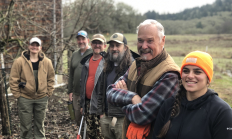
When you sign up to be an ODFW volunteer, you're helping to protect Oregon's fish and wildlife, manage ODFW properties, and share your hunting and fishing experiences with others while creating a stronger appreciation for the outdoors. Already volunteering with ODFW
Year round opportunities
Various programs statewide
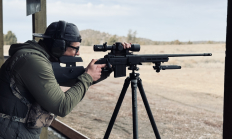
This is a one-day training course designed for hunters who want to shoot farther when conditions and skill allow. This course emphasizes ethical shot execution and practical field positions with mid-to-long range targets.
May & June
Multiple locations
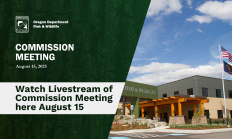
SALEM, Ore.—Oregon's Fish and Wildlife Commission will meet Friday, Aug. 15 in Salem at ODFW Headquarters, 4034 Fairview Industrial Drive SE. The meeting will be livestreamed from the Commission page. See the agenda here. (Note that Commission materials have moved to myodfw.com while ODFW's older website odfw.com is transitioned to…
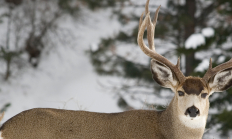
SALEM, Ore.— Hunters are the first line of defense against Chronic Wasting Disease (CWD). By getting their animals tested, hunters can help wildlife managers detect the disease early and slow its spread in the state's deer and elk herds. OHA and ODFW are again teaming up to encourage hunters who…
WILLAMETTE WILDLIFE VIEWING May 7, 2026 Corvallis area EE Wilson Wildlife Area There are lots of deer, shorebirds and waterfowl to see on the wildlife area – look for goose, mallard, hooded merganser and wood duck broods. Wildlife viewing remains good for waterfowl and shorebirds. Note: Dogs are required to be on a leash inside the wildlife area boundary. Rifles and pistols are prohibited year-round. Find directions to EE Wilson Wildlife Area. A parking permit is required to park at EE Wilson Wildlife Area. Find out how to buy a parking permit. Eugene area Fern Ridge Wildlife Area Observant visitors…
Features: Common carp are deep-bodied, heavy-looking fish with short heads and forked tails. They have large (really large) scales ranging from grey to bronze. Two barbels hang from each side of the upper lip of their subterminal (near the bottom of the head) mouth. This distinguishes them from goldfish that have no barbels. The dorsal fin is elongated. Habitat: Though tolerant of most conditions, common carp prefer large bodies of slow moving or standing water with soft sediments like mud or sand, and good growths of aquatic vegetation. They’re omnivorous bottom feeders that prefer aquatic insects, worms, mollusks and zooplankton…

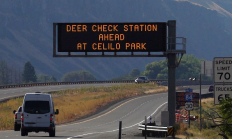
SALEM, Ore.—As 2025 deer and elk hunting seasons begin, ODFW is ramping up its Chronic Wasting Disease (CWD) surveillance statewide. Hunters are encouraged to take advantage of streamlined testing options and reminded that CWD check stations are mandatory to stop at when transporting harvested deer or elk. Sampling is quick…
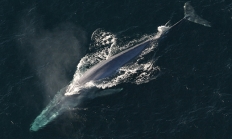
Blue whales are occasionally spotted off Oregon, but usually no closer than 10 miles offshore. These whales are part of the Eastern North Pacific population that range from Alaska to Costa Rica. They migrate between feeding areas along the west coast of the United States and Canada and breeding and calving grounds off Mexico and Central America. They are thought to be among the most endangered of the great whales. Photo by NOAA
This species breeds in upland deciduous and mixed forests with dense understory from southeastern Canada south to Georgia. It winters in the Caribbean and Middle America and casually in the United States. It migrates primarily along the east coast and regularly in small numbers along the west coast. It is rare but regular in Oregon during the fall from early September to mid-November. Hear the song of the Black-throated warbler Photo by Kenneth Schneider, Flickr

SALEM, Ore.—Oregon's Fish and Wildlife Commission meets April 23-24 in Lincoln City. View the agenda online. Commissioners will visit coastal coho habitat restoration and monitoring projects in the Siletz River Basin during a field tour on Thursday. To join the tour, meet at the Shearwater Inn, 120 Inlet Court at…
This is a sparrow of the dry brushlands. The Clay-colored sparrow breeds chiefly across the northern prairies from northeast British Columbia east to Michigan and south into Colorado. It winters in the southern United States and Mexico. It has expanded its range westward and northward in recent years and is now nesting in small numbers in eastern Washington. It was seldom reported west of the Rocky Mountains prior to 1960. Since that time, it has become a regular migrant and wintering bird along the west coast. Hear the song of the Clay-colored sparrow Clay-colored sparrow. Photo by "Always a birder"…
