
Search myodfw.com
Showing 41 - 60 of 399 results

SALEM, Ore.—Everyone can fish, clam and crab for free in Oregon on Saturday and Sunday, June 7-8, 2025. No fishing/shellfish licenses or tags (including a Combined Angling Tag or Columbia River Basin Endorsement or Two-Rod Validation) are required on these days. Both Oregon residents and nonresidents can fish for free. Oregon…

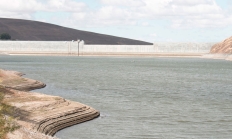
The southwest zone includes Umpqua River, Coos Bay, Coquille River, Port Orford, Rogue River and Chetco River - all of which offer shellfishing.
Willamette Trout Hatchery and the adjacent Oakridge Salmon Hatchery were combined in 1983 and operate today as Willamette Hatchery. The trout hatchery was constructed in 1922 and the salmon hatchery in 1911. The U.S. Army Corps of Engineers (USACE) rebuilt the salmon hatchery in 1952 to mitigate for fishery losses caused by Hills Creek, Lookout Point and the Dexter hydroelectric/flood control projects. The trout side was rebuilt between 1950 and ‘56. Today, Willamette Hatchery is used for adult holding/spawning, egg incubation and rearing of spring chinook and rainbow trout. In addition, both summer and winter steelhead are reared at this…
CENTRAL WILDLIFE VIEWING May 7, 2026 Crook County Spring ungulate migration will soon be upon us. You can find mule deer transitioning from low elevation winter feeding areas to the higher elevation sagebrush and agricultural areas. There are red-tailed, rough-legged and ferruginous hawks, northern harriers, American kestrels, prairie falcons and golden eagles throughout Crook County and they're usually associated more closely with open/agricultural areas. Bald eagles and ospreys, on the other hand, are more closely associated with water bodies. Look for northern goshawks throughout the Ochoco National Forest, and for ducks and geese in rivers and lakes. Prineville Reservoir Wildlife…
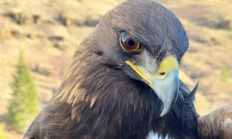
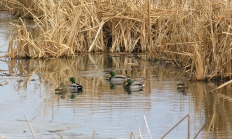

This is your one-stop platform for learning how to hunt and fish in Oregon. Look at the learning opportunities to participate in one or more of the many statewide workshops offered to adults. Enjoy the great outdoors even more by building your confidence and expanding your knowledge! Youth required hunter certification: hunter safety conventional courses and field days Choose between a full conventional course or complete one of the ODFW approved online education courses plus an in-person field day. Sign up for a location, date and time that works best with your schedule. Hunter safety education events are offered year-round…
Gnat Creek Hatchery was constructed in 1960 as part of the Columbia River Fisheries Development Program (Mitchell Act)—a program to enhance declining fish runs in the Columbia River Basin. The facility is used for egg incubation and rearing of spring Chinook and winter steelhead. Most of the production is released off-station. The hatchery is an easy drive toward Oregon’s coast on Highway 30 and a visitor-friendly place for the entire family. With lots to do, located on beautiful Gnat Creek and tucked away amid the rainforest, this is a worthwhile stop on the way to the coast.
Protecting and enhancing Oregon’s fish and wildlife, and the habitats they use, for the use and enjoyment of present and future generations is at the heart of what we do.


Willamette Fishing May 7, 2026 Best bets for weekend fishing: Spring Chinook fishing was most productive this week below the St Johns bridge and in the Multnomah Channel. Several waterbodies will be stocked with trout this week. Trout stocking Drought conditions are already impacting Oregon waterways. The Trout Stocking Schedule is subject to change. Check the field notes below or contact the local ODFW office for questions about a specific area. Stocked in April: Alton Baker Canal, Benson Lake, Blue Lake, Blue River Res, Canby Pond, Clear Lake, Commonwealth Lake, Cottage Grove Res, Dorena Res, Dorman Pond, EE Wilson Pond…
Sauvie Island Wildlife Area protects vital waterfowl habitat and provides a public hunting area while supporting a rich diversity of wildlife, including hundreds of bird, mammal, reptile, and plant species.
Phillip W. Schneider Wildlife Area provides winter range for mule deer populations and year-round habitat for a variety of wildlife including mammals, birds, reptiles and amphibians. Elk, deer, and bighorn sheep viewing is often good during winter and early spring. Bird watching is excellent all year. Native habitats include sagebrush shrubland, riparian, ponderosa pine forest, western juniper woodland and mixed conifer which support a diversity of fish and wildlife. The riparian areas along the mainstem John Day River, South Fork John Day River and Murderers Creek provide excellent habitat for many birds. Upland areas provide important habitat for passerines and…