Search myodfw.com
Showing 441 - 460 of 672 results
SALEM Ore. – The Fish and Wildlife Commission meets June 12-13 for a field tour on Thursday and a regular meeting Friday. See the agenda here. The meeting will also be livestreamed from the Commission page. To testify on an agenda item virtually, register on the agenda page at least…
SALEM, Ore. — Oregon's Fish and Wildlife Commission meets June 25-26 in Redmond. View the agenda online. On Thursday, Commissioners will visit projects showcasing the landscape scale work underway with partners to protect and restore sagebrush habitat for mule deer in central Oregon. To join the tour, meet at Comfort…
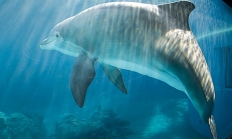
The bottlenose dolphin is the most common of the oceanic dolphins and can be found in all tropical and temperate oceans. Flipper was a bottlenose dolphin. Their considerable intelligence and permanently-affixed smile make them a favorite of aquarium and television shows. The U.S. Navy also uses bottlenose dolphins to find mines and booby traps underwater. Oregon is the northern extent of its range on the West Coast. They are most often seen offshore during the summer by tuna and other fishers. They are gray with light gray to white on the undersides. In size they range from six to 13…
NEWPORT, Ore. – New research from Oregon's south coast highlights the positive economic impact of science and tourism within Redfish Rocks Marine Reserve. The study quantifies the number of jobs supported and income generated by these activities, providing important data for the local Port Orford community, policymakers, conservation practitioners, and…
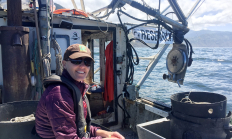
Image: The circles show monitoring stations in the basin and the green shows detection of a tagged salmon. KLAMATH FALLS, Ore. — Salmon are making exciting progress in their return to the upper Klamath Basin, with fisheries biologists from ODFW and The Klamath Tribes celebrating a series of firsts as…
The major portion of Elk River Hatchery construction was completed in 1968. In 1971 the hatchery completed final construction on an intake and ten new ponds. The purpose of the facility is to supplement natural production of fall Chinook in the Elk and Chetco Rivers and winter steelhead in the Chetco River. The facility is used to collect Elk River fall Chinook, to incubate eggs and rear both natural and hatchery fall Chinook and winter steelhead.
NEWPORT, Ore. – ODFW is accepting nominations for a seat on the Pacific Fishery Management Council (Council). The three-year term for this Oregon at-large seat begins Aug. 11, 2026. Anyone interested in being considered, or wishing to nominate someone, must contact Jessica Watson at 541-351-1196 or jessica.l.watson@odfw.oregon.gov . Completed application…

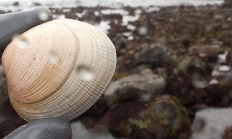
Features: The purple varnish clam is named for the purple hue found inside the clam and the shiny varnish over the brown color outside the shell. It is oval in shape and is relatively flat with a prominent ligament near the hinge. Habitat: These clams can be found in cobble to muddy substrate. Technique: Purple varnish clams are found in very high densities. Limits are 72 a day. Learn more here before getting started clamming. See Oregon Sport Fishing Regulations for information on the daily catch limits for bay clams. How to dig purple varnish clams (video)

Lower Deschutes Wildlife Area was established in 1983, with the initial donation of land by the Oregon Wildlife Foundation (OWF) of 2,758 acres. In 1986 OWHF donated an additional 5,158 acres of land to the department. The Lower Deschutes Wildlife Area was initially established to provide permanent public angler access. However, especially with the 1986 acquisition, the wildlife area has grown to provide enhanced wildlife and fish habitat (i.e. through removal of livestock, riparian vegetation improvements, etc.) and more wildlife-oriented recreational activities such as hunting, boating, hiking and biking. In 2015, ODFW partnered with the Trust for Public Land to…
Features: Circular in shape and 1.5-2.5 inches across. Identified by concentric lines and radiating ridges. Longer lived and less abundant than cockles. Habitat: High salinity areas of sand, mud, gravel, or rock. Harvest them in Tillamook, Netarts, Yaquina, and Coos bays. Techniques: These clams can be found in rocky nearshore areas within 6 inches of the surface. Using a rake for these clams is the best harvest method. Learn more here before getting started clamming. See Oregon Sport Fishing Regulations for information on the daily catch limits for bay clams. How to dig for little neck clams (video)
NEWPORT, Ore. – The Oregon Department of Fish and Wildlife is helping investigate the entanglement of a young humpback whale stranded earlier this week near Yachats. The whale was entangled in gear attributed by NOAA Fisheries to the Oregon commercial Dungeness crab fishery. Veterinarians from the West Coast Marine Mammal…
Newport, Ore. – Oregon's commercial Dungeness crab season is delayed coastwide until at least Dec. 16, the Oregon Department of Fish and Wildlife announced today. Oregon Dungeness crab met both meat and safe biotoxin level requirements; however, the season is delayed as Long Beach, WA crabs have not yet met…
CENTRAL POINT, Ore. – Learn how to spot and identify animal tracks, splash around in a stream to check out aquatic bugs, and play "survival of the fish-est." Join the Oregon Department of Fish and Wildlife, Jackson County Parks, and Rogue River Watershed Council for Wildlife Wisdom every Saturday from…

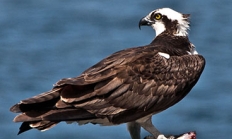
This large bird of prey has dark brown feathers above, white feathers below with a white head and prominent dark eye stripe as well as a visible dark spot at the wrist of the wing when flying. Juveniles have buffy-tipped dark feathers above. In flight, the wings have a noticeable angle or "crook." This highly migratory fish-eating species is frequently found nesting along larger rivers, lakes, and reservoirs. A large bulky nest at the very top of a live, broken top, or dead tree and more recently on utility poles, channel markers, pilings, and cell phone towers near fishable waters…