
Search myodfw.com
Showing 461 - 480 of 777 results
Find maps, boundary descriptions and the percent public land for the Willamette Unit.
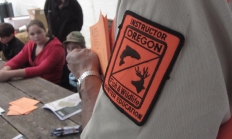
Oregon requires all hunters under the age of 18 to complete a hunter safety education course before hunting in the state. Upon course completion, students will receive a temporary Hunter Safety certification card to be carried while hunting in Oregon until a permanent card is received in the mail to replace it. Hunters over 18 are encouraged to take the online education course, as it may be required for out of state hunts. Note: Youth under the age of 9 may struggle with the course material and may not have the physical strength needed to safely handle a firearm during…
SALEM, Ore.—Oregon's Fish and Wildlife Commission meets online Friday, Jan. 16 to amend the formula for setting Landowner Preference tags for mule deer hunts and modify the Coquille River Fall Chinook conservation hatchery program to allow the use of hatchery origin broodstock. See the full meeting agenda at https://myodfw.com/articles/commission-agenda-january-16-2026 The…
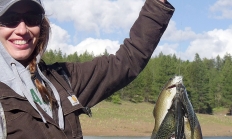

Oregon's diverse habitats and terrain offers something for every hunter. From the densely forested Coast Range to the expansive sage steppe of the Great Basin, hunting opportunities are practically unlimited. Visit e-regulations

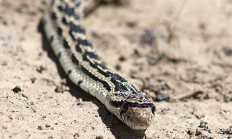
The gopher snake occurs in a wide variety of habitats, from deserts and grasslands to woodlands and open forests. It frequents agricultural regions, especially where there is brushy cover such as fence rows. Diet varies according to size, with young eating insects, lizards, rodents, and birds and their eggs. Adults can take larger prey, occasionally as large as rabbits. Photo by Simon Wray, ODFW
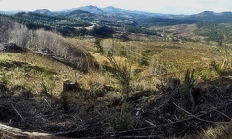
Lower Deschutes Wildlife Area was established in 1983, with the initial donation of land by the Oregon Wildlife Foundation (OWF) of 2,758 acres. In 1986 OWHF donated an additional 5,158 acres of land to the department. The Lower Deschutes Wildlife Area was initially established to provide permanent public angler access. However, especially with the 1986 acquisition, the wildlife area has grown to provide enhanced wildlife and fish habitat (i.e. through removal of livestock, riparian vegetation improvements, etc.) and more wildlife-oriented recreational activities such as hunting, boating, hiking and biking. In 2015, ODFW partnered with the Trust for Public Land to…

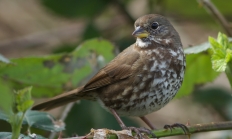
These big, medium-brown sparrows with variable grayish faces and heavily streaked or blotch undersides can be found in summer at higher elevations across much of the state except the Coast Range. Darker brown birds from more northerly breeding populations are common in western Oregon in winter, often coming to feeders, where they scratch like towhees for seed on the ground. Hear the song of the Fox sparrow Photo by Robin Horn, Flickr
California myotis is an acrobatic flyer. It is dark brown to blond with dark ears, and feeds on moths and flies. Early in the summer, a female joins a maternity or nursery colony where she gives birth to one offspring. In winter, these bats roost in mines, caves and buildings. The California myotis is an Oregon Conservation Strategy Species found throughout the state except for the Columbia Basin. Photo by ©Michael Durham

CANYON CITY, Ore.- A poacher investigated for more than 50 crimes committed in Grant County between 2023 and 2024 was sentenced to 95 days behind bars and more than $22,000 in restitution and fines, according to wildlife officials. In what wildlife enforcement officers refer to as a serial poaching case…
Bonneville Hatchery was constructed in 1909. In 1957, the facility was remodeled and expanded as part of the Columbia River Fisheries Development Program (Mitchell Act)—a program to enhance declining fish runs in the Columbia River Basin. The hatchery underwent another renovation in 1974 as part of the U.S. Army Corps of Engineers' (USACE) mitigation of fish losses from the construction of the John Day Dam. In 1998, construction was completed on the Captive Broodstock Facility for the Grande Ronde Basin spring Chinook supplementation program.
The song of this wren is often mistaken for the Song sparrow in the thickets and open woodlands where it resides. When in view, however, its long tail, thin bill, and white line above its eye are distinctive. Found in a variety of habitats, it readily takes advantage of cleared forest grown to large shrubs, especially blackberries. It is a permanent resident west of the Cascades, in Klamath and Warner basins, and along the upper Columbia River and tributaries. Hear the song of the Bewick's wren Photo by David Hoffman, Flickr

The Pacific wren makes its home in dense coniferous forests with understory thickets where it often forages for insects. This bird was considered the same species as the winter wren but is now separated as its own distinct species. The Pacific wren is rufous brown above, richly colored below, and barred with a darker brown and dusky. Young birds are distinctly less barred. It’s most easily found by its sharp kep-kep call and ringing, tinkling song. Males defend territory by singing in spring and in hopes of attracting a mate.

SALEM, Ore. – ODFW staff at the Ashland Boat Inspection Station found quagga mussels on a motorboat that was being transported from Lake Havasu, Arizona into Oregon on March 21. This was the first instance in 2026 where crews found invasive freshwater mussels on a boat entering Oregon. The watercraft…
Merriam's ground squirrel is one of the two small gray ground squirrels in Oregon without stripes or spots. Most of the geographic range of this squirrel is in Oregon, where it occurs south and east of a line connecting Huntington, North Powder, Maupin, Warm Springs, Bend, and Fort Rock, Summer Lake, and Plush. This species does not occur south of the North Fork Owyhee River in Malheur County. These ground squirrels emerge in early March, breed, rear their young, become exceedingly fat and go into their hibernacula by early August. Photo by ©John Rakestraw
