Search myodfw.com
Showing 501 - 520 of 897 results
The white-footed vole is among the smaller voles. The pelage consists of dark bluish-gray hairs tipped with a rich brown or black on the dorsum grading lighter on the sides, thence to light gray to pinkish buff on the venter. The tail is distinctly bi-colored: white or buff on the vental surface, brownish black on the dorsal surface. The dark dorsal stripe is much wider than the lighter ventral stripe. The feet are light grayish. This vole occurs from Old Fort Clatsop, Clatsop county, and near Rainier, Columbia County, south through the coast range. Various Oregon specimens have been found…
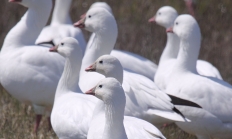
Features: The small Ross's goose looks very similar to a snow goose, but with some slight distinguishing features. Like the snow goose, this goose has black primary feathers. But it does not have the black grin of a snow goose on its pink bill. Also, their wing beat is faster and call higher pitched than a snow goose's. Habitats: The Ross's goose can be found in shallow lakes and wetlands while in migration. It feeds on grasses, sedges and small grains. Techniques: Often taken while snow goose hunting, the techniques are similar. Create a white decoy spread with silhouettes, white…
Additional events coming soon
Multiple locations

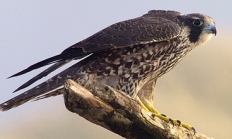
Peregrine falcons are among the most charismatic and noted of the world's birds. They are described as the fastest animal on the planet, and have been recorded reaching speeds in excess of 240 miles an hour in dives after prey. They are one of Oregon's boldest raptors, and have been observed usurping active Golden eagle nest sites, stealing fish from Ospreys and ground squirrels from adult Bald eagles who stray into their territory. It has, for perhaps 4,000 years, been used by falconers because of its skill in capturing game birds in tandem hunts with humans. Peregrines are medium-sized raptors…
The camas pocket gopher is the largest member of the genus, although large size is not a distinctive feature of the species. This gopher is a dark, sooty brown on the dorsum; the ears and nose are blackish. The venter is lead colored except for an irregular and variable-shaped patch of white on the throat. The winter pelage is long and furry; the summer pelage is short and coarse. The camas pocket gopher is one of the most vicious animals known for its size. Nevertheless, these pocket gophers flee from potential predators whenever the opportunity arises. This pocket gopher produces…

Features: Spruce grouse are gray with white spots on the belly. The back feathers often have dark bars. Females tend to be paler in color than the males. The eyes are outlined by red combs over and white arcs underneath. Habitat: The spruce grouse is native to Oregon and found in coniferous forests across northern North America. However, Oregon is on the periphery of this species' range and they likely were never abundant in the state. Currently, spruce grouse can only be found in the Wallowa Mountains and Snake River divide of northeastern Oregon. Technique: Spruce grouse have been protected…

The emperor is a medium-sized stocky goose with a white head and metallic blue-gray body reminiscent of a blue-morph snow goose. Dark throat and undertail coverts as well as yellow feet distinguish it from the latter. Juveniles are brown with a gray-black head and neck that becomes white with black flecking in late fall. Vocalizations include in-flight kla-ha, kla-ha, kla-ha, and an alarm call a deep ringing u-lugh, u-lugh, u-lugh. The emperor is a rare but regular visitor in Oregon during migration and in winter, most commonly on the coast. Hear the call of the emperor goose Photo from USFWS

The pied-billed grebe is an aquatic species that breeds at the edge of open water in freshwater lakes, ponds, sluggish rivers, and marshes. When disturbed, it sinks like a submarine, rather than diving, and re-emerges with only its head above water. This is a brownish grebe with a black vertical bar in the middle of the rather stubby, whitish bill, and jet-black throat patch on both sexes in alternate plumage. It has a surprisingly loud "yelping" call within a marsh. Young have striking stripes on the head. This bird is widespread and common in Oregon. It winters locally in open…

The largest of Oregon's grebes, these have a long white neck, black cap, bright red iris, long strait bill, dark back, bright white breast, and they appear tailless. While excellent divers, they are unable to walk on land because their body weight is forward of their legs. Differences in appearance between western and Clark's grebes are subtle. In the western grebe, the black cap typically extends down to the eye whereas white facial plumage extends slightly above the eye on the Clark's grebe, but this is not always diagnostic in winter. The western grebe is a common breeder in eastern…

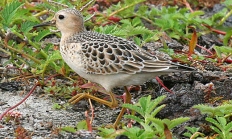
The Buff-breasted sandpiper resembles a plover with a high-stepping, pigeon-like gait. One of the few Oregon shorebirds that frequents dry, sparsely vegetated coastal grasslands. Fall migrants consist of juveniles. It has scaly, buffy-brown underparts, yellow legs, a small head, and a short black bill. Beady black eyes stand out on a plain, pale face. It bobs its head while moving. Gleaming white underwings are displayed in a graceful flight pattern. It is unique among North American shorebirds in having a lek mating system. This is a rare but regular fall migrant on the Oregon coast where it has been recorded…
Features: Both males and females have a bluish bill with a black tip. Drakes are white on the top of the head, green eye stripes, purplish breast and flanks, white belly and wing covert patch, and have an iridescent black/green speculum. The grayish hen shows white on the wing covert patch. Habitat: An abundant overwintering duck, especially in the Willamette Valley and coastal areas. Prefer shallow habitats like wet meadows or marshes where, like geese, they feed on green grass and sedges. Techniques: These ducks are early migrants (September) but can be common in mixed duck bags throughout the season…

Features: Drakes have a black head with a white spot below and in front of the eye -- rather than the crescent-shaped patch of the barrow's goldeneye -- white neck, breast and flanks and a black back and tail. Hens have a brown head, light neck, breast and belly, brown backs and flanks. Drakes and hens of both common and Barrow's goldeneye have a distinctive golden ring around the pupil. Habitat: It is a common migrant in northeastern Oregon and winter resident of the Snake, Columbia, Klamath, Rogue and Umpqua rivers. Techniques: These ducks travel in small groups of two…


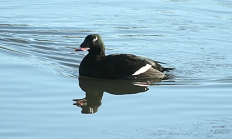
The white secondaries of the white-winged scoter in all plumages form a conspicuous square wing patch during flight but are often hidden during rest. Other than the secondaries, males' plumage is entirely black except for a small white teardrop around each eye. Females and immatures are dark brown above and pale below with diffuse white patches in front of and behind the eyes. A black knob graces the males' swollen, white-ridged, orange bills, while females' and immatures' bills are dark; the feathering of all extends almost to the nostril. Abundant along the coast from fall through spring, white-winged scoters are…
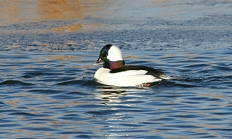
The bufflehead is North America's smallest diving duck, giving it the advantage of being able to nest in abandoned holes of northern flickers, a plentiful resource off limits to larger cavity-nesting ducks. It is a swift flyer and takes wing from water more easily and neatly than other diving ducks. Widely distributed throughout the state in winter, males attract attention with their striking white body, black back, and iridescent black head with a large notch of white; females and juveniles are dark charcoal-gray with a conspicuous white patch behind and below the eye. It is a local, uncommon breeder in…
This small shorebird moves along the sand by foot rather than flight. It has a distinct black cap behind a white forehead, a dark line though the eye, and an incomplete black breast band. Males have darker and more distinct breeding plumage than females; both sexes loose coloration during late summer. It is the only shorebird that regularly breeds on Oregon's beaches. East of the Cascades, the Western Snowy plover is a summer resident breeding on alkaline flats and salt pans. On the Oregon coast, this species is found year-round between Heceta Head and Cape Blanco. Western snowy plovers are…

With a widespread distribution and affinity for open habitats, the Killdeer is one of the most common and recognized birds through much of North America. Killdeer are large for a plover and easily distinguished from other North American plovers by their characteristic two black or brownish-black breast bands. Killdeer are well known for their loud and persistent call of "kill-dee, kill-dee," heard at all times of day or night on both the breeding and wintering grounds. Killdeer often nest close to human activities. Adults perform an elaborate and exaggerated broken-wing display to lure humans and potential predators away from their…

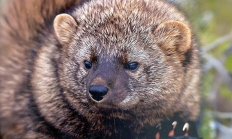
The Fisher is considerably larger than the marten and males are considerably larger than females. It is more stockily built than the weasels, but is similar in that the head is somewhat pointed, the body elongate, and the legs short. The pelage is long except on the face. The fur is dark brown grading to black on the rump and legs; the tail is black. Fishers once occurred throughout the coniferous and mixed forests of Oregon's Coast Range and Cascade Mountains. Currently, there is a native population in the Siskiyou Mountains and an introduced populations in the southern Cascades that…
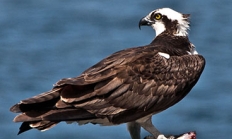
This large bird of prey has dark brown feathers above, white feathers below with a white head and prominent dark eye stripe as well as a visible dark spot at the wrist of the wing when flying. Juveniles have buffy-tipped dark feathers above. In flight, the wings have a noticeable angle or "crook." This highly migratory fish-eating species is frequently found nesting along larger rivers, lakes, and reservoirs. A large bulky nest at the very top of a live, broken top, or dead tree and more recently on utility poles, channel markers, pilings, and cell phone towers near fishable waters…