Search myodfw.com
Showing 61 - 80 of 408 results
THE DALLES, Ore.—Steelhead and salmon fishing will close on the Deschutes River Aug. 15, to protect wild upriver summer steelhead and consistent with ODFW's Deschutes River Steelhead Management Framework. The Framework requires protective action when returns fall below established thresholds. Just 7,388 wild steelhead have passed Bonneville Dam since July…
The following list of landmarks and regulatory boundaries have been used in ocean salmon fisheries seasons in recent years and may affect Oregon anglers directly. Some of the listed landmarks are not currently in use. Generally, regulations note a specific landmark, and the management/regulatory line is an East-West line of latitude from that landmark.
SALEM, Ore. – ODFW staff will be hosting an online public meeting at 6 p.m. on Wednesday, July 29 to discuss the 2027 Pacific halibut season. The meeting will be held online only, through Microsoft Teams (information below). ODFW manages Pacific halibut in partnership with the International Pacific Halibut Commission…
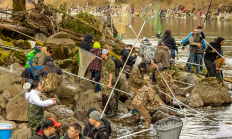
This release was updated April 25 to correct two errors (the first name of the OSP Lieutenant who testified on Sauvie Island parking issues and that the Don Lindly property was sold to Lincoln County not Lincoln City.) LINCOLN CITY, Ore.—The Commission adopted a limited entry parking program for summer…

UPDATE: The National Marine Fisheries Service (NMFS) did not authorize a wild coho season in the Alsea Basin for 2026 because escapement is not projected to meet full seeding requirements as required in the Oregon Coast Coho FMEP. Wild coho retention will remain closed in the Alsea Basin for the…
PENDLETON, Ore. – ODFW will close recreational spring Chinook retention in the Umatilla River Basin from May 30 through June 30, 2026. The closure will be in effect from the mouth of the Umatilla River, near Highway 730 bridge, to the Confederated Tribes of the Umatilla Indian Reservation (CTUIR) boundary…
Newport, Ore. – Oregon's commercial Dungeness crab season opens Dec. 16 from Cape Falcon to the California border, the Oregon Department of Fish and Wildlife announced today. Crab will be available in time for the holiday season. Oregon will open the north coast to align with Washington once Long Beach…
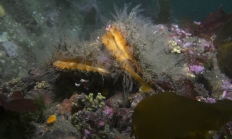
The rock scallop ( Crassadoma gigantea) lives in the swift current shallows of Oregon's nearshore rocky reefs. Due to the coloration at its hinge, it is also known as the purple hinged scallop. These highly specialized scallops cement themselves to rocks, primarily at depths from 10 to 150 feet. They feed on microscopic plankton they filter from the water and reproduce via broadcast spawning. In order for spawning to be successful, they need to be close to one another. For this reason, it is best to harvest solitary rock scallops and minimize harvest pressure on dense aggregations which are more…
Piloted in 2014, the Tag Team program helps ODFW fish biologists better evaluate resident gamefish, bass, and stocked rainbow trout fisheries. It's also a chance for anglers to participate in fishery management and, perhaps, come away with up to $50.
SALEM, Ore.—The Commission approved a revised State Wildlife Action Plan (SWAP) today, a plan that serves as a roadmap for protecting Oregon's at-risk species and their habitats. The Plan incorporates the latest available information on species and presents recommended conservation actions to inform and prioritize conservation work for community members…
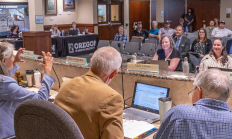
CLACKAMAS, Ore.—Fishery managers from Oregon and Washington added several days of recreational spring Chinook fishing on the mainstem Columbia River during a joint state hearing today. With these additional days, and the action taken last week, the Columbia River will be open for spring Chinook for the entire upcoming Memorial…
July 2, 2025 THE DALLES, Ore.—With another poor forecast for Columbia Basin summer steelhead runs this year, protective regulations are again in effect on some tributaries (Deschutes, John Day, Eagle Creek). The daily adult salmon and steelhead bag limit may not include more than one hatchery steelhead in the following…
ONTARIO, Ore.–The Fish and Wildlife Commission voted 5-1 to open a hatchery Chinook salmon season in the Coquille River, the first Chinook season since 2021, during their meeting today in Ontario. The Coquille River will be open for fall salmon fishing from Sept. 13-Oct. 15 from the Hwy 101 bridge…