Search myodfw.com
Showing 61 - 80 of 306 results
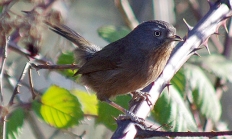
This is a mouse-like bird, only occasionally musters the courage to dart from its shadowy domain. The male and female are generally indistinguishable by external characters. Both sexes are small and brown, with dim streaks on a paler, often pinkish breast; generally paler and grayer in drier regions. Both sexes sing; the female's repeated single note is easily distinguishable from the male's fast trill introduced by several individual notes. The Wrentit is a resident along the coastal slope; in the Columbia River Lowlands and in the south inland to the west Klamath Mountains. It uses a wide range of habitats…
Features: Adult drakes have a black bill, buff head, gray body, and black upper and lower tail coverts. Hens are nondescript brown ducks with a spotted, yellowish-orange bill with black edges. Unique among dabbling ducks, the gadwall has a partly white speculum (rear part of the wing) that can be seen when the bird is in flight. Habitat: Submerged aquatic vegetation makes up the majority of the gadwall's diet. As a result, they are often found feeding far from the shoreline, in deeper water than most other dabbling ducks. Can be abundant is eastern Oregon early in the season, but…

Features: The black back, white crescent on the side just in front of the wing, and white-ringed bill separate the drake ring-neck from the scaups. The brownish neck ring of the male in alternate plumage is not prominent. The hen is a small dark brown duck with a buff face. Drakes in courtship give a head-throw accompanied by a wow note while hens utter a growling purr. The ring-necked duck can resemble a scaup, so hunters need to know what they are shooting at. Habitat: These ducks are pretty widespread during the winter months. They generally prefer fresh water, from…

This moderately small wren maintains the frenetic energy that is so obviously typical of this family of birds. It is a summer inhabitant in many parts of Oregon, generally in open woodlands, thickets, and occasionally in residential gardens. The House wren occurs over the widest latitudinal range of any New World passerine. The House wren nests in a wide variety of native and human-influenced habitats. Nest sites are primarily located within preformed cavities in snags. It is a very uncommon to common transient and summer resident in semi-open woodland habitats throughout the state. In southwest Oregon, it is most common…

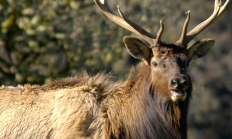
Features: Roosevelt elk are one of two subspecies of elk found in Oregon, with an estimated population of 59,000 in the state. “Rosies” are darker in color than other elk subspecies and the largest in terms of body size, with bulls generally weighing 700-1,100 pounds. Habitat: Roosevelt elk occupy most of western Oregon, with concentrations in the Cascade and Coast ranges. All elk west of Hwy 97 are considered to be Roosevelt elk, though there is some overlap of Oregon’s two subspecies in the Cascades. Techniques: Roosevelt elk make their home in the thick and lush forests of western Oregon…
At certain estuaries and interior alkali lakes, flocks of many thousands of these migrants can be observed swirling around over shallow water, landing to frantically feed, before resuming migration. Falcons often attack Westerns, and their acrobatic, tightly coordinated escape flights are breathtaking to observe. In winter, these small sandpipers are gray above with white underparts. In breeding plumage they have a rich rufous-chestnut back, cheeks and cap, dark-centered scapulars with rufous-chestnut edges, grayish throats streaked with dark chevrons through the flank, and whitish underparts. Longer-billed females generally are larger than males but are otherwise similar in appearance. Along the coast…

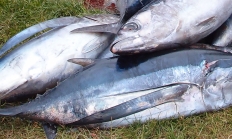
Features: These fish have dark blue backs, silver sides and bellies, and very long pectoral (side) fins. Albacore caught off the Pacific Coast are generally 21 to 30 inches long with the largest fish running about 35 pounds. Habitat: Tuna are pelagic species, meaning they spend their lives in the open ocean. Albacore generally show up 15-200 miles or more off the Pacific Coast in mid-July and stick around through September. Albacore are usually found where surface water temperatures are at least 59 degrees Fahrenheit and the water has a distinct clear blue color (this is where chlorophyll levels are…
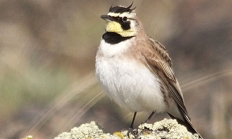
Wide open spaces generally surround these sparrow-sized, ground dwelling birds. The upperparts are mostly brownish and the underparts are generally buffy with varying amounts of yellow on the throat. There is black on the breast and side of the head, but the most unique features are small black "horns." Females and immature birds are duller. Interesting behavior includes aerial displays and "flight songs" during courtship, and the propensity to forage and loaf along dirt and gravel roads. In western Oregon, it breeds in small, scattered populations throughout the Willamette Valley, with concentrations in the central valley on and near Basket…
Willamette Fishing September 10, 2026 Best bets for weekend fishing: Last week's rain gave several valley waterways a cooling refresh to kickstart fall fishing. Two-rod validation has been extended through Dec. 31 upstream of Willamette Falls. ODFW stocked Blue Lake, St. Louis Ponds, Adair Pond, and Bond Butte Pond in July with channel catfish. These fish, sourced from an approved facility, averaged approximately one pound each and are expected to provide excellent summertime fishing opportunities in these valley ponds. Try warmwater fishing for smallmouth bass and yellow perch near underwater structures and drop-offs in Foster Reservoir. Fishing for walleye and…
Central Point, Ore. – Hunters and recreationists who plan to use the Jackson Cooperative Travel Management Area (TMA) should download the newest version of the georeferenced .pdf map. updated on Oct. 14. There have been major changes this year, so users should double check where they plan to access. These…
Of the three U.S. and Canadian forest hawks known as accipiters, this is by far the most impressive because of its size and aggressiveness. Like others of the genus it is morphologically adapted to maneuvering through forest landscapes and usually uses an ambush approach to capturing prey; although if prey tries to escape, it quickly pursues. From Turkey to Japan, goshawks are favored over falcons for falconry, and a limited number of permits are issued in Oregon for taking goshawks for falconry purposes. The Northern goshawk has short, broad, round-tipped wings and a long tail. It is approximately the size…

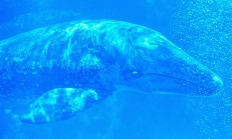
The most common whale off the Oregon coast is the gray whale. In addition to the approximately 200 resident gray whales that live nearly year-round off Oregon, a winter and spring migration brings about 18,000 more past our coast. Gray whales are baleen whales (mysticetes). They grow to 50 feet in length and will weigh up to 80,000 pounds; adult females are larger than males, which is common in all baleen whales. They do not have a dorsal fin on their back but instead have a series of knuckles. These whales are mottled gray and are covered with barnacles and…

Events in Coquille, Central Point, Monmouth, Eugene, Irrigon, John Day, Klamath Falls, La Grande, Madras, Portland, Tygh Valley SALEM, Ore.—Youth hunters (age 17 and under) who will have completed hunter education by the time of the event can sign up now for ODFW's free pheasant hunts happening around the state…


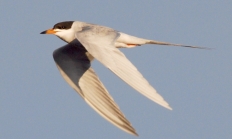
Terns are generally associated with marine environments and salt marshes, but the Forster's tern inhabits freshwater areas. During the breeding season this graceful bird is eastern Oregon's resident small white tern. Typical of terns, the Forster's employs a dramatic hunting method of plunge-diving into shallow waters to capture small fish, the bird sometimes submerging completely. This is an uncommon but highly visible colonial breeder east of the Cascades. Hear the call of the Forster's tern Photo by Dave Budeau, ODFW