
Search myodfw.com
Showing 661 - 680 of 785 results

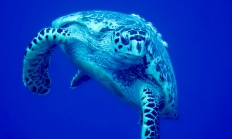
Sea turtles are federally protected under the Endangered Species Act of 1973. NOAA Fisheries is responsible for conservation and recovery of sea turtles in the marine environment, while the U.S. Fish and Wildlife Service is lead on conservation and recovery of sea turtles on nesting beaches.
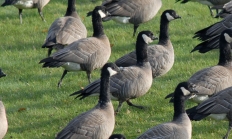
Oregon has two species of pelicans, American white and the Brown pelican, and three species of cormorants. All are fish-eating water birds with four toes joined by webbing. Depending on the species, pelicans and cormorants inhabit the Oregon coast, rivers or interior waterbodies.

The Eastern gray squirrel is the smallest member of the genus in Oregon. This squirrel was introduced into Oregon and can now be found in Salem, Portland, Milwaukie, and Vale. All populations in Oregon have been found in urban areas. This squirrel is active throughout the year, activity restricted to daylight hours. Photo from Washington Fish and Wildlife


Oak Springs Hatchery was constructed in several phases beginning in 1922 with the last major construction in 1996. The facility is currently used for egg production, incubation and rearing of rainbow trout, incubation and rearing of summer and winter steelhead, and maintains one resident rainbow trout and one resident cutthroat broodstock.
Public comment period open; comment via online form SALEM, Ore.—Oregon's Fish and Wildlife Commission will meet Feb. 20 at the Lane County Armed Forces Readiness Center, 3106 Pierce Parkway in Springfield. The meeting starts at 8 am and will be livestreamed on the meeting agenda page and at ODFW's YouTube…
PRINEVILLE, Ore. – A single dead adult quagga mussel was found out of water on the shoreline at Prineville Reservoir on June 6 during a routine survey for aquatic invasive species. This marks the first time that this highly invasive freshwater mussel species has been found in or near an…
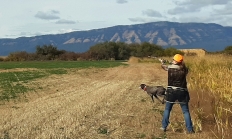
Western Oregon September 3, 2026 Current Season: Mourning dove, ruffed and blue grouse, Rooster pheasant and Quail (Western Oregon), Turkey (Select WMU's) Announcements, resources 2026-27 Game Bird Regulations online and available at ODFW licensed agents and vendors. Buy your 2026-27 bird stamp(s) and validations - Available for purchase now: upland and waterfowl validations, federal duck stamp and don't skip the HIP survey. Time to redeem your sports-pac vouchers. Don't miss the Youth Upland Game Bird Hunts register now. Plan this season's hunts with prior year game bird harvest summaries. ODFW's Hunt by Reservation Program connects bird hunters with private landowners. By making a reservation…
SALEM, Ore. – The Private Forest Accord (PFA) Advisory Committee will hold its regular virtual meeting on Tuesday, October 21, 2025. Oregon Department of Fish and Wildlife staff will present two new funding pathways for the PFA Grants Program, Land Transactions and Water Transactions, followed by Advisory Committee discussion of…
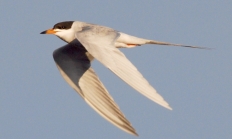
Terns are generally associated with marine environments and salt marshes, but the Forster's tern inhabits freshwater areas. During the breeding season this graceful bird is eastern Oregon's resident small white tern. Typical of terns, the Forster's employs a dramatic hunting method of plunge-diving into shallow waters to capture small fish, the bird sometimes submerging completely. This is an uncommon but highly visible colonial breeder east of the Cascades. Hear the call of the Forster's tern Photo by Dave Budeau, ODFW
This snake is found in meadows and at the edges of clearings in forests. It prefers areas with dense vegetation but, when basking, can be found in open areas or on talus slopes. It occurs in wooded areas on the floor of the Willamette Valley and has been found in the Rogue Valley. This garter snake is commonly found in suburban areas and city parks. The Northwestern garter snake feeds mainly on slugs and earthworms, but also takes insects, small salamanders, frogs, fish, small mammals, and possibly nestlings of ground nesting birds. Photo by J. Maughn, Flickr

Oregon's owls are mostly nocturnal, hunting for insects, fish, frogs, birds, mice and other small mammals in the night. Their hoots, screeches and calls can be heard after dark or early in the morning. Owls don't build nests, but instead use tree cavities, nests created by other species, naturally occurring structures or human-made nest platforms. The Western burrowing owl nests underground in abandoned dens dug by squirrels, prairie dogs and badgers. Learn more about Oregon's owls.

Much variability in coloration exists in the common garter snake but the best identifying characteristic is a stripe down the middle of the snake's back. While the common garter snake frequents wet meadows and forest edges, it occurs in a variety of habitats far from water, including open valleys and moist coniferous forest. Smaller snakes eat earthworms, but adults feed on a variety of vertebrate prey, including frogs, toads, salamanders, birds, fish, reptiles, and small mammals. Invertebrates, including slugs and leeches, are also eaten. Photo by Dave Budeau, ODFW

Western pond turtles prefer marshes, streams, rivers, ponds and lakes. They need sparse vegetation nearby for digging nests and like to bask on logs. Population declines are due to habitat loss, degradation of nesting areas by invasive plants, competition from non-native turtles and disease. Predators include raccoons and invasive bullfrogs and fish. Western pond turtles are Oregon Conservation Strategy Species in the Coast Range, East and West Cascades, Klamath Mountains and Willamette Valley ecoregions. Photo by Simon Wray, ODFW

This species is found in a variety of habitats. To make matters more confusing, four subspecies are found in Oregon, each of which has somewhat different habitat preferences. All can be found in moist areas such as marshes and lake or stream margins, but two may occur some distance from water. The diet varies among subspecies; the more aquatic forms feed on fish, frogs, tadpoles, and leeches, which are eaten in the water. Terrestrial forms take frogs and toads, but also lizards, small mammals, salamanders and slugs. Photo by David Bronson, ODFW

Establishment of the Bridge Creek Wildlife Area initially started in 1961 when a parcel of land was purchased from the Frank Hilbert estate. After the initial purchase, several private holdings were acquired to consolidate the land under department ownership. The last parcel was purchased from the Colvin Cattle Company in 1975. The primary purpose of the wildlife area is to maintain and protect a key historic winter range for Rocky Mountain elk ( Cervus elaphus nelsoni).