
Search myodfw.com
Showing 981 - 1000 of 1128 results
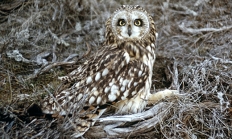
This tiny owl has a reputation as an aggressive predator on everything from mice and voles to birds and mammals over twice its size. Coloration is highly variable with brown and gray morphs. In Oregon, color varies from dark brown in coastal mountains to gray in eastern Oregon, with an intermediate pale grayish-brown form in the Cascade mountains. About the length of a White-crowned sparrow, it has striking yellow eyes, dark vertical streaks on the breast and abdomen, and dark "eyespots" on the back of the head. It is primarily diurnal and can often be approached quite closely when it…

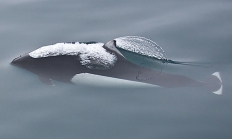
A thick body, small head and coloration similar to a killer whale make this dolphin easy to recognize. Dall’s porpoise is mostly black with a large white patch on the belly and flanks. The small dorsal fin is partly white and the trailing edges of the tail are frosted white. About seven feet long and weighing around 400 pounds, Dall’s live only in the north Pacific. Dall’s are the fastest of all small cetaceans and can swim at up to 35 miles per hour, almost as fast as a killer whale. When swimming at the surface they create a characteristic…
The Klamath Fish Hatchery was originally constructed in 1929. Many improvements have been made since original construction. The hatchery produces legal and trophy sized rainbow trout, fingerling rainbow trout, brown trout, and cutthroat trout for release throughout the Klamath Basin, Deschutes Basin, Umpqua Basin and the southeast part of the state. The hatchery assist with remote egg takes for wild rainbow and brown trout at Crane Prairie and Wickiup Reservoirs.
The goal of the Oregon Hatchery Research Center (OHRC) is to answer scientific questions related to fish recovery and hatchery programs. Information gained at the Research Center will help answer questions vital to the success of the Oregon Plan for Salmon and Watersheds and implementation of the Native Fish Conservation Policy. The Oregon Hatchery Research Center is a cooperative research project between the Oregon Department of Fish and Wildlife and the Oregon State University Department of Fisheries and Wildlife.
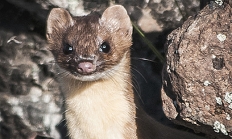
The Long-tailed weasel is the larger of the two weasels in Oregon, but smaller than the other member of the genus, the mink. Males are considerably larger than females. The head is flattened and somewhat triangular; the body and neck are elongate and almost cylindrical; the legs are short, and the tail is long. The summer pelage is brown dorsally; the venter is yellowish to orangish except for a white chin and sometimes one or more scattered brown spots. The tip of the tail is black. The pelage is molted twice annually. In the Cascade Range and eastward through the…
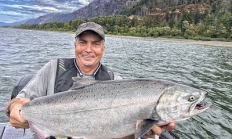
The Dalles, Ore.—The lower Deschutes River will be open for spring Chinook salmon from May 5-20. "This is exciting news for anglers as the last spring Chinook season on the Deschutes was in 2018," said Jason Seals, Deschutes District Fish Biologist. "We're expecting a return of more than 2,000 hatchery…
PENDLETON, Ore. – ODFW will close recreational spring Chinook retention in the Umatilla River Basin from May 30 through June 30, 2026. The closure will be in effect from the mouth of the Umatilla River, near Highway 730 bridge, to the Confederated Tribes of the Umatilla Indian Reservation (CTUIR) boundary…
Construction of this facility began in 1924 and production started in 1925 by the state of Oregon. Various renovations have taken place with the most recent being the addition of 4 new fish rearing raceways and improvements to the pollution abatement system which was completed in 2016. Other renovations made throughout the hatchery have utilized the Restoration and Enhancement Program.. The purpose of this facility is to enhance spring Chinook, winter steelhead, summer steelhead, and coho populations for various coastal streams. The facility is used for adult collection, egg incubation and rearing of spring Chinook, fall Chinook, winter steelhead, summer…
Big Creek Hatchery began operation in 1941. It was refurbished in 1957 under the Mitchell Act as part of the Columbia River Fisheries Development Program – a program to enhance declining fish runs in the Columbia River Basin. The facility is used for adult collection, egg incubation and rearing of winter steelhead, fall Chinook, and coho.
Salem, Or. — The Oregon Department of Fish and Wildlife's Salmon and Trout Enhancement Program (STEP) Advisory Committee will meet in person Tuesday, Oct. 14 in the Evergreen conference room in Cartwright's Taprock Grill & Restaurant at 971 SE 6 th St. in Grants Pass. The meeting runs from 8…
SALEM, Ore.—The Oregon Fish and Wildlife Commission will meet Thursday and Friday, Dec. 11-12 to set 2026 groundfish regulations and hear an informational briefing on the barbless hook requirement for Columbia River recreational fisheries. Both a Dec. 11 workshop and Dec. 12 meeting will be in a hybrid format, allowing for…
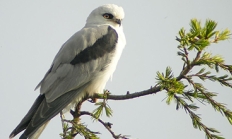
As the winter day turns to dusk, White-tailed kites drop into their roosts and Short-eared owls rise to take their place on the local hunting grounds. White-tailed kites in Oregon often roost communally in winter, but they disperse in early spring and are more difficult to find during the breeding season. By day, they are conspicuous as they hover over rural fields searching for prey, in part because of their pale appearance. The tail is entirely white, as are the head and the underparts. Dark crescents on the underwing can be seen when a bird is flying or hovering. Above…
ENTERPRISE, Ore. – Anglers may retain only one wild Chinook as part of the three adult daily bag limit for fall Chinook salmon per day when the season opens on the Snake River tomorrow, Aug. 18. All other permanent regulations remain unchanged. ODFW is adjusting regulations for the 2026 fall…
KLAMATH FALLS, Ore.—A video camera captured a Chinook salmon ascending the fish ladder at Keno Dam on the upper Klamath River this week (Sept. 24), the first picture of a salmon ascending the upper bays of the ladder since four hydroelectric dams were removed on the Klamath River last year…
SALEM, Ore.—ODFW is seeking to fill three vacant positions on the Salmon and Trout Advisory Committee (STAC). One position will represent the Mid-Coast District, the second will represent the Upper Rogue District, and the third will represent the Umpqua District. Interested individuals are encouraged to apply by 5:00 p.m. on…
The original portion of Fall River Hatchery construction was completed in 1929. Many improvements have been made since original construction. In 1952 the ten raceways were completed. The hatchery produces legal and trophy sized rainbow trout, and provides rainbow, brook and cutthroat trout fingerlings for air stocking programs throughout the state. The facility traps and spawns brown trout at a remote site.
The Short-eared owl is one of our most conspicuous owls owing to its use of open country and crepuscular habits. It is often seen hunting low over the ground across marshes, fields, and other open areas on its buoyant, long wings, flying slowly and irregularly like a giant moth. This owl also differs from most other owls as it seldom vocalizes and is more often seen than heard. It was named for its inconspicuous "ear" tufts arising from the center of the forehead, though field observers rarely see these tufts. Distinguishing characteristics include a pale buff facial disk and a…
The majestic trumpeter swan is the largest of our native waterfowl and one of the heaviest flying birds in the world with males sometimes exceeding 30 pounds. Historically hunted to the brink of extinction, it was recognized as an endangered species long before there was an Endangered Species Act, and its recovery is a conservation success story. The adult's snow-white plumage with contrasting black bill and feet and 8-foot wingspan define this magnificent bird. Their neck is as long as their body and is used to reach food at the marsh bottom. In spring, the trumpeter swan is a locally…

Klaskanine Hatchery was first operated in 1911 by the state of Oregon. In 1959 the hatchery was enlarged and renovated under the Columbia River Fisheries Development Program (Mitchell Act)—a program to enhance declining fish runs in the Columbia River Basin. The hatchery is now closely tied to the Select Area Fisheries Enhancement (SAFE) program and works closely with Clatsop County Fisheries (CCF). The facility is currently used primarily for rearing coho for SAFE commercial fisheries, as well as for adult collection and spawning of fall Chinook and as a rearing facility for fall Chinook and winter steelhead.