Search myodfw.com
Showing 101 - 120 of 408 results
The goal of the Oregon Hatchery Research Center (OHRC) is to answer scientific questions related to fish recovery and hatchery programs. Information gained at the Research Center will help answer questions vital to the success of the Oregon Plan for Salmon and Watersheds and implementation of the Native Fish Conservation Policy. The Oregon Hatchery Research Center is a cooperative research project between the Oregon Department of Fish and Wildlife and the Oregon State University Department of Fisheries and Wildlife.
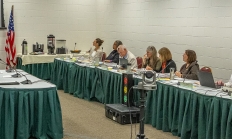
SALEM Ore. – The Fish and Wildlife Commission meets June 12-13 for a field tour on Thursday and a regular meeting Friday. See the agenda here. The meeting will also be livestreamed from the Commission page. To testify on an agenda item virtually, register on the agenda page at least…
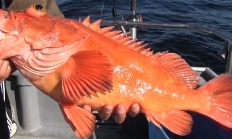
CLACKAMAS, Ore.—Following an in-season assessment of the upriver spring Chinook return, fishery managers from Oregon and Washington added more recreational spring Chinook fishing days on the mainstem Columbia during a joint state hearing yesterday. Six additional fishing days downstream of Bonneville Dam and five additional fishing days upstream of Bonneville…
SALEM, Ore.–The Fish and Wildlife Commission meets Sept. 11 and 12 in Ontario for a field tour on Thursday and a regular meeting on Friday. See agenda here. The meeting will also be livestreamed from the Commission page. To testify on an agenda item virtually, register on the agenda page…
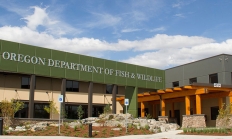
LA GRANDE, Ore. – Lookingglass Creek, a tributary to the Grande Ronde River at Palmer Junction, will open to fishing for hatchery spring Chinook on Friday, May 15. The open area is from the mouth upstream to the confluence of Jarboe Creek. Depending on which happens first, the fishing season will remain open through June 14 or until…
Each fathom line, conservation area, and marine reserve is defined by a connecting series of waypoints (latitude and longitude). The waypoints are used for regulatory enforcement, while maps are provided for visual reference.
Subscribe for updates Find catch estimates Ocean sport salmon regulations map
Phillip W. Schneider Wildlife Area provides winter range for mule deer populations and year-round habitat for a variety of wildlife including mammals, birds, reptiles and amphibians. Elk, deer, and bighorn sheep viewing is often good during winter and early spring. Bird watching is excellent all year. Native habitats include sagebrush shrubland, riparian, ponderosa pine forest, western juniper woodland and mixed conifer which support a diversity of fish and wildlife. The riparian areas along the mainstem John Day River, South Fork John Day River and Murderers Creek provide excellent habitat for many birds. Upland areas provide important habitat for passerines and…
SALEM, Ore.—ODFW is seeking qualified applicants to fill one sport fishing position and one commercial salmon industry position on the Restoration and Enhancement (R&E) Program Board. Interested individuals must apply by Oct. 6, 2025, use this form on the R&E Board page. The ideal sport fishing candidate will be a…
CLACKAMAS, Ore.—Fishery managers from Oregon and Washington added more recreational spring Chinook fishing days on the mainstem Columbia during a joint state hearing today. Eleven additional fishing days for the area from the Tongue Point/Rocky Point line in the estuary upstream to the Oregon/Washington border (upstream of McNary Dam) were…
Round Butte Hatchery was constructed in 1972 to mitigate for the fishery losses caused by Pelton/Round Butte (PRB) Hydroelectric Complex. Round Butte and its satellite, Pelton Ladder, are used for adult collection, egg incubation and rearing of spring Chinook, summer steelhead, and sockeye salmon.
CLACKAMAS, Ore. – The two-rod validation will not be available for the Willamette River in 2026 as the forecast for hatchery-origin adult fish does not meet the minimum return threshold. The 2026 Columbia River spring-summer forecast anticipates 43,700 adult Willamette-origin spring Chinook will return to the mouth of the Columbia…
SALEM, Ore. — ODFW is seeking applicants to serve on two public advisory committees that support its Fish Screening and Fish Passage Programs. These programs play a vital role in protecting native fish populations across the state. Through collaboration with landowners, agencies, and conservation partners, the programs work to keep…