

Search myodfw.com
Showing 101 - 120 of 705 results
Article
Resources to help prepare for a successful hunt in sagebrush country.

Zones or Areas
Densely forested hillsides from the coast through the Siskiyou Mountains to the Cascade Range offer excellent habitat for a myriad of big game species.
Zones or Areas
The transition from forested foothills of Mt. Hood to the beginnings of the Columbia Basin offers big game hunters an array of opportunities. The challenge can be finding public land or getting permission to hunt on private land.

Zones or Areas
This vast area covers the Columbia Basin through the Blue, Wallowa and Elkhorn mountains to Hells Canyon. Some of Oregon's most prized big game hunts are managed in this area.

Article
Pronghorn antelope are the fastest ungulates in North America and can reach speeds of up to 40 miles an hour. Oregon has about 25,000 pronghorn antelope, which are native to the Columbia Plateau and the High Desert shrublands of eastern Oregon.
January 8, 2026

Species and Subspecies
Features: Overall, medium-gray with a white underside. Gray, bushy tail has a white "halo." Habitat: It is commonly associated with mixed forest communities in central Wasco, Jefferson, Deschutes, and Klamath counties west, except for unforested portions of the Willamette Valley, to central Washington, Benton, Lane, Douglas, Coos, and Curry counties. It is active at all seasons and exhibits diurnal activity almost exclusively. Techniques: Most hunters use a small caliber rifle, and aim for the head to avoid ruining the meat.

Article
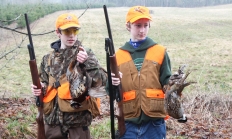
Mentored Youth Hunter Program allows youth 9 through 15 years of age to hunt without first passing an approved hunter safety education program. It gives unlicensed youngsters an unlimited opportunity to receive mentored, one-on-one field experience and training on the ethics, safety, responsibility and enjoyment of hunting while closely supervised by a licensed adult who is 21 years of age or older and who has a valid license and tag(s) for the dates, area and species being hunted. Register for the Mentored Youth Hunter Program free of charge online (in the youth account) or at any license sales agent where…
July 1, 2026
Species and Subspecies
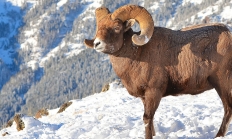
Features: Rocky Mountain bighorn sheep are the largest-bodied bighorn in North America and one of two subspecies of wild sheep in Oregon. Bighorn sheep were extirpated from the state in the 1800s so current populations are the result of a reintroduction effort by ODFW and sportsman groups. Habitat: Oregon’s estimated 800 Rocky Mountain bighorn sheep are found in the northeast corner of the state, in canyons of the Snake River and its tributaries and in alpine areas of the Wallowa Mountains. Techniques: Bighorn sheep are one of the rarest game species hunted in Oregon today, with about 100 tags available…
Species and Subspecies
Features: Rocky Mountain elk are one of two subspecies of elk found in Oregon, with a population estimate of more than 74,000 in the state. They are lighter in color and slightly smaller in size than Roosevelt elk, but their antlers are the largest of all elk and can weigh up to 40 pounds. Habitat: Rocky Mountain elk inhabit most of eastern Oregon with concentrations in the Blue Mountains and south-central Oregon. Techniques: Rocky Mountain elk live in much more open country that Roosevelts so try glassing, still hunting, spot and stalk and calling. Rifle, archery and muzzleloader seasons are…

Species and Subspecies
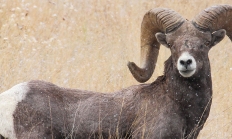
Features: California bighorn sheep are one of two subspecies of wild sheep in Oregon. They are usually smaller, with a less blocky build and smaller horns than Rocky Mountain bighorn sheep. Bighorn sheep were extirpated from the state in the 1800s. Current populations are the result of a reintroduction effort by ODFW and sportsman groups. Habitat: California bighorn sheep are the most abundant subspecies in Oregon with an estimated 3,700 found among 32 herds in central and southeast Oregon. They prefer rugged, open habitats with a good view of their surroundings. Techniques: Bighorn sheep are one of the rarest game…
Press Release
SALEM, Ore. – ODFW completed a final draft of the 2025 State Wildlife Action Plan (SWAP), now available online for public review. A virtual public meeting will be held on Wednesday, July 16 at 6 p.m., where ODFW staff will present highlights from the plan and answer questions. The public…
July 14, 2025
Landing page
Find the weekly statistics for waterfowl and upland game birds at Ladd Marsh Wildlife Area. More information about Ladd Marsh Wildlife Area
September 22, 2017
Press Release
SPRINGFIELD, Ore.— The Commission voted 6-1 to deny a petition that requested crab fishery rules be modified to further reduce the risk of whale entanglement, while urging the department to continue its planned rulemaking process and engagement with NOAA fisheries to obtain ESA coverage. Whale entanglements have increased in Oregon…
February 20, 2026

Press Release
SALEM, Ore.—Manulife will not renew its cooperative agreement with ODFW's Access and Habitat program, the company informed ODFW late last week. This means Manulife properties in northeast Oregon and Jackson County that are currently open to hunter access through the Access and Habitat "Welcome to Hunt" program will no longer…
January 21, 2026
Landing page
Find the 2025-26 weekly statistics for waterfowl and upland game birds at Klamath Wildlife Area. More information about Klamath Wildlife Area
September 15, 2017
Landing page
Find the weekly statistics for waterfowl and upland game birds for E.E. Wilson Wildlife Area. More information about E.E. Wilson Wildlife Area
October 03, 2017
Press Release
SALEM, Ore.— ODFW will host a series of free upland game bird hunts for youth hunters starting in September. The hunts will take place around the state and youth hunters (age 17 and under) who have completed hunter education by the time of the event can sign up now for…
August 6, 2026
Article
Oregon offers spring and fall bear hunting seasons. Spring bear season requires a controlled hunt application, while fall bear is an entirely general season hunt. Apply for a controlled hunt
February 19, 2026

Landing page
Find the weekly statistics for waterfowl and upland game birds at Summer Lake Wildlife Area. More information about Summer Lake Wildlife Area Bird counts at Summer Lake WA
October 01, 2025
Press Release
SALEM, Ore.—With the May 15 deadline approaching, ODFW is reminding hunters to apply early for 2026 controlled deer hunts and to carefully review changes to Eastern Oregon deer hunts. With the transition from Wildlife Management Units (WMUs) to Deer Hunt Areas in eastern Oregon, hunters who wait until the last…
April 23, 2026