
Search myodfw.com
Showing 101 - 120 of 677 results
Returning adult salmon and steelhead enter the fish ladder on the south side of the dam and are held in a 12’ x 40’ trap until they can be processed by ODFW’s South Santiam Hatchery staff. Hatchery employees operate the fish trap one to three times per week depending on the time of year and numbers of adults returning to the system. An average of 4,000 spring Chinook, 4,700 summer steelhead, and 670 winter steelhead are collected annually. All unmarked spring Chinook and winter steelhead are returned to their native habitats in the South Fork of the Santiam above Foster…
Find maps, boundary descriptions and hunts available in the new Fox Hunt Area. Download printable PDF map
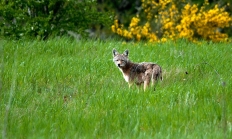

Find maps, boundary descriptions and hunts available in the new Poverty Basin Hunt Area. Download printable PDF map
Fun facts about our bats Oregon's bats eat only insects. An adult bat eats about 1,000 insects every hour! Bats hang upside down because it gives them an ideal position for take-off. Bats can fly 20 to 30 miles an hour and travel more than 100 miles a night. A baby bat is called a pup. Young bats can fly between two and five weeks of age. Bats are the only flying mammal. ODFW's Living with bats page has tips on protecting at-risk populations, and more. Bat Conservation International Batty for Bats: Facts for kids (pdf) Build a bat house…


Find the 2025-26 weekly statistics for waterfowl and upland game birds at Klamath Wildlife Area.
Find maps as well as boundary and percent public land for the Grizzly Unit.
Hunter's Guide Hunter's Resources Hunter's Technique Hunter's Bounty
Spring and Fall
Online Learning

SALEM, Ore. – The Private Forest Accord (PFA) Advisory Committee will hold its regular virtual meeting on Tuesday, October 21, 2025. Oregon Department of Fish and Wildlife staff will present two new funding pathways for the PFA Grants Program, Land Transactions and Water Transactions, followed by Advisory Committee discussion of…
Cascade Hatchery was authorized under the Mitchell Act and began operating in 1959 as part of the Columbia River Fisheries Development Program – a program to enhance declining fish runs in the Columbia River Basin. The facility is used for egg incubation and rearing of coho.
Find maps, boundary descriptions and the percent public land for the Wilson Unit.

Find maps, boundary descriptions and percent public land for the Fossil Unit.
Find maps, boundary descriptions and the percent public land for the Willamette Unit.