
Search myodfw.com
Showing 1041 - 1060 of 1128 results
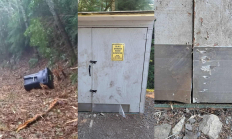
A black bear tried its best to get into a Neskowin homeowner's bear resistant trash can. The homeowner then built a small shed to enclose the trash can. The persistent bear left its prints and claw marks on the shed but did not succeed in breaking into it. This resident…
Find the weekly statistics for waterfowl and upland game birds at Denman Wildlife Area. More information about Denman Wildlife Area
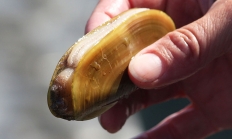
Features: This clam has a long, narrow, thin shell with a smooth brown coating. Habitat: Razor clams are found in stable, sandy, surf-swept beaches of the open coast and some coastal bays. Razor clams have the ability of digging up to a foot per minute and have been found more than four feet deep in the sand. The 18 mile stretch of Clatsop beaches account for 90% of Oregon’s razor clam harvest. The razor clam population in this area is much denser than any other area in the state. Other areas that also have razor clams include Indian Beach (Cannon…
SALEM, Ore. – Organizations and partners interested in funding conservation, outdoor access, and recreation projects in Oregon are encouraged to apply soon, as the Oregon Conservation and Recreation Fund (OCRF) grant application window is open now but closes Monday, Feb. 9, 2026. The OCRF Advisory Committee began accepting applications on…
Seeing killer whales off the Oregon coast is a rare treat, but whale watchers can usually count on a pod of orca’s patrolling the coast in mid-April – just in time to intercept baby gray whales. Orcas are most often seen in the ocean off Depoe Bay and Newport, but can be spotted coastwide. The first thing you are likely to see when sighting killer whales is their dorsal fin. Male orcas have a dorsal fin that can be six feet in height, juveniles and females have shorter fins. These large fins can be seen from quite a distance. There…

FOR IMMEDIATE RELEASE Oregon Department of Fish and Wildlife (ODFW) Confederated Tribes of the Umatilla Indian Reservation (CTUIR) Statement on Qapqápa Wildlife Area Acquisition Oregon Department of Fish and Wildlife (ODFW) and the Confederated Tribes of the Umatilla Indian Reservation (CTUIR) regret to announce that the Qapqápa (pronounced cop-COP-a) Wildlife…

Upon taking an adult salmon, steelhead, legal-size sturgeon or Pacific halibut, the angler must immediately enter the codes for the species caught, ocean port or stream, and the month and day of catch. The information from these tags helps ODFW manage the fisheries and estimate total harvest. Currently nearly 40 percent of anglers use e-tagging. Want to switch from paper to electronic? Login to your account and look under your profile to switch.
Irrigon Hatchery began operation in 1984 as part of the Lower Snake River Compensation Program (LSRCP)—a program to mitigate for spring Chinook and summer steelhead losses caused by the four federal dams constructed on the lower Snake River. This facility serves as an egg incubation and rearing facility for summer steelhead destined for the Grande Ronde and Imnaha river systems and egg incubation for 575,000 Umatilla coho eggs for transfer to Cascade Hatchery. Irrigon Hatchery also rears 1.4 million fall Chinook for the Grande Ronde and Snake Rivers and is used as a rearing site for legal-sized and trophy rainbow…
Bitterns, herons, and egrets are all long-legged wading birds with long necks and pointed bills for spearing fish or other prey.

SALEM, Ore. – People across Oregon are being urged to avoid contact with sick or dead birds as highly pathogenic avian influenza (HPAI) continues to impact wild and domestic bird populations across the state. There is currently no effective treatment for wild and domestic birds, and the virus can spread…

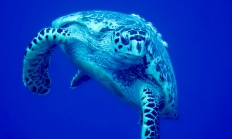
Sea turtles are federally protected under the Endangered Species Act of 1973. NOAA Fisheries is responsible for conservation and recovery of sea turtles in the marine environment, while the U.S. Fish and Wildlife Service is lead on conservation and recovery of sea turtles on nesting beaches.
Oregon has two species of pelicans, American white and the Brown pelican, and three species of cormorants. All are fish-eating water birds with four toes joined by webbing. Depending on the species, pelicans and cormorants inhabit the Oregon coast, rivers or interior waterbodies.

The Eastern gray squirrel is the smallest member of the genus in Oregon. This squirrel was introduced into Oregon and can now be found in Salem, Portland, Milwaukie, and Vale. All populations in Oregon have been found in urban areas. This squirrel is active throughout the year, activity restricted to daylight hours. Photo from Washington Fish and Wildlife

Public comment period open; comment via online form SALEM, Ore.—Oregon's Fish and Wildlife Commission will meet Feb. 20 at the Lane County Armed Forces Readiness Center, 3106 Pierce Parkway in Springfield. The meeting starts at 8 am and will be livestreamed on the meeting agenda page and at ODFW's YouTube…
SALEM, Ore. – The Private Forest Accord (PFA) Advisory Committee will hold its regular virtual meeting on Tuesday, October 21, 2025. Oregon Department of Fish and Wildlife staff will present two new funding pathways for the PFA Grants Program, Land Transactions and Water Transactions, followed by Advisory Committee discussion of…
This snake is found in meadows and at the edges of clearings in forests. It prefers areas with dense vegetation but, when basking, can be found in open areas or on talus slopes. It occurs in wooded areas on the floor of the Willamette Valley and has been found in the Rogue Valley. This garter snake is commonly found in suburban areas and city parks. The Northwestern garter snake feeds mainly on slugs and earthworms, but also takes insects, small salamanders, frogs, fish, small mammals, and possibly nestlings of ground nesting birds. Photo by J. Maughn, Flickr
