Search myodfw.com
Showing 121 - 140 of 705 results
Article
Regulated Hunt Areas (RHAs) are cooperative programs between Oregon Department of Fish and Wildlife and private landowners that offer regulated hunting on private lands. Each RHA has special regulations so be sure to check them before hunting. The Upland Cooperative Access Program (UCAP) is an incentive-based program designed to provide quality public hunting opportunities for upland game birds on private lands in Wasco, Sherman, Gilliam and Morrow counties in the Columbia Basin.
September 11, 2017
Press Release
HINES, Ore. – ODFW biologists confirmed that a natural mixing event, or "turnover," likely caused the death of stocked rainbow trout recently observed at Burns Gravel Pond on Hwy 78. The pond is located two miles east of Burns, Ore., on Hwy 78 on property owned by ODFW. The pond's…
September 30, 2025
Press Release
SALEM, Ore. – ODFW biologists confirmed that a blue-green algae likely caused the death of stocked rainbow trout recently observed at Burns Gravel Pond on Hwy 78. The pond is located two miles east of Burns, Ore., on Hwy 78 on property owned by ODFW. The pond's two basins are…
September 10, 2026
Press Release
SALEM, Ore. – ODFW and the Oregon Hunters Association (OHA) will give away free wildlife forage seed to landowners at E.E. Wilson Wildlife Area near Corvallis on Saturday, May 9. The giveaway coincides with OHA's Youth Field Day (limited spots available). Seed giveaway More than 500 bags of free seed…
April 22, 2026
Article
Successful bear hunters must appear in-person at an ODFW office to check in their bear's skull.

Article
A growing number of people take to the woods in winter, looking for antlers that have been shed by Oregon’s deer and elk. This is a critical time for big game, and shed hunting responsibly can help protect vulnerable animals.
February 9, 2026
Zones or Areas
Southeast Oregon, with its ponderosa pine forests, sage steppe expanses and aspen pocked mountains, is a very popular area to hunt mule deer, elk and pronghorn antelope.
Zones or Areas
This area extends from the eastern flanks of the Cascade Range through the Ochoco Mountains to the beginning of the Great Basin, making it a great place to explore.

Species and Subspecies
Features: The most distinguishing feature of white-tailed deer is the tail. Whitetails have long, wide tails that can easily be seen, especially when they are startled and raise their tails. White-tailed deer antlers differ from mule and black-tailed deer in that there is one main beam with points coming off. Mule and black-tailed deer have antlers that fork on the main beam. Habitat: White-tailed deer share the same habitat as eastern Oregon’s mule deer. Deer both graze and browse. Forbs and browse (stems and leaves of woody plants) are favored forage during the growing season. Grasses are consumed during some…

Species and Subspecies
Features: Columbian black-tailed deer are smaller and darker than mule deer. As the name suggests, black-tailed deer have a wide, triangular tail with a dark brown or black top and a white underside. Habitat: Blacktails are a subspecies of mule deer found in western Oregon from the Coast Range east to the Cascade Mountains. They are edge-adapted species using the region’s dense forest cover to hide during the day and are then more open in early successional forest to feed at dawn and dusk. Places with a mix of forest age classes offer the best habitat for black-tailed deer. Techniques…

Species and Subspecies
Features: Mule deer are larger and lighter in color than black-tails. Mule deer have a thinner “ropelike” tail that is white with a black tip. Their antlers are forked, as opposed to having a main beam. And as their name implies, they have large ears, like a mule, that stand at an angle. Habitat: Mule deer occupy a wide range of habitat types; some live in desert shrub-steppe, some in woodlands, and some in conifer forests. In general, however, mule deer occupy the more open, rugged areas. Although mule deer commonly are considered “browsers," they consume a wide variety of…

Species and Subspecies
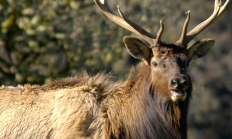
Features: Roosevelt elk are one of two subspecies of elk found in Oregon, with an estimated population of 59,000 in the state. “Rosies” are darker in color than other elk subspecies and the largest in terms of body size, with bulls generally weighing 700-1,100 pounds. Habitat: Roosevelt elk occupy most of western Oregon, with concentrations in the Cascade and Coast ranges. All elk west of Hwy 97 are considered to be Roosevelt elk, though there is some overlap of Oregon’s two subspecies in the Cascades. Techniques: Roosevelt elk make their home in the thick and lush forests of western Oregon…
Species and Subspecies

Species and Subspecies
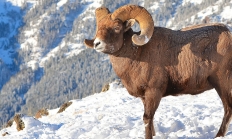
Features: The mountain goat is stockily built with black scimitar-shaped horns, large black hooves and prominent dewclaws, and an entirely white, woolly coat. Habitat: Rocky Mountain goats are found in steep and rugged habitat in eastern Oregon, including the Wallowa, Elkhorn and Strawberry mountains, and the central Cascades near Mt Jefferson. Techniques: Rocky Mountain goat tags are “once-in-a-lifetime” and less than 25 are available each year. Be prepared to hunt their steep, rugged habitat if you are lucky enough to draw a tag.

Species and Subspecies
Article
Take a look at what hunters can expect in 2026 for their specific hunt areas, details provided by wildlife biologists throughout the state.
March 3, 2026

Article
Hunting regulations level the playing field for all hunters and maintain fair chase standards. New technology threatens both.
October 2, 2025