
Search myodfw.com
Showing 141 - 160 of 509 results
Features: Greater sage-grouse are a large grouse species. They are mottled gray-brown with black undersides. Males have black on the head and throat, while females have white behind their eyes. Habitat: Sage-grouse were originally found through much of the sagebrush dominated areas of eastern Oregon, but were eliminated from large areas by the mid 1900s through conversion of land for agricultural purposes. There has been little change in sage-grouse range, however since the 1950s. They live exclusively in sagebrush steppe habitat. During dry years, they may be concentrated in the vicinity of water sources. Technique: Due to greater sage-grouse fluctuating…


Find the weekly statistics for waterfowl and upland game birds at Fern Ridge Wildlife Area.
Find maps, boundary descriptions and hunts available in the new Juntura Hunt Area. Download printable PDF map
These small, fast flying seabirds are unique among alcids in North America in their use of coastal coniferous forests, primarily old-growth trees, as nesting habitat. Their solitary nests are usually concealed within the forest canopy, and breeding birds are cryptic and primarily crepuscular at nest sites. Because of their secretive behavior and elusive nests, Marbled murrelets were considered the "enigma of the Pacific" and were one of the last ornithological mysteries in North America, as the first nest was not discovered until 1974. Distribution at inland nesting sites is fragmented, as birds occur only in areas where suitable habitat remains…

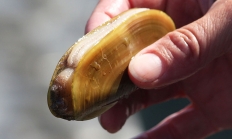
Features: This clam has a long, narrow, thin shell with a smooth brown coating. Habitat: Razor clams are found in stable, sandy, surf-swept beaches of the open coast and some coastal bays. Razor clams have the ability of digging up to a foot per minute and have been found more than four feet deep in the sand. The 18 mile stretch of Clatsop beaches account for 90% of Oregon’s razor clam harvest. The razor clam population in this area is much denser than any other area in the state. Other areas that also have razor clams include Indian Beach (Cannon…
Find maps, boundary descriptions and hunts available in the new Northeast Hunt Area. Download printable PDF map
Find the weekly statistics for waterfowl and upland game birds at Ladd Marsh Wildlife Area.
Find the weekly statistics for waterfowl and upland game birds for E.E. Wilson Wildlife Area. More information about E.E. Wilson Wildlife Area
Protecting and enhancing Oregon’s fish and wildlife, and the habitats they use, for the use and enjoyment of present and future generations is at the heart of what we do.
Find maps, boundary descriptions and hunts available in the new Mid Columbia Hunt Area. Download printable PDF map

Find maps, boundary descriptions and hunts available in the new Northeast Hunt Area. Download printable PDF map

Wizard Falls Hatchery was constructed in 1947. Many improvements have been made to the facility since original construction. The hatchery has a rainbow trout broodstock which supply rainbow trout to the Deschutes sub-basin and southeast Oregon. The hatchery is used for incubation and rearing of kokanee salmon and rainbow trout to provide for recreational fishing program objectives, and the incubation and rearing of spring Chinook and summer steelhead as part of a reintroduction program in the upper Deschutes Basin. Brook trout and cutthroat trout fingerlings are reared for the air stocking program on odd years. Kokanee salmon are spawned remotely.
The Bureau of Land Management maintains a series of pastures along Oregon Highway 38 that are a year-round residence for a herd of 60-100 Roosevelt elk. Elk are visible almost every day of the year!