Search myodfw.com
Showing 1561 - 1580 of 1656 results
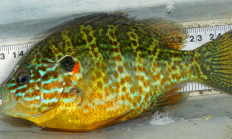
Features: Pumpkinseeds may be identified by the orange or red spot on the ear flap and the orange cheeks with wavy blue or turquoise stripes. Color is exceedingly brilliant and somewhat variable; olive to brassy-green above, the back finely dusted with gold or emerald. Habitat: Pumpkinseeds are found in the same habitats and often in association with bluegills. Adults often congregate beneath old deadheads and trees that have fallen into the water. Food habits are also similar to bluegill. They consume large numbers of snails by browsing on the stalks of aquatic vegetation. Techniques: Pumpkinseed are found in many of…
Features: Oregon is home to an estimated 25,000-30,000 black bears, which is North America’s most common bear species. They are the only type of bear found in Oregon. Despite their name, black bears are often brown in color. Habitat: Black bears are found statewide, with concentrations in the Coast and Cascade ranges and the Blue Mountains. Techniques: Oregon offers a controlled spring season (apply by Feb. 10) and a general fall season. Glassing open areas where bears are feeding on grass and shrubs works early spring season. Later in the season, some hunters turn to predator calls. Most fall bears…

This release was updated April 25 to correct two errors (the first name of the OSP Lieutenant who testified on Sauvie Island parking issues and that the Don Lindly property was sold to Lincoln County not Lincoln City.) LINCOLN CITY, Ore.—The Commission adopted a limited entry parking program for summer…
ODFW's Oregon Conservation and Recreation Advisory Committee meets May 4 and 5 SALEM, Ore. – The Oregon Conservation and Recreation Advisory Committee will meet in Newport on Monday, May 4 at 12 p.m. for a tour of area projects. The Conservation and Recreation Advisory Committee will also meet Tuesday, May…
Features: The pronghorn is deer-sized (up to 150 lbs) with relatively long and thin legs and feet, only two digits on each foot (no "dew claws"), a relatively small tail, and unique horns. Bright white sides, underside and rear end help hunters spot them in the field. Habitat: Pronghorn are found in the High Desert sagebrush of eastern Oregon and the Columbia Plateau. Techniques: Most pronghorn hunts happen in August, before other big game seasons, so be ready for the High Desert’s warm summer temperatures. All pronghorn hunting is limited entry (apply by May 15) and it can take several…

Features: Oregon is home to more than 6,000 cougars, or mountain lions. Cougars are the largest members of the cat family found in the state and tend to be solitary, except for females raising young. Males in particular are very territorial. Habitat: Cougars are throughout Oregon, with concentrations in the Cascade Range and Blue Mountains. Lately, more cougars are being seen in northwest Oregon including the suburbs of Portland. Techniques: Hunting is open statewide under a general season all year, or until zone quotas are met. Most cougars in Oregon are taken while hunters are out pursuing other species like…

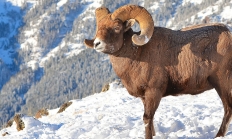
Features: The mountain goat is stockily built with black scimitar-shaped horns, large black hooves and prominent dewclaws, and an entirely white, woolly coat. Habitat: Rocky Mountain goats are found in steep and rugged habitat in eastern Oregon, including the Wallowa, Elkhorn and Strawberry mountains, and the central Cascades near Mt Jefferson. Techniques: Rocky Mountain goat tags are “once-in-a-lifetime” and less than 25 are available each year. Be prepared to hunt their steep, rugged habitat if you are lucky enough to draw a tag.

Updated December 31, 2025 Subscribe for updates Starting Jan. 1, 2026, an Ocean Endorsement is needed for most recreational anglers fishing in the ocean. Check the Ocean Endorsement page for more information. Ocean Endorsement
Updated April 29, 2026 Subscribe for updates Starting Jan. 1, 2026, an Ocean Endorsement is needed for most recreational anglers fishing in the ocean. Check the Ocean Endorsement page for more information. Ocean Endorsement
While there is a general, statewide season for cougars, there are quotas set by zone. Once a quota in a certain zone is met, that zone will close for cougar hunting. Below are the most recent numbers on cougar harvest by zone.
Salamanders are a group of tailed amphibians with long bodies and short limbs. They often prefer habitats with damp conditions, which allows them to “breathe” better through their skin. Wet and rainy days (typically late fall through spring in Oregon) are the best time to look for salamanders, as the additional moisture from fog and rain allow for increased surface activity. To find salamanders, look in cracks or search under bark, rocks or logs. If you move any debris during your search, remember to put it back where you found it when you’re done—salamanders are sensitive to disturbance and many…

Game bird seasons in Oregon run from July 1 to June 30, which means you'll need to purchase new upland and waterfowl validations before you hunt again in the fall. If you have questions or need assistance, please call ODFW licensing staff at 503-947-6101. Buy license Check current Game Bird Regulations for details on licenses, tags, permits and validations. Purchase the federal duck stamp here to prepare for waterfowl season. Special permits-applications-forms *Use current published regulations by downloading a .pdf on your device. (AI-may contain inaccurate data).

Hunting licenses are valid from Jan. 1 to Dec. 31. If you have questions or need assistance, please call ODFW licensing staff at 503-947-6101. Buy license Check current Big Game Regulations for details on licenses, tags, permits and validations. *Use current published regulations by downloading a .pdf on your device. (AI-may contain inaccurate data).
Fishing licenses are valid from Jan. 1 to Dec. 31. If you have questions or need assistance, please call ODFW licensing staff at 503-947-6101. Buy license Check current Sport Fishing Regulations & updates for details on required licenses, tags, permits, and endorsements. *Use current published regulations by downloading a .pdf on your device. (AI-may contain inaccurate data).
Shellfish licenses are valid from Jan. 1 to Dec. 31. If you have questions or need assistance, please call ODFW licensing staff at 503-947-6101. Buy license Check current Sport Fishing Regulations for details on licenses, tags, permits and endorsements. *Use current published regulations by downloading a .pdf on your device. (AI-may contain inaccurate data).