
Wildlife Control Operators - WCO Permit
Regulating harvest, health, and enhancement of wildlife populations
Oregon's permitted wildlife control operators (WCO) are an individual, business owner, or the business owner's designee charging a fee to control furbearers, unprotected mammals (excluding moles) and western gray squirrels causing damage, creating a public nuisance or posing a public health or safety concern in incorporated city limits and associated urban development areas. They are permitted by ODFW and governed by a set of rules.
What should you do if you have a nuisance problem?
If you are experiencing wildlife causing a nuisance on your property, contact a permitted wildlife control operator or contact ODFW if you wish to conduct the trapping yourself. A WCO permit is not required for the onsite capture and euthanasia of species defined as "predatory animals".
Local and regional ODFW offices
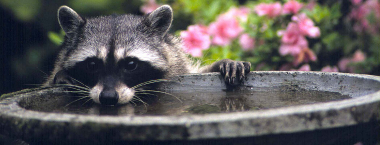
"Furbearers" means beaver, bobcat, fisher, marten, mink, muskrat, otter, raccoon, red fox, and gray fox.
"Predatory animals" means coyotes, rabbits, rodents (except beaver), feral swine, Starling, House sparrows, and Eurasian Collared Doves which are or may be destructive to agricultural crops, products and activities.
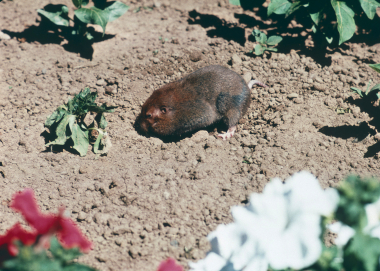
"Unprotected Mammals" means badger, coyote, gophers (Thomomys bottae, T. bulbivorus, T. mazama, T. talpoides and T. townsendii), moles (Scapanus townsendii, S. orarius and S. latimanus), mountain beaver (Apolodontia rufa), yellowbellied marmots (Marmota flaviventris), nutria, opossum, porcupine, spotted skunk, striped skunk, and weasel.
For any person owning, leasing, occupying, possessing or having charge of or dominion over any land (or an agent of this person) who is taking or attempting to take coyote, gophers, mountain beaver (boomer), marmot, nutria, or porcupine on that property, these six species are considered to be predatory animals.
Prohibited species listed in OAR 635-056-0050 such as Nutria, Eastern Gray Squirrels, Eastern Fox Squirrels, and Virginia Opossum must be euthanized and cannot be released onsite.

- How to become a Wildlife Control Operator?
A WCO permit is required for any individual, business owner, or the business owner's designee charging a fee to control furbearers, unprotected mammals (excluding moles) and western gray squirrels causing damage, creating a public nuisance or posing a public health or safety concern in incorporated city limits and associated urban development areas.
A permit is also required for the offsite transportation of any live wildlife on behalf of private property owners or legal occupant of the property.
A WCO permit is not required for the onsite capture and the onsite euthanasia of species defined as "predatory animals". "Predatory animals" means coyotes, rabbits, rodents, and feral swine which are or may be destructive to agricultural crops, products and activities (ORS 610.002 & 610.105). This definition is applicable where wildlife is taken under the authority of one who owns leases, occupies, possesses or has charge or dominion over the land. Muskrats and western gray squirrels (Sciuris griseus) causing damage on private property are defined as predatory animals under ORS 610.002.
A private property owner that chooses to trap (excluding "Predatory animals") and lawfully remove an animal from his or her property needs an ODFW permit, but not a WCO permit. Such permits are free of charge and can be obtained by contacting the nearest ODFW office.
However, ODFW recommends that private property owners unfamiliar with trapping wildlife seek the help and advice of professional WCOs before attempting to trap or remove wildlife, in order to best protect the welfare of the animal and the health and safety of people.
Steps to become a WCO and maintain a permit:
1. Contact your local or regional odfw office to schedule an exam. A fee of $25 will be charged each time a person takes the WCO test. A minimum test score of 80 percent is required to pass. Study materials for the test can be found in the WCO Training Manual.
a. Anyone who is conducting wildlife control activities is required to take and pass the test with a minimum score of 80%. A business owner who does not conduct any type of wildlife control activities is not required to take and pass the test but must have a designee of the business that has successfully passed the WCO test.
2. Apply - WCO New Application (pdf).
3. Maintain reporting and renewal requirements:
- Reporting must be completed every January and July, within the 30-day reporting window.
- Permit renewal occurs every two years during the month of December.
Important notes:
- Failure to renew will result in the expiration of your permit and WCO number. Your WCO number will not be renewed if it expires and you will be issued a new number if you choose to reapply (see step 1).
- Failure to report may result in the cancelation of your permit.
- If you are experiencing difficulties, please contact us as soon as possible. We can assist you better if you reach out early.
New WCO Existing WCO Other Information WCO Training Manual (pdf)
WCO New Application (pdf)
Affidavit (pdf)
WCO Continuing Education (pdf)
Employee Change Form (pdf)
Reporting FAQs (pdf)
Acceptable management practices for bat control activities in structures (pdf)
Furbearer Trapping and Hunting
National White-Nose Syndrome Decontamination Protocol (pdf)
White-nosed syndrome fact sheet (pdf)
White-nosed syndrome brochure (pdf)
Oregon threatened and endangered species List (pdf)
Sensitive species information (pdf)
Most common rehabbed species (pdf)
Explore Related Articles

living with wildlife
Build a bat box and know who to call with bat questions
More than 50 percent of native bats in North America are at risk. In Oregon, eight of 15 species are...

Young animals are rarely orphaned, so leave them where you find them. Chances are mom is nearby, just waiting
...
Support Oregon's Wildlife
When you buy a Habitat Conservation Stamp, you are helping to conserve Oregon's native species and their habitat.