
Search myodfw.com
Showing 121 - 140 of 1647 results
The original portion of Fall River Hatchery construction was completed in 1929. Many improvements have been made since original construction. In 1952 the ten raceways were completed. The hatchery produces legal and trophy sized rainbow trout, and provides rainbow, brook and cutthroat trout fingerlings for air stocking programs throughout the state. The facility traps and spawns brown trout at a remote site.
Wizard Falls Hatchery was constructed in 1947. Many improvements have been made to the facility since original construction. The hatchery has a rainbow trout broodstock which supply rainbow trout to the Deschutes sub-basin and southeast Oregon. The hatchery is used for incubation and rearing of kokanee salmon and rainbow trout to provide for recreational fishing program objectives, and the incubation and rearing of spring Chinook and summer steelhead as part of a reintroduction program in the upper Deschutes Basin. Brook trout and cutthroat trout fingerlings are reared for the air stocking program on odd years. Kokanee salmon are spawned remotely.
Bandon Hatchery was constructed in 1925. Various renovations have taken place since original construction and more are planned for the future. The facility is used for adult collection, egg incubation and rearing of both natural and hatchery fall Chinook, winter steelhead, and trophy-sized rainbow trout.
The major portion of Elk River Hatchery construction was completed in 1968. In 1971 the hatchery completed final construction on an intake and ten new ponds. The purpose of the facility is to supplement natural production of fall Chinook in the Elk and Chetco Rivers and winter steelhead in the Chetco River. The facility is used to collect Elk River fall Chinook, to incubate eggs and rear both natural and hatchery fall Chinook and winter steelhead.
Find maps, boundary descriptions and the percent public land for the Lookout Mountain Unit.
Klaskanine Hatchery was first operated in 1911 by the state of Oregon. In 1959 the hatchery was enlarged and renovated under the Columbia River Fisheries Development Program (Mitchell Act)—a program to enhance declining fish runs in the Columbia River Basin. The hatchery is now closely tied to the Select Area Fisheries Enhancement (SAFE) program and works closely with Clatsop County Fisheries (CCF). The facility is currently used primarily for rearing coho for SAFE commercial fisheries, as well as for adult collection and spawning of fall Chinook and as a rearing facility for fall Chinook and winter steelhead.
Cascade Hatchery was authorized under the Mitchell Act and began operating in 1959 as part of the Columbia River Fisheries Development Program – a program to enhance declining fish runs in the Columbia River Basin. The facility is used for egg incubation and rearing of coho.
Alsea Hatchery was constructed in 1936 and is operated with state funds. Many improvements have been made to the hatchery since original construction. The hatchery produces both winter steelhead and rainbow trout. The facility is used for adult collection, spawning, egg incubation and rearing of winter steelhead, and egg incubation and rearing of rainbow trout.
Find maps, boundary descriptions and the percent public land for the Malheur River Unit.
Find maps, boundary information and the percent public land for the Maupin Unit.

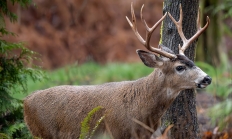
Find maps, boundary information and the percent public land in the Maury Unit.
Find maps, boundary descriptions and the percent public land for the McKenzie Unit.
Find maps, boundary descriptions and the percent public land for the Melrose Unit.
This 141-acre property along both sides of the Yachats River was first purchased in the early 1980s to provide forage for elk and help alleviate elk damage to surrounding agricultural land. It also provides public access to the Siuslaw National Forest along the Yachats River Highway, where there are few public access points.
Find maps as well as boundary and the percent public land for the Metolius Unit.
Jewell Meadows Wildlife Area is located in the Oregon Coast Range Mountains, in the northwestern part of the state. The wildlife area was established in 1969, with an initial purchase of 183 acres. It now encompasses 1,114 acres. The wildlife area’s purpose is to protect and enhance habitat to benefit native wildlife species, to reduce wildlife damage to adjacent properties, and to provide the public with an opportunity to observe wildlife in a natural setting.
Following droughts in the 1930s that affected most of North America, major conservation efforts, both private and governmental, were enacted to reverse trends of degrading and disappearing wetlands. During this time period there was a major creation and expansion of Federal refuges and State wildlife areas. As the concept of waterfowl flyway management was endorsed and developed, wildlife areas were acquired and managed as part of a larger plan focused on migratory waterfowl needs. Klamath Wildlife Area was one of several wetland-focused wildlife areas established in Oregon. KWA was established in 1958, with primary objectives of protecting and improving waterfowl…