
Search myodfw.com
Showing 301 - 320 of 1410 results
Find maps, boundary descriptions and the percent public land for the Dixon Unit.
Find maps, boundary descriptions and the percent public land for the Sprague unit.
Find maps, boundary descriptions and the percent public land for the Whitehorse Unit.
Find maps, boundary descriptions and the percent public land for the Imnaha Unit.
Find maps, boundary descriptions and the percent public land for the Lookout Mountain Unit.
Find maps, boundary descriptions and the percent public land for the Alsea Unit.
Find maps, boundary descriptions and the percent public land in the Biggs Unit.
Find maps, boundary descriptions and the percent public lands for the Northside Unit.
This small, rich-brown wren is only slightly larger than a quarter, and has a tail quite short for a wren. A quiet observer in the forest will see these birds hop in and out and all over logs, snags, shrubs, twigs, and limbs on the forest floor. It has been said that the song of this bird is larger than the bird itself. The Winter wren breed from Coos County southward and in eastern Oregon in the Blue and Steens mountains. It retreats from high altitudes in winter where snow pack is heavy. Migration probably occurs throughout the state, but…

Find maps, boundary descriptions and the percent public land for the Keating Unit.
Find maps, boundary descriptions and percent public land for the Hood Unit.
Find maps, boundary information and the percent public land in the Maury Unit.
Find maps, boundary information and the percent public land in the Sixes Unit.
Find maps, boundary descriptions and the percent public lands for the Desolation Unit.
Find maps, boundary descriptions and the percent public land for the Heppner Unit.
Find maps, boundary descriptions and the percent public land for the Scappoose Unit.
Find maps, boundary descriptions and the percent public land for the Catherine Creek Unit.
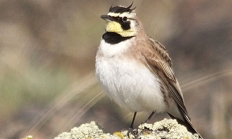
Wide open spaces generally surround these sparrow-sized, ground dwelling birds. The upperparts are mostly brownish and the underparts are generally buffy with varying amounts of yellow on the throat. There is black on the breast and side of the head, but the most unique features are small black "horns." Females and immature birds are duller. Interesting behavior includes aerial displays and "flight songs" during courtship, and the propensity to forage and loaf along dirt and gravel roads. In western Oregon, it breeds in small, scattered populations throughout the Willamette Valley, with concentrations in the central valley on and near Basket…
Find maps, boundary descriptions and percent public land for the Fossil Unit.