

Search myodfw.com
Showing 321 - 340 of 399 results
Landing page
Coquille Valley Wildlife Area was initially established in 2013 with two equally important primary objectives; (1) To protect, enhance, and restore fish and wildlife habitats located on the WA, and (2) to provide a wide variety of wildlife-oriented recreational and educational opportunities to the public.
March 05, 2018
Recreation Report
COLUMBIA BIG GAME HUNTING April 23, 2026 Currently open Controlled Spring Bear, Cougar ( check current harvest numbers), Coyote Announcements and resources Here's the local scoop for your hunt area in the 2026 Spring Bear Forecast. Submit your applications for 2026 controlled hunts by May 15. Big game harvest statistics - You'll find links to population, harvest and point summary reports that can help you decide what hunts to apply for this season. Please report elk with hoof disease - If you see elk showing signs of elk hoof disease, including lame or limping elk or elk with damaged, injured…
September 05, 2017
Article
A growing number of people take to the woods in winter, looking for antlers that have been shed by Oregon’s deer and elk. This is a critical time for big game, and shed hunting responsibly can help protect vulnerable animals.
February 9, 2026
Article
See the latest and historic data on big game population surveys from 2012 to present.
May 1, 2026

Article
Some anglers think coho are more aggressive and easier to catch while they’re still in the open waters of the ocean. Here are some tips for targeting coho on big water.

Landing page
Big Creek Hatchery began operation in 1941. It was refurbished in 1957 under the Mitchell Act as part of the Columbia River Fisheries Development Program – a program to enhance declining fish runs in the Columbia River Basin. The facility is used for adult collection, egg incubation and rearing of winter steelhead, fall Chinook, and coho.
November 01, 2017
Zones or Areas
Wide open spaces, wild windy places, and extreme temperatures characterize Oregon’s largest, most remote fishing zone. Redband trout are native to its rivers and streams, including the Williamson, Malheur and Chewaucan. Brown and hatchery rainbow trout can grow to trophy-size in many of its lakes and reservoirs, many of which also feature crappie, yellow perch and bass.
Landing page
Lookingglass Hatchery was constructed in 1982 as part of the Lower Snake River Compensation Program (LSRCP) – a program to mitigate for spring Chinook and summer steelhead losses caused by four federal dams constructed on the lower Snake River. Lookingglass is used to rear spring Chinook for the Grande Ronde and Imnaha rivers as part of LSRCP. Lookingglass Hatchery serves as an adult collection, egg incubation, and rearing and release site for the spring Chinook destined for the Grande Ronde River systems. The Imnaha Satellite Facility is used for the collection of spring Chinook adults returning to the Imnaha River…
November 30, 2017
Article
Commission materials have moved to MyODFW.com: Commission materials have a new look. ODFW is working to transition its older odfw.com site to a new web platform. Some Commission pages that used to be on the older site have been moved over to MyODFW.com during this transition period. View the agenda Meeting : Friday, February 20, 2026 - 8:00 AM Lane County Armed Forces Readiness Center 3106 Pierce Parkway Springfield, OR 97477
February 20, 2026
Workshop and Events
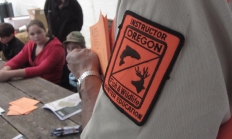
Oregon requires all hunters under the age of 18 to complete a hunter safety education course before hunting in the state. Upon completing the course (and a Field Day for youth), participants will receive a Hunter Safety certification number and card. Adults are also encouraged to take the online course, as it may be required for out of state hunts. Note: Youth under the age of 9 may struggle with the course material and may not have the physical strength needed to safely handle a firearm during a Field Day, particularly during muzzle control, loading, and unloading drills.
Date
Offered Year Round
Location
Statewide
Article
Oregon has over 360 miles of coastline -- that's a big sandbox in which to take the family clamming and crabbing. They're open throughout the year and are suitable for everyone in the family. It's fun, it's easy, it's delicious.
January 5, 2024

Press Release
Note: Recreational ocean crabbing is closed through Nov 30. SALEM, Ore.- Get outdoors with friends and family and enjoy free fishing, crabbing and clamming on Friday and Saturday, Nov. 28 and 29. Statewide free fishing days are a great chance to take someone new fishing and celebrate Oregon's natural resources…
November 21, 2025
Landing page
Jewell Meadows Wildlife Area is located in the Oregon Coast Range Mountains, in the northwestern part of the state. The wildlife area was established in 1969, with an initial purchase of 183 acres. It now encompasses 1,114 acres. The wildlife area’s purpose is to protect and enhance habitat to benefit native wildlife species, to reduce wildlife damage to adjacent properties, and to provide the public with an opportunity to observe wildlife in a natural setting.
February 07, 2018
Landing page
Lower Deschutes Wildlife Area was established in 1983, with the initial donation of land by the Oregon Wildlife Foundation (OWF) of 2,758 acres. In 1986 OWHF donated an additional 5,158 acres of land to the department. The Lower Deschutes Wildlife Area was initially established to provide permanent public angler access. However, especially with the 1986 acquisition, the wildlife area has grown to provide enhanced wildlife and fish habitat (i.e. through removal of livestock, riparian vegetation improvements, etc.) and more wildlife-oriented recreational activities such as hunting, boating, hiking and biking. In 2015, ODFW partnered with the Trust for Public Land to…
February 09, 2018
Landing page
The goal of the Oregon Hatchery Research Center (OHRC) is to answer scientific questions related to fish recovery and hatchery programs. Information gained at the Research Center will help answer questions vital to the success of the Oregon Plan for Salmon and Watersheds and implementation of the Native Fish Conservation Policy. The Oregon Hatchery Research Center is a cooperative research project between the Oregon Department of Fish and Wildlife and the Oregon State University Department of Fisheries and Wildlife.
May 07, 2018
Recreation Report
CENTRAL BIG GAME HUNTING April 23, 2026 Currently open Controlled Spring Bear, Cougar ( check current harvest numbers), Coyote Announcements and resources Here's the local scoop for your hunt area in the 2026 Spring Bear Forecast. Submit your applications for 2026 controlled hunts by May 15. Big game harvest statistics - You'll find links to population, harvest and point summary reports that can help you decide what hunts to apply for this season. Please report elk with hoof disease - If you see elk showing signs of elk hoof disease, including lame or limping elk or elk with damaged, injured…
September 21, 2017
Article
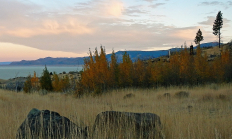
Always have your camera with you, explore your backyard and 10 more pro tips.
