
Search myodfw.com
Showing 421 - 440 of 705 results
SALEM, Ore. — Oregon's Fish and Wildlife Commission meets June 25-26 in Redmond. View the agenda online. On Thursday, Commissioners will visit projects showcasing the landscape scale work underway with partners to protect and restore sagebrush habitat for mule deer in central Oregon. To join the tour, meet at Comfort…

THE DALLES, Ore. – Several California bighorn sheep along the John Day River have recently tested positive for Mycoplasma ovipneumoniae (M. ovi), the respiratory pathogen associated with pneumonia outbreaks in wild sheep. The detections mark the first known cases of M.ovi in the John Day River herd, the state's largest…
NE WILDLIFE VIEWING September 10, 2026 Recreating in drought and wildfire season - actions you can take to protect wildlife . For the most current fire closures and restrictions-- KNOW BEFORE YOU GO . Baker County Bighorn sheep can be seen in the Burnt River Canyon west of Durkee or along the Snake River Road south of Richland. The best viewing is in the early morning and late in the evening. Take the Snake River Road between Richland and Huntington to see bald and golden eagles along the Snake River. There are deer throughout the valley. Early in the morning…
Enterprise, Ore. – Spring Chinook fishing in Hells Canyon will be closed starting June 4, after harvest quotas for the season were reached earlier than anticipated due to a run size downgrade. Spring Chinook fishing on the Snake River is open April 22 to Aug. 17 under permanent regulations but…
Teach, restore, study, host, build, communicate When you sign up to be an ODFW volunteer, you are helping to protect Oregon's fish and wildlife, manage ODFW properties and spark a passion in others to hunt, fish and appreciate the outdoors building and enhancing fish, wildlife and their habitats for current and future generations. Donating even one day a year is all it takes to be helpful. We can be as flexible as possible to find the right opportunity to fit your schedule. Join thousands of volunteers by sharing your time and talents with ODFW.
Piloted in 2014, the Tag Team program helps ODFW fish biologists better evaluate resident gamefish, bass, and stocked rainbow trout fisheries. It's also a chance for anglers to participate in fishery management and, perhaps, come away with up to $50.

SALEM, Ore. – The deadline for applications has been extended to July 11, 2025, for the Landowner Representative. Application forms are available at http://www.dfw.state.or.us/lands/AH/get_involved.asp. The Landowner Representative position is looking for individuals with experience in forestry or agriculture with an interest and experience in hunting and wildlife conservation. You do…
SALEM, Ore. – ODFW is seeking applicants for two vacancies on its Access & Habitat Board, announcing openings for both a Landowner Representative and a Hunter Representative. Applications will be accepted through Sept. 18, 2026. To apply, visit the A&H Program's "Get Involved" page at http://www.dfw.state.or.us/lands/AH/get_involved.asp. ODFW encourages candidates with…
NEWPORT, Ore. – ODFW is accepting nominations for a seat on the Pacific Fishery Management Council (Council). The three-year term for this Oregon at-large seat begins Aug. 11, 2026. Anyone interested in being considered, or wishing to nominate someone, must contact Jessica Watson at 541-351-1196 or jessica.l.watson@odfw.oregon.gov . Completed application…
Find maps, boundary descriptions and hunts available in the new Sage Hen Hunt Area. Download printable PDF map
NEWPORT, Ore. – The Oregon Department of Fish and Wildlife recommends people avoid harvesting and consuming softshell and bay clams from Alsea Bay estuary after the Oregon Health Authority issued a recreational use advisory for Eckman Lake in Lincoln County. The OHA issued an August 28 advisory due to the…
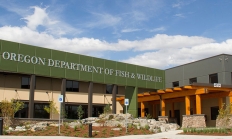
Cole Rivers Hatchery is the largest producer of hatchery fish on the coast of Oregon. Almost all of the fish production at Cole Rivers is done to mitigate for the fish production that was lost when miles of high quality fish habitat was blocked by Applegate Dam (Applegate Reservoir) and William Jess Dam (Lost Creek Reservoir). Visit Cole Rivers Hatchery