
Search myodfw.com
Showing 421 - 440 of 545 results
This is one of the most widespread and familiar waterbirds in Oregon. It is the largest heron in North America, standing approximately four feet tall. It is slate gray with a white crown, cheeks, and throat, rusty thighs and a uniformly yellow bill. Adults develop long gray-white plumes on chest, neck, and back during breeding. Juveniles have similar plumage but may be distinguished by absence of breeding plumes, a dark crown, and dark upper bill. Great blue herons frequent many habitats from shallow areas of marshes, lakes, streams, and oceans, where they feed on fish, amphibians, and aquatic invertebrates; to…

Following droughts in the 1930s that affected most of North America, major conservation efforts, by both private and governmental entities, were enacted to reverse trends of degrading and disappearing wetlands. During this time period there was a major creation and expansion of federal wildlife refuges and state wildlife areas. As the concept of waterfowl flyway management was endorsed and developed, wildlife areas were acquired and managed as part of a larger plan focused on migratory waterfowl needs. LMWA was one of several wetland-focused wildlife areas established in Oregon. Ladd Marsh Wildlife Area was established in 1949, with primary objectives of…
CENTRAL WILDLIFE VIEWING May 7, 2026 Crook County Spring ungulate migration will soon be upon us. You can find mule deer transitioning from low elevation winter feeding areas to the higher elevation sagebrush and agricultural areas. There are red-tailed, rough-legged and ferruginous hawks, northern harriers, American kestrels, prairie falcons and golden eagles throughout Crook County and they're usually associated more closely with open/agricultural areas. Bald eagles and ospreys, on the other hand, are more closely associated with water bodies. Look for northern goshawks throughout the Ochoco National Forest, and for ducks and geese in rivers and lakes. Prineville Reservoir Wildlife…
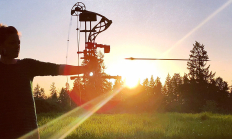
SALEM, Ore. – Bowhunters can warm up for the archery season at a free 3D shoot in La Pine on Saturday, Aug. 2 at Three Rivers Archers Park located at the intersection of Coach Rd. and Memorial Lane. This unique course offers hunting scenarios and learning opportunities to help you…
The E.E. Wilson Wildlife Area came into existence in 1950 when the U.S. Government gave quitclaim title to the property to the Oregon Department of Fish and Wildlife. The wildlife area covers approximately 1,788 acres, is located on Highway 99W about 10 miles north of Corvallis and is situated on the Willamette Valley floor. SHOTGUN RANGE BACK OPEN AS OF LATE OCTOBER 2025: The renovation is complete and the shotgun range is back open. Improvements include: four times as many shooting lanes, fully paved ADA-compliant walkway with pullouts that will make it easier for disabled shooters, a new covered pole…
The original Riverside Tract is adjacent to the Malheur River near the former railroad community of Riverside. It was purchased from the Blaylock family in 1976 and has been administered by ODFW as Riverside Wildlife Area since that time. The purpose of this initial acquisition was to provide public fishing and hunting access to a previously privately held portion of the Malheur River canyon. In addition, this purchase provided the opportunity for the department to emphasize fish and wildlife habitat management in the river canyon. Additional acres were added to this tract in 1977. In 1972, the department purchased a…
The Columbia Basin Wildlife Areas are a composition of four Oregon Dept of Fish & Wildlife managed wildlife areas located along the Columbia River, in the Columbia Basin. The four wildlife areas (Power City, Irrigon, Coyote Springs and Willow Creek) are within the Columbia Plateau ecoregion. Management agreements for these areas were initially established between 1971 and 1977 between the department and Federal agencies which owns the lands. The Columbia Basin Wildlife Areas, which total approximately 1,885 acres, provide an important landbase for the conservation and recreation of fish and wildlife within a highly privatized and altered landscape and play…

SALEM, Ore. – The deadline for applications has been extended to July 11, 2025, for the Landowner Representative. Application forms are available at http://www.dfw.state.or.us/lands/AH/get_involved.asp. The Landowner Representative position is looking for individuals with experience in forestry or agriculture with an interest and experience in hunting and wildlife conservation. You do…
This is your one-stop platform for learning how to hunt and fish in Oregon. Look at the learning opportunities to participate in one or more of the many statewide workshops offered to adults. Enjoy the great outdoors even more by building your confidence and expanding your knowledge! Youth required hunter certification: hunter safety conventional courses and field days Choose between a full conventional course or complete one of the ODFW approved online education courses plus an in-person field day. Sign up for a location, date and time that works best with your schedule. Hunter safety education events are offered year-round…
NE WILDLIFE VIEWING May 7, 2026 Baker County Bighorn sheep can be seen in the Burnt River Canyon west of Durkee or along the Snake River Road south of Richland. The best viewing is in the early morning and late in the evening. Take the Snake River Road between Richland and Huntington to see bald and golden eagles along the Snake River. There are deer throughout the valley. Early in the morning and late in the afternoon are good times to view wildlife. A drive through the foothills of the Baker valley and through the Keating valley can turn up…
Jewell Meadows Wildlife Area is located in the Oregon Coast Range Mountains, in the northwestern part of the state. The wildlife area was established in 1969, with an initial purchase of 183 acres. It now encompasses 1,114 acres. The wildlife area’s purpose is to protect and enhance habitat to benefit native wildlife species, to reduce wildlife damage to adjacent properties, and to provide the public with an opportunity to observe wildlife in a natural setting.
Phillip W. Schneider Wildlife Area provides winter range for mule deer populations and year-round habitat for a variety of wildlife including mammals, birds, reptiles and amphibians. Elk, deer, and bighorn sheep viewing is often good during winter and early spring. Bird watching is excellent all year. Native habitats include sagebrush shrubland, riparian, ponderosa pine forest, western juniper woodland and mixed conifer which support a diversity of fish and wildlife. The riparian areas along the mainstem John Day River, South Fork John Day River and Murderers Creek provide excellent habitat for many birds. Upland areas provide important habitat for passerines and…
Find the weekly statistics for waterfowl and upland game birds for E.E. Wilson Wildlife Area. More information about E.E. Wilson Wildlife Area
Vireos and shrikes are predatory song birds. Their bills are strong and hooked to kill and dismember prey including insects and small birds, mammals and reptiles. These birds hunt from fences, wires and treetops and sometimes hang captured prey on thorns to eat them later.

Oregon has a variety of raptors, from the diminutive Sharp-shinned hawk to our nation's symbol, the Bald eagle. Some of these birds of prey are migratory, while many live here year-round and can be seen hunting along rivers, roadside posts and fields.

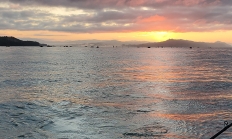
Need to figure out controlled hunts, find a place to clam, learn how to fish or get directions to a wildlife area? We've got information on all that and more, straight from ODFW biologists and other accomplished hunters, anglers and wildlife watchers. Header image by Dave Budeau

This 141-acre property along both sides of the Yachats River was first purchased in the early 1980s to provide forage for elk and help alleviate elk damage to surrounding agricultural land. It also provides public access to the Siuslaw National Forest along the Yachats River Highway, where there are few public access points.