
Search myodfw.com
Showing 421 - 440 of 1416 results
Features: The male has a striking black head with a white crest, white breast, black back, and chestnut sides. Females and immatures are dull grayish brown except for a reddish-brown crest. Habitat: During migration hooded mergansers are widespread, though uncommon, across Oregon. They are usually in sheltered areas of lakes and ponds and less commonly on estuaries. Often seem in pairs or small groups. Techniques: Not usually targeted, they can be part of a mixed duck bag.

Features: The winter males' body is mostly white except for a black breast and central back; the wings are dark, scapulars long and gray, and the dark central tail feathers are long and slender. Winter females are darker above with a light head; scapulars and tail feathers are short and dark. Dark areas mark females' heads and males' necks. Habitat: Long-tailed ducks can show up almost anywhere from the coast (they usually winter off shore) to inland on the Columbia River and on lakes throughout the state. Techniques: Some long-tailed ducks are taken in Oregon, but not enough to show…

Features: Drakes have a reddish head and neck; black breast, lower back and tail coverts; nearly white back, flank, and belly, and dark gray tail. The hen is grayish brown with a darker brown head, neck, breast and tail coverts. Canvasbacks are large; adults in good condition are as heavy as mallards and second in size only to the white-winged scoter among common Oregon ducks. Habitat: Brackish estuarine bays and marshes with abundant submerged aquatic vegetation and invertebrates are ideal wintering habitat for canvasbacks. Techniques: Generally part of a mixed duck bag. These ducks have a reputation as good table…

Features: Except for adult drakes in breeding plumage, blue-wings are difficult to distinguish from cinnamon teal. Adult blue-wing drakes have a gray head with white crescent between the eye and bill. Hens and young of both species are nondescript small brown ducks, but show the prominent blue wing-covert patch in flight. Blue-winged teal is an early migrant and extremely rare winter resident in Oregon. Many hunters who believe they have shot a blue-winged teal actually have probably taken a hen or young drake cinnamon teal, both of which have identical wings with a large blue shoulder patch.

Features: The other "greenhead", the drake is handsome with a dark iridescent green head, white breast, reddish belly, blue wing patch of coverts, and an iridescent green speculum. Brown hens also have blue wing patches similar to that of the cinnamon and blue-wing teal. Habitat: This dabbling duck prefers lakes and ponds where it uses its unique bill to sift through water in shallow areas. Food choices include the seeds of sedges, bulrushes and other aquatic plants, duck weed, and algae; also aquatic insects, mollusks and crustaceans. Common winter species in the Willamette Valley and Columbia Basin, but widespread throughout…


The E.E. Wilson Wildlife Area came into existence in 1950 when the U.S. Government gave quitclaim title to the property to the Oregon Department of Fish and Wildlife. The wildlife area covers approximately 1,788 acres, is located on Highway 99W about 10 miles north of Corvallis and is situated on the Willamette Valley floor. SHOTGUN RANGE BACK OPEN AS OF LATE OCTOBER 2025: The renovation is complete and the shotgun range is back open. Improvements include: four times as many shooting lanes, fully paved ADA-compliant walkway with pullouts that will make it easier for disabled shooters, a new covered pole…
Find the weekly statistics for waterfowl and upland game birds at Denman Wildlife Area. More information about Denman Wildlife Area
SALEM, Ore.—Everyone can fish, clam and crab for free in Oregon on Saturday and Sunday, June 7-8, 2025. No fishing/shellfish licenses or tags (including a Combined Angling Tag or Columbia River Basin Endorsement or Two-Rod Validation) are required on these days. Both Oregon residents and nonresidents can fish for free. Oregon…
This massive area is a cornucopia of geographic features and prime upland and waterfowl hunting opportunities. It is a gem of Oregon.
Features: Slightly larger than its cousin, the rock pigeon, band-tailed pigeons have a grey body. As its name suggests, a wide pale band stretches along the tip of tail feathers. Up close a distinctive white, crescent-shaped mark across its neck is noticable. Habitats: Found on the west side of the state, the band-tailed pigeon frequents semi-open coniferous forests. It forages on wild seeds and fruits in tree tops. In search of food, it travels in flocks from tree top to tree top. Techniques: Find a food source, such as elderberry or cascara, and location with open shooting lanes. Then wait…

Features: The coot can't be mistaken in a wetland. With a black body, white curved bill and red eyes, these birds often move in rafts on the water. Low flyers, they still require furious wing beats before taking flight. Habitats: These birds can be found in wetlands, estuaries and bays where other waterfowl are found. Techniques: Coots are often taken as they enter decoy spreads. Not widely targeted, hunters may pinch a raft into a choke point to take birds on the wing.

Features: Slender birds, mourning doves have long tails and small heads. Their soft cooing and whistling wings make them unmistakable. Habitats: Mourning doves perch on telephone wires or in trees. They forage on the ground for seeds. Techniques: Scouting is always helpful. Look for a tree or telephone line that is near a food crop. Once a location is found, find a spot where a backdrop will breakup your silhouette and take a seat. Wait for a passing shot. Extra shells may be necessary.

Features: Wood ducks can not be mistaken. The drake's iridescent chestnut, greens and white patterning are distinctive. The hen has a unique profile and white pattern around the eye. Habitat: Wood ducks are found in wooded swamps, on rivers and ponds. They feed on mostly seeds, but wood ducks will supplement their diet with aquatic plants, insects and crustaceans too. Acorns, hazelnuts, waste grains, and fallen seeds from trees and shrubs make up a good deal of their diet. As the name implies, they nest in tree cavities near water. Techniques: Search out a wood duck's food source and wait…
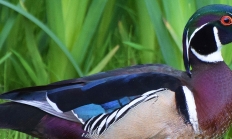

Features: Both males and females have a bluish bill with a black tip. Drakes are white on the top of the head, green eye stripes, purplish breast and flanks, white belly and wing covert patch, and have an iridescent black/green speculum. The grayish hen shows white on the wing covert patch. Habitat: An abundant overwintering duck, especially in the Willamette Valley and coastal areas. Prefer shallow habitats like wet meadows or marshes where, like geese, they feed on green grass and sedges. Techniques: These ducks are early migrants (September) but can be common in mixed duck bags throughout the season…

Features: Drakes are easily distinguished from American wigeon drakes by a reddish brown head, gray flank, and lack of green eye stripe. Hens are similar to American wigeon hens and difficult to distinguish. The call of the male is a shrill whistling, whe'e you; the female's voice a low purr or croak. It is a rare to uncommon visitant east of the Cascades.

