
Search myodfw.com
Showing 461 - 480 of 705 results
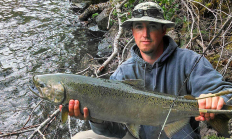
SALEM, Ore. – The Oregon Department of Fish and Wildlife is accepting applications for the Chair position on the state Access & Habitat (A&H) Program Board. The deadline to apply is April 3, 2026. Application forms and additional information are available at: http://www.dfw.state.or.us/lands/AH/get_involved.asp The current Chair has completed the maximum…
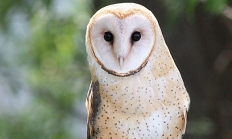
One of the most startling sounds in the black of night is the loud, harsh call of the Barn owl as it flies over field or marsh in search of small rodents. They are white to tan beneath with fine spotting ranging from almost none to fairly extensive. The face has a well-defined facial disc that acts as a parabolic dish collecting the faint sounds of its prey, allowing it to hunt successfully in total darkness. Male and female Barn owls are similar in appearance though the female is somewhat larger. The Barn owl is a fairly common permanent resident…
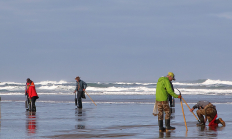
Features: Redtail surfperch all fins are reddish in color, and have 8-11 reddish to brownish vertical bars along the sides over a silver to brassy body. Habitat: Surfperch are found mostly in the surf. Redtail will usually be found between the 2nd and 4th row of breakers and near deeper holes and areas of high sand erosion. Technique: Some anglers use a #4 to #6 hook secured 24-30 inches below a 1- to 2-ounce sinker on 8- to 10-pound line. Baits include sand and kelp worms, sand shrimp, clam necks, and mussels. Some anglers have found success fly fishing for…

Game bird seasons in Oregon run from July 1 to June 30, which means you'll need to purchase new upland and waterfowl validations before you hunt again in the fall. If you have questions or need assistance, please call ODFW licensing staff at 503-947-6101. Buy License Check current Game Bird Regulations for details on licenses, tags, permits and validations. Purchase the federal duck stamp here to prepare for waterfowl season. Special permits-applications-forms *Use current published regulations by downloading a .pdf on your device. (AI-may contain inaccurate data).

ASTORIA, Ore – The annual conservation closure of razor clamming on Clatsop beaches begins 12:01 a.m. July 15. The Oregon Department of Fish and Wildlife encourages clammers to take advantage of the low tide series that begins July 8. However, ODFW reminds clammers that although the low tide series goes…
SALEM, Ore. – The Oregon Fish and Wildlife Commission meets March 19-20 in Medford for a field tour on Thursday and a regular meeting on Friday. The Friday meeting agenda and livestream are available from the Commission page. To virtually testify on an agenda item, register here at least 48…
The European starling is considered an invasive species in Oregon. It was introduced from Europe. They most closely resemble blackbirds, with which they often flock in fall and winter. While both have iridescent plumage, starlings can be told from blackbirds by their two-toned wing pattern - dark upperwing, pale underwing - and during the breeding season by the bright yellow bill. Starlings adapt readily and quickly to human habitation and are highly efficient and successful breeders. However, the abundance of the bird, the rapidity with which it has spread across North America, and its propensity to cause damage to crops…

One of the "winter" finches that appear unpredictably in the state, the White-winged Crossbill wanders in flocks year-round searching for food, and may actually be seen in parts of Oregon in any month of the year. Its peculiar twisted bill, specialized for prying seeds out of conifer cones, is smaller than that of the Red Crossbill, and it prefers smaller, softer cones, mainly spruce. Males are a dull pinkish red, with distinctive broad with bars on black wings. Females are dusty brown and dull yellow with blurry streaks. The White-winged crossbill is a very rare and erratic visitor in Oregon…

CLACKAMAS, Ore.—Fishery managers are delaying the sockeye retention opener on the Columbia River until at least June 27 as the run is returning lower than forecasted. The season is now scheduled for June 27-July 5, but anglers should keep a close eye on action notices and the in-season regulations updates…

Features: The coloration tends to be golden-brownish with dark brown or black spots on the body, and on the dorsal and adipose fins. Usually few or no spots appear on the tail fin. Many body spots, especially those below the lateral line, are edged with pink, red, or orange, forming rings or halos. Breeding males develop strong teeth and a hooked snout. Size can range from 11-inches long in small streams to over 30-inches in large rivers or lakes. Habitat: Although brown trout can adapt themselves to sluggish streams and warmer temperatures than other trout, cold, spring-fed tributary streams with…

The majestic trumpeter swan is the largest of our native waterfowl and one of the heaviest flying birds in the world with males sometimes exceeding 30 pounds. Historically hunted to the brink of extinction, it was recognized as an endangered species long before there was an Endangered Species Act, and its recovery is a conservation success story. The adult's snow-white plumage with contrasting black bill and feet and 8-foot wingspan define this magnificent bird. Their neck is as long as their body and is used to reach food at the marsh bottom. In spring, the trumpeter swan is a locally…

CENTRAL POINT, Ore. – The seventh annual Rogue River Pikeminnow Roundup is set for Sept. 26 - Sept. 28, offering anglers the chance to win prizes while helping protect native fish. Participants can win fishing gear, apparel, gift cards, and more by catching non-native Umpqua pikeminnow in the Rogue River…
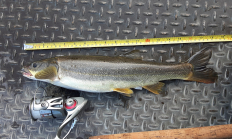
Summer Lake Wildlife Area was established in 1944, with primary objectives of protecting and improving waterfowl habitat and providing a public hunting area. It is now a popular destination for hunting, wildlife viewing and environmental education due to its geographic setting, the abundance of wildlife present and species diversity.

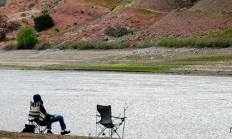
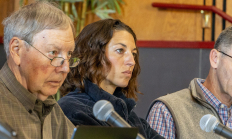
CLACKAMAS, Ore.—Oregon and Washington fishery managers have finalized preseason planning for 2025 Columbia River summer and fall recreational salmon and steelhead fisheries. Forecasts for summer steelhead, sockeye, fall Chinook, and coho will allow opportunity for anglers to target these fish. The planned 2025 fall-season fisheries are primarily limited by the…