Search myodfw.com
Showing 501 - 520 of 849 results
A large and colorful member of the sparrow family, the Green-tailed towhee is perhaps more recognizable by its eye-catching chestnut crown than by its less intense green-gray back and olive tail. As a ground forager, it spends most of its time on the ground or in thick cover, scratching about industriously in the leaf litter, and it may go unnoticed. But its catlike mewing call, which it often gives from a brushy perch, is one of the quintessential sounds of the shrublands of the east slope of the Cascades and the Great Basin. It is locally fairly common east of…

Familiar to anyone from the eastern United States and Canada, this sparrow is much less common in Oregon. Adults show both a white-striped and tan-striped morph, while first year birds resemble tan-striped adults but are typically more heavily streaked underneath. Even the dullest first-year birds have a distinct rectangular white throat patch, often set off with a partial black border. The White-throated sparrow is an uncommon migrant and winter visitor, mainly in western Oregon. Hear the call of the White-throated sparrow Photo by ©Keith Kohl, ODFW

In Oregon, the opossum is considered an invasive species. The Virginia opossum is a cat-sized mammal with a pointed nose, unfurred, black, leathery ears with white edges; beady eyes; a hind foot with an opposable hallux (big toe); and a naked scaly tail. It was introduced in Oregon between 1910 and 1921. Populations were established in northwestern Oregon apparently from releases of animals brought to the state as pets or novelties. Small streams, forest communities, and agricultural lands planted to a variety of crops are typical of many habitats occupied by Virginia opossums in Oregon. They are active nocturnally and…

Oregon has 15 native snake species, from the beautifully colored California Mountain kingsnake to the rubber boa, a constrictor. Interestingly, the sharp-tailed snake appears to specialize in feeding on slugs. And did you know that of our native snakes, only the Western rattlesnake has poisonous venom that's dangerous to humans? ODFW has a fun fact sheet for kids of any age, and a more in-depth brochure, Living with Snakes .

The Northern shoveler's specialized bill earned it in the nickname "spoonbill" among waterfowl hunters. The drake is strikingly handsome with a dark head, white breast, reddish belly, blue wing coverts and an iridescent green speculum. Brown hens also have blue wing patches similar to that of the cinnamon and blue-wing teal. This duck is locally common in summer in eastern Oregon and uncommon in western Oregon. It is a common spring and fall migrant statewide. Hear the call of the Northern shoveler Photo by Kathy Munsel, ODFW

The green-winged teal is the smallest North American dabbling duck. In alternate plumage, green-wing drakes have a cinnamon-colored head with a green eye-stripe, gray back, flanks, and wing with a iridescent green speculum. Hens are brown with a green speculum. This duck is mainly a migrant and winter visitor. It is an uncommon summer resident and breeder in northeastern Oregon and a rare summer resident west of the Cascades. Hear the call of the green-winged teal Photo by Kathy Munsel, ODFW

EASTERN OREGON September 17, 2026 Current Season: Mourning dove, band-tailed pigeon*, ruffed and blue grouse, turkey (Select WMU's) * Permits required for band-tailed pigeons and sea ducks. For more information on permits. Announcements, resources 2026-27 Game Bird Regulations online and available at ODFW licensed agents and vendors. Buy your 2026-27 bird stamp(s) and validations - upland, waterfowl, or non-resident bird validations, federal duck stamp and don't skip the HIP survey. Time to redeem your sports-pac vouchers. Try a new hunt location -- Western Oregon fee pheasant hunts offered at Wildlife Area locations for additional hunting opportunity – Find season dates in September and…

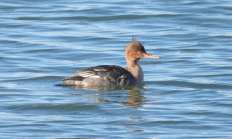
Swimming and diving with grace and energy, red-breasted mergansers arrive in fall but save their complex, contorting courtship display for early spring. A ragged-crested dark green head and reddish brown breast mark the male, along with a dark back and gray sides. Females share the ragged crest; their rufous heads and gray bodies may make separation from common merganser females difficult. Their bills, however, are noticeably slimmer. Red-breasted mergansers are common from fall through spring, mostly in coastal bays and estuaries but occasionally on the open ocean. Hear the call of the red-breasted merganser Photo by Jason Badger, ODFW
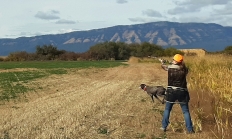
Chukars are ground-loving birds that quickly run uphill or burst from cover with rapid wing-beats and a characteristic whitoo call if alarmed. Introduced by managers wishing to increase hunting opportunities in arid western North America, the chukar is a very successful exotic species that occupies habitats where few other gamebirds exist. It is the most harvested upland bird in Oregon. It is a common permanent resident of eastern Oregon. Populations are distributed in steppe habitats along the breaks of the Columbia, John Day, Snake, Owyhee, Deschutes, Malheur, Burnt and Grand Ronde rivers and lesser watercourses or reservoirs. Hear the call…

Ruffed grouse are named for a series of black iridescent feathers on the sides of the neck called the ruff, which is erected by males to form an ring around the neck during courtship displays. This forest-dwelling species, favored by upland game-bird hunters, is well known for the drumming of the males during courtship displays in the spring. It is a common resident throughout most forested regions of the state. It occupies most forests at low to moderate elevations east of the Cascade crest, primarily the east slope of the Cascades from Ft. Klamath and upper Klamath Lake and Blue…

A big, well-mannered bird of friendly, even playful disposition, with an abundant curiosity as to human presence and activities within the realm of open ocean over which he presides. Long-winged, to seven feet, and dark sooty-brown; adults have a white rump and feathering, which juveniles lack, around the base of a large bill. Every sighting of these gentle giants gliding up to the boat evokes delight. The black-footed albatross is a regular visitant spring through fall offshore, but is irregular in winter. They glean squid, fish and fish eggs from the ocean surface and also eat galley scraps. Hear the…

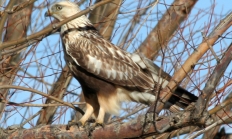
Characteristic of open country and cold weather, the Rough-legged hawk can be found soaring over exposed terrain or perched on utility poles across much of the state in winter. The rough appearance of its legs comes from the feathers covering their length, an adaptation that provides extra warmth in frigid weather. In flight, dark wrist patches and belly help identify this large buteo, though like other hawks it is subject to much variation in plumage. From a distance it frequently appears to have a frosty upper half. It often hovers over fields while hunting, a behavior that is rare among…
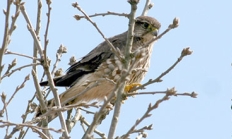
One of the most impressive sights in the unforested regions east of the Cascades is a Prairie falcon strafing a Belding's ground squirrel colony repeatedly at full speed in hopes of catching one emerging from its burrow at just the wrong moment. Prairie falcons are most common in rimrock country where they nest, but may travel great distances in search of prey. Prairie falcons are large, sandy brown above and off-white with variable amounts of streaking below. The face has a vertical stripe below the eye, as do many falcons. In flight, the long, pointed wings and long tail identify…
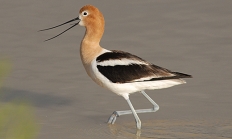
A conspicuous wader of shallow wetland habitats with a striking appearance and graceful movements. These long-legged shorebirds have contrasting black and white upperparts and during the breeding season, the head and neck turn from gray or white to a deep rust color. One of their most notable traits is a long, slender upturned bill. It is a common breeder east of the Cascades at wetlands of south central and southeast Oregon. Distribution and number of breeding birds vary annually depending on regional and local water levels and habitat availability. Regardless, most breeders occur in the western Great Basin counties of…
A large, long-legged wader distinguished from similar species in a flight by flashing rufous underwings and dark brown primaries. Its feet extend beyond tail tip in flight. Flocks generally consist of fewer than 50 birds on the coast. Juveniles migrate south several weeks later than most adults. After mid-November, a few stragglers are seen until late December. The Marbled godwit is a regular spring and fall migrant on the Oregon coast. Spring migration commences in early April and extends through early June on the coast. Its average arrival at the Malheur National Wildlife Reserve is April 27. Hear the call…

Heermann's gulls, the warm-water gulls of summer and fall, accompany Brown pelicans as they fly north each summer. Although most feed along the shore or in the ocean, some feed on tide flats. They often steal food from Brown pelicans. They may take fish directly from the pelicans' bills immediately after a dive or claim food that pelicans have located, discarded, or disturbed. This gull is common on the outer seacoasts, beaches, bays and estuaries. They are strongly associated with outer coasts and adjacent ocean waters, usually within a few miles of shore. A few wander inland during the fall…

Spirited vocalizations make this handsome clown-faced woodpecker one of the more conspicuous residents of much of Oregon's oak woodland. It is unique among Oregon woodpeckers with its habits of communal living and acorn storage. It is fairly common in the Rogue Valley and adjacent hills and locally common in the Klamath River Canyon in southwest Klamath county and the southern part of the Willamette Valley. Acorn woodpeckers are Oregon Conservation Strategy Species in both the Klamath Mountains and Willamette Valley ecoregions. Loss of oak woodlands poses a major threat to this bird. Hear the call of the Acorn woodpecker Photo…

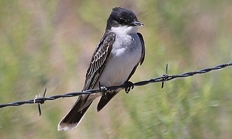
The plumage and perching habits of the Eastern kingbird make it one of the more conspicuous birds in open habitats of eastern Oregon. The plumage is well defined: black on the upperparts and white on the underparts, and a white band on the terminal tip of the tail feathers. It is a relatively large flycatcher, often perching on powerlines, fences, or exposed perches on trees or snags. They hawk aerial insects during the breeding season. The Eastern kingbird breeds throughout non-forest of most of northeast Oregon lowlands with spotty distribution in central and southeast Oregon. They are most abundant in…