
Search myodfw.com
Showing 541 - 560 of 672 results
SALEM, Ore.— White-nose syndrome (WNS) in bats has been detected for the first time in Oregon in Columbia and Benton counties. White-nose syndrome is caused by an infection with the fungus Pseudogymnoascus destructans that disrupts hibernation, causing early winter emergence, dehydration and starvation. This finding follows the 2025 detection of…

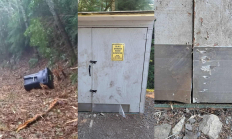
A black bear tried its best to get into a Neskowin homeowner's bear resistant trash can. The homeowner then built a small shed to enclose the trash can. The persistent bear left its prints and claw marks on the shed but did not succeed in breaking into it. This resident…
OTIS, Ore.—ODFW's recent legislatively adopted budget did not include funding to continue the operation of Salmon River Hatchery, one of more than 30 hatcheries that ODFW maintains in the State. The cost of operating and maintaining the hatchery exceeded available revenue, but funding is just one of the issues facing…
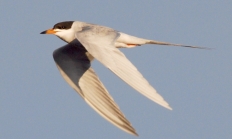
Terns are generally associated with marine environments and salt marshes, but the Forster's tern inhabits freshwater areas. During the breeding season this graceful bird is eastern Oregon's resident small white tern. Typical of terns, the Forster's employs a dramatic hunting method of plunge-diving into shallow waters to capture small fish, the bird sometimes submerging completely. This is an uncommon but highly visible colonial breeder east of the Cascades. Hear the call of the Forster's tern Photo by Dave Budeau, ODFW
Oregon's owls are mostly nocturnal, hunting for insects, fish, frogs, birds, mice and other small mammals in the night. Their hoots, screeches and calls can be heard after dark or early in the morning. Owls don't build nests, but instead use tree cavities, nests created by other species, naturally occurring structures or human-made nest platforms. The Western burrowing owl nests underground in abandoned dens dug by squirrels, prairie dogs and badgers. Learn more about Oregon's owls.

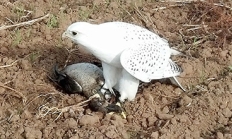
This is a large and power falcon. The majority of Gyrfalcons seen in Oregon are immatures or adults of the "gray" type, but there are several reports of "white" birds. The Gyrfalcon is a regular winter visitant to Oregon. The majority of sightings come from coastal and Willamette Valley lowlands near waterfowl concentrations. Individuals have been seen chasing and feeding on geese, ducks and gulls. Gyrfalcons forage by flying low over the ground and flushing prey, then often giving spectacular tail chases. If a bird refuses to flush the hunt is usually unsuccessful. East of the Cascades it occurs around…
Establishment of the Bridge Creek Wildlife Area initially started in 1961 when a parcel of land was purchased from the Frank Hilbert estate. After the initial purchase, several private holdings were acquired to consolidate the land under department ownership. The last parcel was purchased from the Colvin Cattle Company in 1975. The primary purpose of the wildlife area is to maintain and protect a key historic winter range for Rocky Mountain elk ( Cervus elaphus nelsoni).
Coquille Valley Wildlife Area was initially established in 2013 with two equally important primary objectives; (1) To protect, enhance, and restore fish and wildlife habitats located on the WA, and (2) to provide a wide variety of wildlife-oriented recreational and educational opportunities to the public.
Oregon hosted the first successful introduction of the ring-necked pheasant in North America. This exotic game bird, released for sport hunting from China is now widely introduced and distributed throughout North America. Although more likely to run than fly, the ring-necked pheasant will explode into the air if startled, producing a distinctive sound from rapid wing-beats. It inhabits open areas such as grasslands, agricultural fields, and brushy areas, and avoids forested habitats. Hear the call of the ring-necked pheasant Photo by Charlotte Ganskopp

A quiet, modest, unobtrusive little bird that must be sought to be seen in its shady retreats, this little-studied species can easily be overlooked. It is typically associated with oaks and mixed woodlands, where it hops along the foliage hunting for insects. In winter it forages with flocks of chickadees, kinglets, and nuthatches. This is Oregon's only resident vireo. Although it is sometimes referred to as non-migratory, some seasonal movement has been observed. Similar in appearance and behavior to the more common and widespread Ruby-crowned kinglet. Hear the song of the Hutton's vireo Photo by Greg Gilson

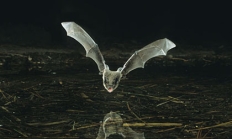
The long-legged myotis lives in forests and comes out early in the evening to hunt. It is a fast flier and will chase insects for a long distance. One baby is born in the summer, and the species hibernates in winter. In general, the long-legged myotis is a species associated with montane coniferous forests, but it also occurs in some desert and riparian habitats. The long-legged myotis is an Oregon Conservation Strategy Species in these ecoregions: Blue Mountains, Coast Range, East and West Cascades, Klamath Mountains, and Northern Basin and Range. Photo by ©Michael Durham

This majestically crested bird is often heard before being seen due to its conspicuous harsh rattling call. Kingfishers are most frequently associated with lake and pond shorelines and islands, as well as coastal dunes with ponds and widely scattered shrubs and trees. They hunt from a vantage point above water such as an overhead branch, telephone wires along shore lines or pilings of piers. This is a common permanent resident throughout most of the state except in the north Lake and east Deschutes counties where open water is generally absent Hear the call of the belted kingfisher Photo from ODFW


MARINE FISHING September 10, 2026 Announcements Ocean salmon closed from Leadbetter Point, WA to Cape Falcon, OR: Effective 11:59 PM Tuesday, September 8, 2026, the ocean recreational fishery in the area between Cape Falcon and Leadbetter Point (Columbia River Subarea) is closed to fishing for salmon. Possession of salmon on board a vessel is prohibited in the Columbia River Subarea. Ocean coho salmon from Cape Falcon to Humbug Mountain: Effective Saturday, September 12, 2026, at 11:59PM, the recreational fishery from Cape Falcon to Humbug Mountain is closed to the retention of coho salmon. The season remains open for all salmon…