
Search myodfw.com
Showing 561 - 580 of 1204 results
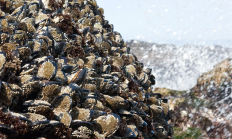
SALEM, Ore – Mussel harvesting is now closed from Cape Blanco to the California border due to levels of paralytic shellfish poisoning above the safety threshold, the Oregon Department of Agriculture and the Oregon Department of Fish and Wildlife announced today. On the mid-coast, marine biotoxin levels tested below the…
Trask River Hatchery was constructed in 1916 to replace an earlier hatchery that was located three miles upstream from the present site. Many improvements have been made to the hatchery since original construction including a new alarm system, early rearing building, and a 40’ x 60’ pole building. Trask Pond was constructed in 1970 and Tuffy Creek was constructed in 1988. The hatchery is used for adult collection, incubation, and rearing of fall and spring Chinook, coho, wild winter steelhead and hatchery winter steelhead.
Willamette Trout Hatchery and the adjacent Oakridge Salmon Hatchery were combined in 1983 and operate today as Willamette Hatchery. The trout hatchery was constructed in 1922 and the salmon hatchery in 1911. The U.S. Army Corps of Engineers (USACE) rebuilt the salmon hatchery in 1952 to mitigate for fishery losses caused by Hills Creek, Lookout Point and the Dexter hydroelectric/flood control projects. The trout side was rebuilt between 1950 and ‘56. Today, Willamette Hatchery is used for adult holding/spawning, egg incubation and rearing of spring Chinook and rainbow trout. In addition, both summer and winter steelhead are reared at this…
Oak Springs Hatchery was constructed in several phases beginning in 1922 with the last major construction in 1996. The facility is currently used for egg production, incubation and rearing of rainbow trout, incubation and rearing of summer and winter steelhead, and maintains one resident rainbow trout and one resident cutthroat broodstock.
The McKenzie River originates in the Cascade Range and empties into the Willamette River near Eugene, which then flows northward into the Columbia River. McKenzie Hatchery was first constructed in 1938 and rebuilt in 1975. Today, 30 rearing ponds, a visitor's center, spawning room, egg incubation facility, office, feed storage, shop area, fish ladder and picnic area are the main components of the facility layout. McKenzie Hatchery is temporarily closed to comply with Oregon Department of Environmental Quality permit conditions. Visitors should be aware that no fish are present in the facilities' production raceways and show ponds. Fish have been…
Round Butte Hatchery was constructed in 1972 to mitigate for the fishery losses caused by Pelton/Round Butte (PRB) Hydroelectric Complex. Round Butte and its satellite, Pelton Ladder, are used for adult collection, egg incubation and rearing of spring Chinook, summer steelhead, and sockeye salmon.
ODFW's Oregon Conservation and Recreation Advisory Committee meets Dec. 2 SALEM, Ore. – The Oregon Conservation and Recreation Advisory Committee will meet on Tuesday, Dec. 2, from 1 p.m. to 3:30 p.m. The Conservation and Recreation Advisory Committee will be reviewing application questions ahead of their Round 10 grant solicitation…
SALEM, Ore. - Oregon's Fish Passage Task Force will meet Thursday, October 16 from 8:00 a.m. to 12:30 p.m. at the Red Lion, 1313 N Bayshore Dr, Coos Bay. The meeting will be open to the public. Members of the public who are interested in the meeting are encouraged to…
SALEM, Ore. — ODFW's Fish Restoration and Enhancement Board will meet in person on Tuesday, Sept. 30 from 8:30 a.m. to 5 p.m., in Redmond at The Lodge at Eagle Crest. The meeting will occur in person and via Teams, and members of the public may attend the meeting in…
Public comment period open; comment via online form SALEM, Ore.—Oregon's Fish and Wildlife Commission will meet Feb. 20 at the Lane County Armed Forces Readiness Center, 3106 Pierce Parkway in Springfield. The meeting starts at 8 am and will be livestreamed on the meeting agenda page and at ODFW's YouTube…
Hunter's Guide Hunter's Resources Hunter's Technique Hunter's Bounty
Various seasons
Online Learning
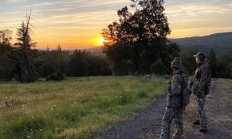
CENTRAL BIG GAME HUNTING September 10, 2026 Currently open Controlled archery deer and elk, bear, cougar ( check current harvest numbers), coyote, controlled youth cow hunts, premium, auction and raffle hunts. Season openings beginning in September Western gray squirrel (9/15) *Check Big Game regulations for hunt details and purchase your license and required species tag before hunting. Announcements and resources Gear up for this year's Big Game Hunting Forecast and get ahead of the game! Big game statistics - You'll find links to population, harvest and maps that can help you decide where to hunt this season. Check the Leftover…
SE Fishing September 10, 2026 Best bets for weekend fishing Catch and Release for Redband Rainbow Trout with no bait is required through October 31 on all of Upper Klamath Lake including but not limited to Pelican Bay, Crystal Creek, Recreation Creek, Harriman Creek, Odessa Creek, Short Creek, Fourmile Creek, Thomason Creek, Fourmile Canal, Barkley Springs Channel below highway 97 and mouth of Williamson River. Yellow perch angling should be excellent in the Williamson River, Crystal Creek, Pelican Bay and Fourmile Canal. Willow Valley Reservoir is good for largemouth bass, yellow perch and some large crappies. The Wood River below…


Willamette Trout Hatchery and the adjacent Oakridge Salmon Hatchery were combined in 1983 and operate today as Willamette Hatchery. The trout hatchery was constructed in 1922 and the salmon hatchery in 1911. The U.S. Army Corps of Engineers (USACE) rebuilt the salmon hatchery in 1952 to mitigate for fishery losses caused by Hills Creek, Lookout Point and the Dexter hydroelectric/flood control projects. The trout side was rebuilt between 1950 and ‘56. Today, Willamette Hatchery is used for adult holding/spawning, egg incubation and rearing of spring chinook and rainbow trout. In addition, both summer and winter steelhead are reared at this…