
Search myodfw.com
Showing 641 - 660 of 785 results
Veterans invited to grand reopening event set for Nov. 15 MONMOUTH, Ore.—ODFW Hunter Education Coordinator Jered Goodwin used to see a group of disabled Veterans regularly visiting the shotgun shooting range at E.E. Wilson Wildlife Area, a former military base turned wildlife area and popular outdoor destination in the Willamette…
CENTRAL BIG GAME HUNTING September 3, 2026 Currently open Controlled archery deer and elk, bear, cougar ( check current harvest numbers), coyote, controlled youth cow hunts, premium, auction and raffle hunts. Season openings beginning in September Western gray squirrel (9/15) *Check Big Game regulations for hunt details and purchase your license and required species tag before hunting. Announcements and resources Gear up for this year's Big Game Hunting Forecast and get ahead of the game! Big game statistics - You'll find links to population, harvest and maps that can help you decide where to hunt this season. Check the Leftover…
SOUTH CENTRAL BIG GAME HUNTING September 3, 2026 Currently open Controlled archery deer and elk, bear, cougar ( check current harvest numbers), coyote, controlled youth antlerless elk Season openings beginning in September Western gray squirrel, controlled muzzleloader pronghorn *Check Big Game regulations for hunt details and purchase your license and required species tag before hunting. Announcements and resources Gear up for this year's Big Game Hunting Forecast and get ahead of the game! Big game statistics - You'll find links to population, harvest and maps that can help you decide where to hunt this season. Check the Leftover Tag List…
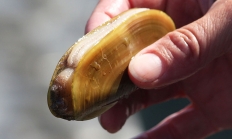
Features: This clam has a long, narrow, thin shell with a smooth brown coating. Habitat: Razor clams are found in stable, sandy, surf-swept beaches of the open coast and some coastal bays. Razor clams have the ability of digging up to a foot per minute and have been found more than four feet deep in the sand. The 18 mile stretch of Clatsop beaches account for 90% of Oregon’s razor clam harvest. The razor clam population in this area is much denser than any other area in the state. Other areas that also have razor clams include Indian Beach (Cannon…
SALEM, Ore. – Organizations and partners interested in funding conservation, outdoor access, and recreation projects in Oregon are encouraged to apply soon, as the Oregon Conservation and Recreation Fund (OCRF) grant application window is open now but closes Monday, Feb. 9, 2026. The OCRF Advisory Committee began accepting applications on…
SALEM, Ore.—Do you have a love of hunting and passion for wildlife conservation? Are you knowledgeable about forestry and/or agriculture? If so, there are vacancies for a Landowner Representative and a Hunter Representative on the Access & Habitat (A&H) Board. Applications are being accepted by the Oregon Department of Fish…
The development of the WWA began in 1953 with the acquisition of five parcels of land consisting of 4,400 acres. The Department continued to purchase additional lands, acquiring 1,670 acres in 1954 and another 760 acres in 1955. From 1961 to the present the department has purchased or received another 4,219 acres. The wildlife area currently consists of 12,419 acres owned by the department. In addition, the department, through agreements with the Bureau of Land Management (BLM), manage 1,329 acres within or adjacent to the wildlife area. The WWA was established in response to continuing complaints from landowners concerned with…
Seeing killer whales off the Oregon coast is a rare treat, but whale watchers can usually count on a pod of orca’s patrolling the coast in mid-April – just in time to intercept baby gray whales. Orcas are most often seen in the ocean off Depoe Bay and Newport, but can be spotted coastwide. The first thing you are likely to see when sighting killer whales is their dorsal fin. Male orcas have a dorsal fin that can be six feet in height, juveniles and females have shorter fins. These large fins can be seen from quite a distance. There…

Newport, Ore. – Oregon's commercial Dungeness crab season opens Dec. 16 from Cape Falcon to the California border, the Oregon Department of Fish and Wildlife announced today. Crab will be available in time for the holiday season. Oregon will open the north coast to align with Washington once Long Beach…
FOR IMMEDIATE RELEASE Oregon Department of Fish and Wildlife (ODFW) Confederated Tribes of the Umatilla Indian Reservation (CTUIR) Statement on Qapqápa Wildlife Area Acquisition Oregon Department of Fish and Wildlife (ODFW) and the Confederated Tribes of the Umatilla Indian Reservation (CTUIR) regret to announce that the Qapqápa (pronounced cop-COP-a) Wildlife…
CLACKAMAS, Ore. – Sturgeon retention will not open in Bonneville and The Dalles pools on the traditional date of Jan 1. following a joint state hearing held by Oregon and Washington fishery managers today. However, the retention fishery in the John Day pool, where harvest rates have been stable and…
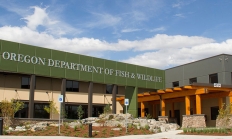
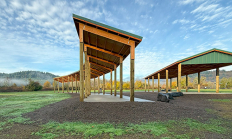
The E.E. Wilson Wildlife Area came into existence in 1950 when the U.S. Government gave quitclaim title to the property to the Oregon Department of Fish and Wildlife. The wildlife area covers approximately 1,788 acres, is located on Highway 99W about 10 miles north of Corvallis and is situated on the Willamette Valley floor. SHOTGUN RANGE BACK OPEN AS OF LATE OCTOBER 2025: The renovation is complete and the shotgun range is back open. Improvements include: four times as many shooting lanes, fully paved ADA-compliant walkway with pullouts that will make it easier for disabled shooters, a new covered pole…
Irrigon Hatchery began operation in 1984 as part of the Lower Snake River Compensation Program (LSRCP)—a program to mitigate for spring Chinook and summer steelhead losses caused by the four federal dams constructed on the lower Snake River. This facility serves as an egg incubation and rearing facility for summer steelhead destined for the Grande Ronde and Imnaha river systems and egg incubation for 575,000 Umatilla coho eggs for transfer to Cascade Hatchery. Irrigon Hatchery also rears 1.4 million fall Chinook for the Grande Ronde and Snake Rivers and is used as a rearing site for legal-sized and trophy rainbow…
Bitterns, herons, and egrets are all long-legged wading birds with long necks and pointed bills for spearing fish or other prey.
