Search myodfw.com
Showing 721 - 740 of 869 results
The development of the WWA began in 1953 with the acquisition of five parcels of land consisting of 4,400 acres. The Department continued to purchase additional lands, acquiring 1,670 acres in 1954 and another 760 acres in 1955. From 1961 to the present the department has purchased or received another 4,219 acres. The wildlife area currently consists of 12,419 acres owned by the department. In addition, the department, through agreements with the Bureau of Land Management (BLM), manage 1,329 acres within or adjacent to the wildlife area. The WWA was established in response to continuing complaints from landowners concerned with…
Phillip W. Schneider Wildlife Area provides winter range for mule deer populations and year-round habitat for a variety of wildlife including mammals, birds, reptiles and amphibians. Elk, deer, and bighorn sheep viewing is often good during winter and early spring. Bird watching is excellent all year. Native habitats include sagebrush shrubland, riparian, ponderosa pine forest, western juniper woodland and mixed conifer which support a diversity of fish and wildlife. The riparian areas along the mainstem John Day River, South Fork John Day River and Murderers Creek provide excellent habitat for many birds. Upland areas provide important habitat for passerines and…
Seeing killer whales off the Oregon coast is a rare treat, but whale watchers can usually count on a pod of orca’s patrolling the coast in mid-April – just in time to intercept baby gray whales. Orcas are most often seen in the ocean off Depoe Bay and Newport, but can be spotted coastwide. The first thing you are likely to see when sighting killer whales is their dorsal fin. Male orcas have a dorsal fin that can be six feet in height, juveniles and females have shorter fins. These large fins can be seen from quite a distance. There…

FOR IMMEDIATE RELEASE Oregon Department of Fish and Wildlife (ODFW) Confederated Tribes of the Umatilla Indian Reservation (CTUIR) Statement on Qapqápa Wildlife Area Acquisition Oregon Department of Fish and Wildlife (ODFW) and the Confederated Tribes of the Umatilla Indian Reservation (CTUIR) regret to announce that the Qapqápa (pronounced cop-COP-a) Wildlife…
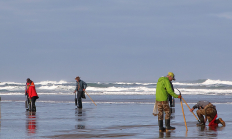
ASTORIA, Ore – The annual conservation closure of razor clamming on Clatsop beaches begins 12:01 a.m. July 15. The Oregon Department of Fish and Wildlife encourages clammers to take advantage of the low tide series that begins July 8. However, ODFW reminds clammers that although the low tide series goes…
CENTRAL POINT, Ore. – Learn how to spot and identify animal tracks, splash around in a stream to check out aquatic bugs, and play "survival of the fish-est." Join the Oregon Department of Fish and Wildlife, Jackson County Parks, and Rogue River Watershed Council for Wildlife Wisdom every Saturday from…

The E.E. Wilson Wildlife Area came into existence in 1950 when the U.S. Government gave quitclaim title to the property to the Oregon Department of Fish and Wildlife. The wildlife area covers approximately 1,788 acres, is located on Highway 99W about 10 miles north of Corvallis and is situated on the Willamette Valley floor. SHOTGUN RANGE BACK OPEN AS OF LATE OCTOBER 2025: The renovation is complete and the shotgun range is back open. Improvements include: four times as many shooting lanes, fully paved ADA-compliant walkway with pullouts that will make it easier for disabled shooters, a new covered pole…
Prioritize what you want out of your hunt Controlled Hunt Application Worksheet Steps on how to apply for a controlled hunt
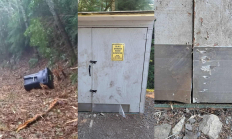
A black bear tried its best to get into a Neskowin homeowner's bear resistant trash can. The homeowner then built a small shed to enclose the trash can. The persistent bear left its prints and claw marks on the shed but did not succeed in breaking into it. This resident…
THE DALLES, Ore. – Several California bighorn sheep along the John Day River have recently tested positive for Mycoplasma ovipneumoniae (M. ovi), the respiratory pathogen associated with pneumonia outbreaks in wild sheep. The detections mark the first known cases of M.ovi in the John Day River herd, the state's largest…
The Columbia Basin Wildlife Areas are a composition of four Oregon Department of Fish and Wildlife (department) managed wildlife areas located along the Columbia River, in the Columbia Basin. The four wildlife areas (Power City, Irrigon, Coyote Springs and Willow Creek) are within the Columbia Plateau ecoregion. Management agreements for these areas were initially established between 1971 and 1977 between the department and Federal agencies which own the lands. The Columbia Basin Wildlife Areas, which total approximately 1,885 acres, provide an important landbase for the conservation and recreation of fish and wildlife within a highly privatized and altered landscape and…
SALEM, Ore.—Oregon's Fish and Wildlife Commission will meet Sept. 17-18 in La Grande to adopt 2027 Big Game Regulations. See the meeting agenda at https://myodfw.com/articles/commission-agenda-september-17-18-2026 Meetings are livestreamed and can be viewed on MyODFW.com website or the agency YouTube channel. On Thursday, Commissioners will tour key sites across the Blue…
Irrigon Hatchery began operation in 1984 as part of the Lower Snake River Compensation Program (LSRCP)—a program to mitigate for spring Chinook and summer steelhead losses caused by the four federal dams constructed on the lower Snake River. This facility serves as an egg incubation and rearing facility for summer steelhead destined for the Grande Ronde and Imnaha river systems and egg incubation for 575,000 Umatilla coho eggs for transfer to Cascade Hatchery. Irrigon Hatchery also rears 1.4 million fall Chinook for the Grande Ronde and Snake Rivers and is used as a rearing site for legal-sized and trophy rainbow…
Upon taking an adult salmon, steelhead, legal-size sturgeon or Pacific halibut, the angler must immediately enter the codes for the species caught, ocean port or stream, and the month and day of catch. The information from these tags helps ODFW manage the fisheries and estimate total harvest. Currently nearly 40 percent of anglers use e-tagging. Want to switch from paper to electronic? Login to your account and look under your profile to switch.
Bitterns, herons, and egrets are all long-legged wading birds with long necks and pointed bills for spearing fish or other prey.