
Search myodfw.com
Showing 901 - 920 of 1416 results
Western Oregon observers enjoy these large, elegant plovers almost year-round, and as a consequence they are one of the most familiar larger shorebirds. Almost all migrants and winterers visiting Oregon inhabit mudflats and open wet dirt fields. A few can be found on sand beaches and even occasionally on rocks, but the great majority are found feeding and resting on open mud. In Oregon, it is a fairly common to common transient in western interior valleys. East of the Cascades, the Black-bellied plover is an uncommon transient in the Klamath Basin and at Malheur National Wildlife Refuge. In winter it…

Spirited vocalizations make this handsome clown-faced woodpecker one of the more conspicuous residents of much of Oregon's oak woodland. It is unique among Oregon woodpeckers with its habits of communal living and acorn storage. It is fairly common in the Rogue Valley and adjacent hills and locally common in the Klamath River Canyon in southwest Klamath county and the southern part of the Willamette Valley. Acorn woodpeckers are Oregon Conservation Strategy Species in both the Klamath Mountains and Willamette Valley ecoregions. Loss of oak woodlands poses a major threat to this bird. Hear the call of the Acorn woodpecker Photo…

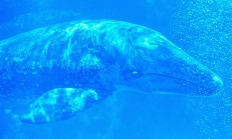
The most common whale off the Oregon coast is the gray whale. In addition to the approximately 200 resident gray whales that live nearly year-round off Oregon, a winter and spring migration brings about 18,000 more past our coast. Gray whales are baleen whales (mysticetes). They grow to 50 feet in length and will weigh up to 80,000 pounds; adult females are larger than males, which is common in all baleen whales. They do not have a dorsal fin on their back but instead have a series of knuckles. These whales are mottled gray and are covered with barnacles and…
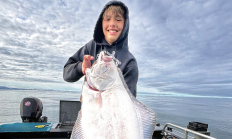
NEWPORT, Ore. – The Oregon Department of Fish and Wildlife is hosting a public meeting on July 29 from 6 p.m. – 7:30 p.m. to get input on the 2026 recreational Pacific halibut season. The meeting is being held in the conference room of the ODFW office, 2040 SE Marine…
The Dalles, Ore.—The lower Deschutes River will be open for spring Chinook salmon from May 5-20. "This is exciting news for anglers as the last spring Chinook season on the Deschutes was in 2018," said Jason Seals, Deschutes District Fish Biologist. "We're expecting a return of more than 2,000 hatchery…
PENDLETON, Ore. – ODFW will close recreational spring Chinook retention in the Umatilla River Basin from May 30 through June 30, 2026. The closure will be in effect from the mouth of the Umatilla River, near Highway 730 bridge, to the Confederated Tribes of the Umatilla Indian Reservation (CTUIR) boundary…
CENTRAL POINT, Ore. – The Oregon Department of Fish and Wildlife is hosting a family-friendly 3D archery event Aug. 2-3 at the Military Slough tract on Denman Wildlife Area. For just $10 (cash only, pay at entrance), archers can take shots at 40 3D animal targets on a two-mile course…

The Lewis's woodpecker was named for Meriwether Lewis, who first described the species in 1805. This medium-sizesd vaguely crow-like woodpecker relies on flycatching during the spring and summer and store mast in the fall and winter. Formerly widespread in Oregon, it is currently common year-round only in the white oak-ponderosa pine belt east of Mt. Hood. It also breeds in low numbers in open habitat along east Oregon river and stream valleys. The Lewis's woodpecker is an Oregon Conservation Strategy Species in these ecoregions: Blue Mountains, Columbia Plateau, East Cascades, Klamath Mountains, West Cascades. Hear the call of the Lewis's…

Worldwide, frogs and toads are in trouble because of habitat loss, pollution, pesticides, climate change, diseases, the pet trade and competition from invasive species. Many of Oregon's 12 native species of frogs and toads are listed as Oregon Conservation Strategy Species of concern. Frogs and toads belong to the same animal group but are very different. Toads have dry, rough and bumpy skin covering a wide body while frogs are slender with smooth, moist skin. Frog eyes are higher on the head than toads and are rounder and bulging. And there's a reason we play "leap frog" - frogs take…

Canvasbacks are large; adults in good condition are as heavy as mallards and second in size only to the white-winged scoter among common Oregon ducks. Drakes have a reddish head and neck; black breast, lower back and tail coverts; nearly white back, flank, and belly, and dark gray tail. The hen is grayish brown with a darker brown head, neck, breast and tailcoverts. It is an occasional summer resident in northeast Oregon, nesting locally only at Ladd Marsh in Union County. It is an uncommon spring and fall migrant in northeastern Oregon and regular in winter and spring on the…

ENTERPRISE, Ore. – ODFW, in coordination with co-managers, will reopen harvest of wild (adipose-intact) fall Chinook salmon in the Snake River effective Saturday, Oct. 4. The reopening follows a temporary closure implemented in September to ensure fisheries remained within agreed harvest limits. During the closure, managers continued to monitor run…
Brandt's cormorants nest colonially on offshore islands and mainland cliffs and are the most common of the cormorants on the Oregon coast in summer. In the breeding season, males are easily distinguished by their intense blue gulag pouches, displayed with a skyward pointing of the bill. They also have wispy white plumes along the side of their head and on their back, which show well against the solid black of the rest of their plumage. In bright light they have a green iridescence. During all seasons they can be distinguished from the two other Oregon species by buff-colored feathers that…

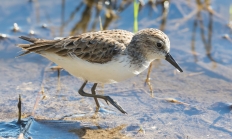
This tiny sandpiper is the rarest of the regularly occurring "peeps" in Oregon. Only a handful of individuals are reported in Oregon each year, mostly during fall migration and usually in mixed flocks with Least and Western Sandpipers. Like the Western sandpiper, the Semipalmated has black legs, but its bill is generally shorter, straighter and more blunt. Well-known as a transoceanic migrant, the Semipalmated sandpiper may be one of the fastest flying of the long-distance shorebirds. It is a rare irregular spring transient throughout Oregon, and a very uncommon coastal and rare inland fall transient. It is usually found inside…
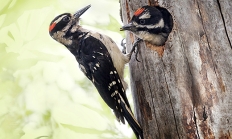
This medium-sized woodpecker may be found in virtually any forested area in Oregon. It is found primarily in mixed-conifer and ponderosa pine forests, as well as adjacent deciduous stands, especially during the breeding season. Hairy woodpeckers feed on beetles, ants and other insects, spiders, miscellaneous plant matter, elderberry corn and mast (mostly acorns), and a few seeds. They are regular visitors to suet feeders and have been observed drinking from hummingbird feeders in central Oregon. It is a resident in forests throughout Oregon with the exception of juniper. Common throughout most of this range, but uncommon to fairly common along…
SALEM, Ore.— ODFW will host an open house on Tuesday, April 7 from 2-4 pm to discuss development of its 2027-29 Agency Request Budget. The meeting will be hosted in ODFW's headquarters classroom (4034 Fairview Industrial Drive, SE, Salem) and will be streamed online via YouTube. In Oregon, state agency budgets…
NEWPORT, Ore. – Oregon Department of Fish and Wildlife staff are hosting in person meetings Oct. 6, 7, and 8 to discuss the 2026 recreational bottomfish and Pacific halibut seasons with anglers. The Oct. 8 meeting in Newport also offers a virtual option. Meeting information: Oct. 6, Brookings: 5:30-7:30 p.m…
SALEM, Ore. – Join ODFW and partners for the third annual Coyote-palooza: a day of discovery and learning dedicated to one of nature's most adaptable creatures! This free event will be in Portland on Saturday, May 30 from 8:30 a.m. – 2 p.m. adjacent to the Portland State University Farmers…
SALEM, Ore. – The Pacific Fishery Management Council (PFMC) met March 4-9 to develop three alternatives for ocean salmon seasons along the coasts of Washington, Oregon, and California. PFMC is hosting a hybrid public meeting March 24 from 7-9 p.m. in Newport to receive input on the proposed salmon management…
This medium-sized, shy grebe has bright white cheeks that contrast sharply against a dark crown and rust red neck during the breeding season. An aquatic bird, it breeds in lakes and ponds, usually in forested areas. In Oregon, it is found in waters with hardstem bulrush intermixed with open water over five feet deep. Five to 20 birds at Rocky Point in the Upper Klamath Lake National Wildlife Reserve form the only consistent breeding population in Oregon. The red-necked grebe reaches its greatest numbers during winter along the coast. The red-necked grebe is an Oregon Conservation Strategy Species in the…

This small shorebird moves along the sand by foot rather than flight. It has a distinct black cap behind a white forehead, a dark line though the eye, and an incomplete black breast band. Males have darker and more distinct breeding plumage than females; both sexes loose coloration during late summer. It is the only shorebird that regularly breeds on Oregon's beaches. East of the Cascades, the Western Snowy plover is a summer resident breeding on alkaline flats and salt pans. On the Oregon coast, this species is found year-round between Heceta Head and Cape Blanco. Western snowy plovers are…
